The Difference Between Brain Fog And Early Cognitive Decline — How To Tell
Quick Read Brain fog, a temporary cloudiness caused by poor sleep, stress, or nutritional gaps, is far more common than
We write a new article on supplements every day , all detailed, with citations.
Once a week we send an email containing a list of the last 7 days articles. Please sign up and also feel free to share the articles with friends and family who you think might benefit.
Simon Parrott – Vitacuity Ltd
Your brain uses magnesium to maintain synaptic connections, the tiny links between brain cells that enable memory and clear thinking. As you age, these connections naturally decline. Most magnesium supplements cannot cross into the brain effectively, but a specific form called Magnesium-L-Threonate (Magtein) appears to enter brain tissue and boost synaptic density in ways standard magnesium cannot.
Animal studies show this form can restore lost brain connections and reverse cognitive deficits in Alzheimer’s disease models. Human trials are smaller but promising: studies found improvements in memory, reaction time, and executive function, with one reporting a 7.5-year reduction in cognitive age. All human trials showed good safety with minimal side effects, though longer-term studies in larger populations are still needed.
The evidence is strongest for memory and cognitive speed rather than sleep. Magnesium deficiency is common, supplementation is safe and inexpensive, and if brain health is your goal, Magnesium-L-Threonate is the form with actual brain-bioavailability research behind it. Doses used in trials were 2g daily, and benefits appear most meaningful when combined with other habits like exercise and cognitive challenge.
Verdict: The science is promising but not yet definitive, making this a reasonable addition to your routine if you are middle-aged or older and concerned about cognitive decline, though larger human studies are still needed to fully confirm the benefits.
What if the cognitive slowdown you’ve been quietly noticing, the word that takes a half-second longer to arrive, the name you have to reach for, the slight fogginess after a poor night’s sleep, wasn’t simply the inevitable cost of getting older? What if part of it came down to a mineral you’re almost certainly not getting enough of, and what if the specific *form* of that mineral made all the difference between something that crossed the blood-brain barrier and something that didn’t?
Magnesium is one of the most studied minerals in human biology. It sits behind over 300 enzymatic reactions, powers ATP synthesis, and plays a central role in how neurons talk to each other [1]. Most people know it vaguely as “the sleep mineral” or “the muscle cramp mineral.” But the research emerging over the past fifteen years tells a far more interesting story, one about synaptic density, brain age, NMDA receptors, and the possibility that targeted supplementation might actually help rebuild the neural architecture that underpins memory and clear thinking. The science isn’t complete. But what’s already there is worth understanding carefully.
Vitacuity analysed over 1.77 million research papers and selected the fifteen most relevant studies on this topic. Here’s what they show.
To understand why magnesium matters for cognition, you need to understand synaptic density, and why it falls.
Your brain contains roughly 100 billion neurons. Each neuron communicates with others through synapses: tiny connection points where chemical and electrical signals pass between cells. The *density* of those synaptic connections is one of the strongest predictors of cognitive ability we have. More synapses means more processing power, more flexible memory, more efficient signal transmission. Synapse loss, on the other hand, is now recognised as one of the earliest and most significant pathological hallmarks of cognitive decline [7].
Here’s where magnesium enters. At the cellular level, magnesium ions (Mg²⁺) regulate NMDA receptors, the gatekeepers of synaptic plasticity. NMDA receptors determine whether a synaptic connection gets strengthened or weakened. They are, in essence, the molecular switches behind learning and memory. As the brain ages, a critical subunit of these receptors, called NR2B, gradually decreases in expression. Lower NR2B means weaker synaptic plasticity. And lower brain magnesium accelerates this process [10].
The problem is that most dietary magnesium never reaches the brain in meaningful quantities. Standard forms, magnesium oxide, magnesium citrate, have poor brain bioavailability. The blood-brain barrier is selective, and most magnesium compounds simply don’t cross it efficiently enough to raise cerebrospinal fluid concentrations [1].
This is what makes certain targeted forms of magnesium scientifically interesting. Magnesium-L-Threonate (MgLT or Magtein®) was specifically developed to cross the blood-brain barrier. The threonate molecule acts through glucose transporters to directly enter neurons and elevate intracellular magnesium concentrations, something that standard magnesium forms appear unable to do [8]. A newer compound, Magnesium-Acetyl-Taurate (MgAT), has also shown promise in preclinical work, with some evidence suggesting it may outperform MgLT on certain bioavailability markers [2].
The foundational study here came from MIT researchers in 2010 [6]. Working with rats, they showed that administering magnesium-L-threonate (MgT) raised brain magnesium levels and produced measurable, quantifiable increases in synaptic density. Specifically, treated rats had higher density of synaptophysin- and synaptobrevin-positive puncta, molecular markers of functional presynaptic terminals, in the hippocampus, the region most associated with memory formation.
The changes weren’t subtle. MgT-treated animals showed enhancements in working memory, short-term memory, and long-term memory. Critically, aged rats showed improvements in pattern completion, a cognitive ability that typically degrades significantly with age [6].
Mechanistically, the researchers found that elevated magnesium increased the number of functional presynaptic release sites while simultaneously reducing their release probability, a reconfiguration that selectively enhanced signal transmission for the kind of burst-pattern inputs associated with memory encoding. This was coupled with upregulation of NR2B-containing NMDA receptors and their downstream signalling pathways [6].
Evidence grade: Early stage. This is a landmark rodent study. It established the mechanistic framework that all subsequent research has built on. But the jump from rat hippocampus to human brain is never automatic, human data are needed to confirm these effects.
One of the more nuanced findings in this literature is that the threonate component of MgLT appears to have its own independent biological activity, it isn’t simply a delivery vehicle [8].
A 2016 study examined what happens when threonate is delivered to cultured hippocampal neurons. The researchers found that threonate alone, without additional magnesium, could elevate intracellular magnesium concentrations. It also upregulated NR2B-containing NMDA receptors, boosted mitochondrial membrane potential (a marker of cellular energy health), and increased functional synapse density in cultured neurons. Other common magnesium anions, the kind found in magnesium citrate or magnesium oxide, could not replicate these effects [8].
Crucially, the researchers found that threonate is naturally present in cerebrospinal fluid, and that oral MgLT supplementation raised CSF threonate levels in living animals. When they tested the effects on human neural stem cell-derived neurons, threonate was equally effective at upregulating synapse density [8].
This matters practically: it suggests that MgLT is working through at least two distinct mechanisms, directly raising brain magnesium AND the independent synaptic activity of threonate itself.
Evidence grade: Early stage (primarily cell culture and animal work, with one result extended to human stem cell-derived neurons, not the same as human clinical trial data). Promising mechanistically, but requires confirmation in clinical settings.
Two studies published in 2013 and 2014 tested MgLT in a transgenic mouse model of Alzheimer’s disease, mice genetically engineered to develop amyloid plaques and cognitive deterioration [7][9].
The findings were striking. MgLT treatment not only prevented synapse loss and memory decline in these mice, it reduced amyloid beta (Aβ) plaque burden and reversed cognitive deficits that had already developed. The effect held even when treatment was initiated at the end-stage of the disease-like pathological progression in the mice [7].
Mechanistically, the Alzheimer’s model mice showed downregulation of the NMDAR/CREB/BDNF signalling pathway, a cascade critical for synaptic health, alongside upregulation of neurodegenerative signalling through calpain, calcineurin, and Cdk5. MgLT treatment prevented impairment of these pathways and stabilised BACE1 expression (an enzyme involved in the production of amyloid fragments) [7].
A separate 2018 study found that combining MgLT supplementation with environmental enrichment produced synergistic effects on memory restoration in Alzheimer’s model mice, suggesting that magnesium’s synaptic benefits may compound with other forms of cognitive stimulation [14].
Evidence grade: Early stage, again, these are animal studies, and mouse models of Alzheimer’s have a complicated track record of translating to human benefit. Many compounds that have reversed cognitive deficits in transgenic mice have later failed in human trials. We should be genuinely interested in these findings without overclaiming what they mean for people.
Here is where the research takes a meaningful step forward.
A 2016 randomised, double-blind, placebo-controlled trial, the gold standard of clinical research, tested MMFS-01 (a form of magnesium-L-threonate) in older adults aged 50-70 with cognitive impairment [11]. Forty-four participants were enrolled and treated for 12 weeks.
The results: overall cognitive ability improved significantly in the MgLT group compared to placebo (p = 0.003; Cohen’s d = 0.91, an effect size that researchers would describe as large). The study population had particularly severe executive function deficits at baseline, and MgLT treatment nearly restored their impaired executive function to age-matched normal levels [11].
A second, larger human trial published in 2025 tested 2g daily of Magtein® (MgLT) in 100 adults aged 18-45 with self-reported poor sleep, using a randomised, double-blind, placebo-controlled design over 6 weeks [4]. Compared to placebo, the MgLT group showed:
– Greater improvement in overall cognitive performance on the NIH Total Cognition Composite (p = 0.043) – A 7.5-year reduction in estimated brain cognitive age – Greater improvement in reaction time (p = 0.031) – Larger treatment effects on working and episodic memory – Greater reduction in resting heart rate (p = 0.030) and an increase in heart rate variability (p = 0.036), a physiological marker of reduced stress and improved autonomic balance [4]
A 2022 double-blind, placebo-controlled study of 109 healthy Chinese adults aged 18-65 tested a Magtein®-based formula (also containing phosphatidylserine, vitamin C, and vitamin D) for 30 days [12]. Participants receiving the formula showed significant improvements over control in all five subcategories of the Clinical Memory Test, as well as overall memory quotient scores. Notably, older participants showed greater improvements than younger ones [12].
Evidence grade: Promising. We now have multiple human RCTs showing real cognitive benefits. The 2025 trial had 100 participants over 6 weeks; the 2016 trial had 44 participants over 12 weeks; the 2022 study had 109 participants over 30 days. These are encouraging results, but sample sizes are still relatively modest, and longer-term trials in larger populations are needed. The 2022 study used a combined formula, so it’s impossible to attribute all benefits to MgLT alone. The evidence is real and meaningful, but not yet definitive.
A 2014 review synthesised the growing evidence around NR2B, the NMDA receptor subunit whose decline is specifically linked to age-related memory loss [10].
The key insight: NR2B expression naturally decreases as the brain ages. This reduction correlates with declining synaptic plasticity and worsening memory performance. Transgenic upregulation of NR2B in animals, essentially forcing the brain to maintain higher NR2B levels, has been shown to enhance synaptic plasticity and memory in multiple species [10].
The review highlighted that elevated brain magnesium, via MgLT, appears capable of boosting NR2B expression in the brain, potentially reversing one of the core molecular mechanisms of age-related cognitive decline. This positions targeted magnesium supplementation not merely as a general nutritional intervention, but as something with a plausible, specific mechanism for addressing age-related memory decline in particular [10].
Evidence grade: Promising for the mechanism; Early stage for the clinical application. The NR2B pathway is well established in animals. The human translation of this specific mechanism remains to be fully confirmed in clinical trials.
A 2011 rodent study uncovered something unexpected [15]. MgLT treatment enhanced the retention of fear extinction, the brain’s ability to “unlearn” fear responses, without erasing or impairing the original fear memory itself.
The mechanism was region-specific: elevated brain magnesium increased NMDA receptor signalling, BDNF expression, density of presynaptic puncta, and synaptic plasticity in the prefrontal cortex, but not in the basolateral amygdala (the fear-encoding region). This selective enhancement of plasticity in the prefrontal cortex, which governs emotional regulation and extinction learning, without disturbing the amygdala, is precisely the pattern that would theoretically improve emotional resilience without numbing appropriate emotional responses [15].
The researchers proposed that this finding could have implications for cognitive therapy, that enhanced synaptic plasticity in the prefrontal cortex might improve the brain’s capacity to update fear-based learning [15].
Evidence grade: Early stage, this is a rodent study and the anxiety/resilience applications in humans require clinical investigation. But the mechanistic logic is intriguing and consistent with what we know about prefrontal cortex function.
Let’s be honest about where the gaps are, because they matter.
Most of the synaptic density data comes from animals. The compelling images of increased synaptophysin-positive puncta in hippocampal tissue, the reversal of amyloid pathology, the region-specific effects on the prefrontal cortex, these are rodent and cell culture findings [6][7][8][15]. We cannot directly observe synaptic density changes in living human brains using current clinical technology, so we cannot yet confirm that these specific structural changes are happening in people taking MgLT.
Human trials are promising but still small. The largest human trial in this dataset had 109 participants and ran for just 30 days [12]. The 2025 RCT had 100 participants over 6 weeks [4]. The 2016 cognitive impairment trial had only 44 participants over 12 weeks [11]. These are genuinely promising results, but we need larger, longer studies to understand the full picture, particularly for older adults with more advanced cognitive concerns.
The 2022 study used a combined formula. Because the Magtein®PS formula tested in that study also contained phosphatidylserine, vitamin C, and vitamin D, we cannot attribute the cognitive benefits to MgLT alone with certainty [12].
MgAT vs MgLT, the head-to-head is only preclinical. The 2026 comparison study between Magnesium-Acetyl-Taurate (MAT) and Magnesium-L-Threonate (MLT) showed MAT performed better on several bioavailability and neurophysiological markers in rats [2][3]. This is genuinely interesting, but it is a rat study. We don’t yet have human data comparing these two forms directly.
Long-term safety at higher doses is not fully established in humans. All the human trials reported good tolerability with no significant adverse reactions [4][11]. But the longest human trial in this dataset ran for 12 weeks. We don’t have multi-year safety data.
The sleep benefits are inconsistent. The 2025 RCT found improvements in sleep-related impairment by self-report, but no group differences on objective sleep measures from the Oura Ring. Sleep disturbances improved only in a subset with more severe sleep problems [4]. The 2016 trial couldn’t assess sleep effects cleanly due to strong placebo responses [11]. The sleep story is genuinely unclear and likely modest at typical doses.
So what does a sensible, informed person actually do with all of this?
Here’s the honest position: magnesium deficiency is genuinely common in modern populations. The brain has a clear, well-established need for magnesium at the cellular level, for NMDA receptor function, for synaptic plasticity, for neuroprotection [1][13]. We have multiple human RCTs showing cognitive benefits from targeted magnesium supplementation. The effect sizes in those trials are real and meaningful. And the safety profile across all studies is excellent.
The practical considerations:
Choose the form carefully. Standard magnesium supplements, magnesium oxide, citrate, glycinate, have their uses, but the brain-specific research has been done on Magnesium-L-Threonate (Magtein®). The threonate molecule specifically crosses the blood-brain barrier and elevates brain and CSF magnesium in ways that other forms don’t appear to [8]. If cognitive health is your goal, MgLT is the form with the actual brain-bioavailability data behind it. The emerging MgAT data is interesting, but we’re waiting for human trials.
The dose used in human trials was 2g/day of MgLT (delivering approximately 144mg of elemental magnesium), typically taken in divided doses [4][11]. This is well within the safety range.
Magnesium is water-soluble and excess is excreted. At the doses studied, the risk of supplementation is low, and the downside of deficiency, reduced synaptic plasticity, impaired memory encoding, disrupted NMDA receptor function, is real. This isn’t a “get tested first, then maybe supplement” situation for most people. It’s a safe, low-cost intervention with a plausible mechanism and meaningful human evidence.
Don’t treat it as a standalone miracle. The 2018 mouse study found that magnesium worked *synergistically* with environmental enrichment, the brain responds better when you give it both the right nutrients and the right stimulation [14]. Magnesium isn’t a substitute for sleep, exercise, cognitive challenge, and good nutrition. It’s a potentially powerful addition to those habits.
The 7.5-year cognitive age reduction figure deserves a measured response. It came from one 100-person, 6-week trial [4]. It’s remarkable if it holds up, but it needs replication in larger, longer studies before we build a marketing campaign around it. What we can say honestly is that the direction of travel across multiple studies is consistent: targeted magnesium supplementation appears to support cognitive function in humans, particularly working memory, executive function, and reaction time.
If you’re 40-65, serious about cognitive health, and not currently supplementing with a brain-bioavailable form of magnesium, this is one of the more evidence-informed additions you could make to your daily routine.
[1] Magnesium (Mg2+): Essential Mineral for Neuronal Health: From Cellular Biochemistry to Cognitive Health and Behavior Regulation (2024). DOI: 10.2174/0113816128321466240816075041 | https://pubmed.ncbi.nlm.nih.gov/39253923/
[2][3] Enhanced Neurophysiological Benefits of Magnesium-Acetyl-Taurate Over Magnesium-L-Threonate: A Comparative pre-clinical Study on Bioavailability, Synaptic Plasticity and Cognitive Functions (2026). DOI: 10.1007/s12017-026-08929-6 | https://pubmed.ncbi.nlm.nih.gov/42084749/
[4] The effects of magnesium L-threonate (Magtein®) on cognitive performance and sleep quality in adults: a randomised, double-blind, placebo-controlled trial (2025). DOI: 10.3389/fnut.2025.1729164 | https://pubmed.ncbi.nlm.nih.gov/41601871/ | https://www.ncbi.nlm.nih.gov/pmc/articles/PMC12832366/
[6] Enhancement of learning and memory by elevating brain magnesium (2010). https://pubmed.ncbi.nlm.nih.gov/20152124/
[7] Elevation of brain magnesium prevents and reverses cognitive deficits and synaptic loss in Alzheimer’s disease mouse model (2013). https://pubmed.ncbi.nlm.nih.gov/23658180/
[8] Regulation of structural and functional synapse density by L-threonate through modulation of intraneuronal magnesium concentration (2016). DOI: 10.1016/j.neuropharm.2016.05.006 | https://pubmed.ncbi.nlm.nih.gov/27178134/
[9] Elevation of brain magnesium prevents synaptic loss and reverses cognitive deficits in Alzheimer’s disease mouse model (2014). DOI: 10.1186/s13041-014-0065-y | https://pubmed.ncbi.nlm.nih.gov/25213836/ | https://www.ncbi.nlm.nih.gov/pmc/articles/PMC4172865/
[10] Targeting the NMDA receptor subunit NR2B for treating or preventing age-related memory decline (2014). DOI: 10.1517/14728222.2014.941286 | https://pubmed.ncbi.nlm.nih.gov/25152202/
[11] Efficacy and Safety of MMFS-01, a Synapse Density Enhancer, for Treating Cognitive Impairment in Older Adults: A Randomized, Double-Blind, Placebo-Controlled Trial (2016). DOI: 10.3233/JAD-150538 | https://pubmed.ncbi.nlm.nih.gov/26519439/ | https://www.ncbi.nlm.nih.gov/pmc/articles/PMC4927823/
[12] A Magtein®, Magnesium L-Threonate, -Based Formula Improves Brain Cognitive Functions in Healthy Chinese Adults (2022). DOI: 10.3390/nu14245235 | https://pubmed.ncbi.nlm.nih.gov/36558392/ | https://www.ncbi.nlm.nih.gov/pmc/articles/PMC9786204/
[13] Magnesium Is a Key Player in Neuronal Maturation and Neuropathology (2019). DOI: 10.3390/ijms20143439 | https://pubmed.ncbi.nlm.nih.gov/31336935/ | https://www.ncbi.nlm.nih.gov/pmc/articles/PMC6678825/
[14] Magnesium boosts the memory restorative effect of environmental enrichment in Alzheimer’s disease mice (2018). DOI: 10.1111/cns.12775 | https://pubmed.ncbi.nlm.nih.gov/29125684/
[15] Effects of elevation of brain magnesium on fear conditioning, fear extinction, and synaptic plasticity in the infralimbic prefrontal cortex and lateral amygdala (2011). https://pubmed.ncbi.nlm.nih.gov/22016520/
This article is for informational purposes only and does not constitute medical advice. Food supplements should not be used as a substitute for a varied and balanced diet and healthy lifestyle. If you are pregnant, breastfeeding, taking medication or have a medical condition, consult your doctor before taking any supplement. These statements have not been evaluated by the Food and Drug Administration (FDA) or the Medicines and Healthcare products Regulatory Agency (MHRA). This product is not intended to diagnose, treat, cure, or prevent any disease.
Quick Read Brain fog, a temporary cloudiness caused by poor sleep, stress, or nutritional gaps, is far more common than
Quick Read Most magnesium supplements don’t reach your brain effectively because they struggle to cross the blood-brain barrier, the brain’s
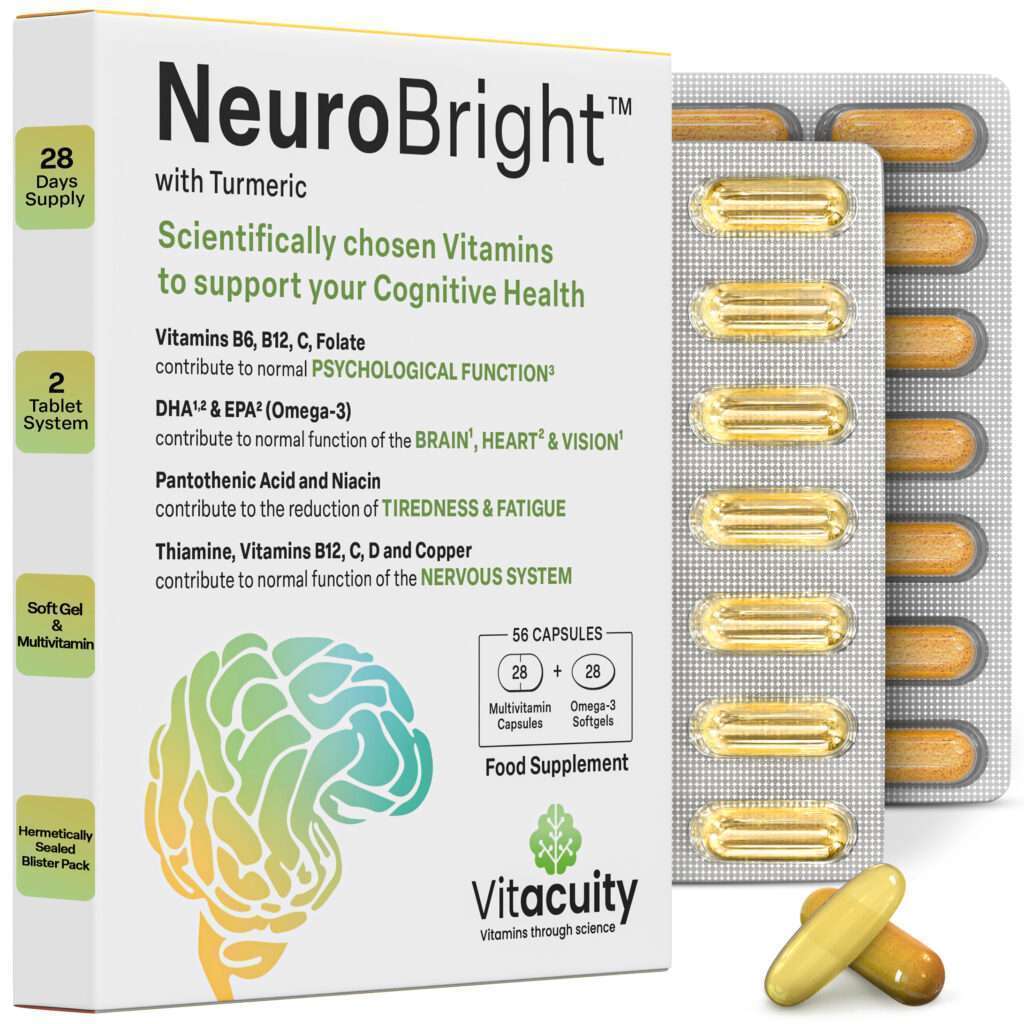
The nutrients that matter, the forms that work, and the claims to ignore.