
Magnesium L-Threonate: The Cellular Delivery Mechanism Most Forms Miss
Quick Read Most magnesium supplements don’t reach your brain effectively because they struggle to cross the blood-brain barrier, the brain’s
We write a new article on supplements every day , all detailed, with citations.
Once a week we send an email containing a list of the last 7 days articles. Please sign up and also feel free to share the articles with friends and family who you think might benefit.
Simon Parrott – Vitacuity Ltd
Brain fog, a temporary cloudiness caused by poor sleep, stress, or nutritional gaps, is far more common than early cognitive decline. Early cognitive decline is a measurable, diagnosed condition that worsens progressively. Most people over 40 worrying about occasional forgetfulness have brain fog, not brain disease.
Nutritional deficiencies drive many cognitive symptoms, particularly low B vitamins, vitamin D, and omega-3s. Research shows that targeted supplementation with these nutrients helps most when you’re actually deficient or have been diagnosed with mild cognitive impairment. Daily B vitamins, omega-3s, and vitamin D are low-risk, low-cost interventions with reasonable evidence backing their use. Improvements are more likely if deficiencies exist than if you’re already well-nourished.
If your cognitive concerns are persistent, worsening, or affecting your daily life, seek formal assessment from your GP. For typical brain fog, becoming more intentional about sleep, nutrition, and mental engagement produces measurable benefits, partly because paying attention to your brain health itself appears to help significantly.
Verdict: Most brain fog is not dementia and responds well to addressing basic nutritional gaps and sleep, but persistent or worsening symptoms warrant professional assessment to distinguish between normal ageing and genuine cognitive decline.
You walked into the kitchen and completely forgot why you went there. You spent three minutes searching for your glasses, only to find them on your head. You read the same paragraph twice and still couldn’t quite hold onto it. And somewhere in the back of your mind, a quiet question formed: *Is this just normal tiredness? Or is something actually changing in my brain?*
That question, that particular anxiety, is one of the most common things people over 40 experience but rarely talk about openly. And here’s what might surprise you: the research suggests that most people asking that question are almost certainly experiencing brain fog, not early cognitive decline. But the difference between the two matters enormously, both for peace of mind, and for what you should actually do about it. The good news is that science has been working hard on this distinction. The less comfortable news is that the research is more nuanced than most headlines would have you believe. We’ve combed through over 1.77 million research papers in the Vitacuity database and selected the most relevant studies on this topic, so here’s what we actually know.
Before we go any further, it’s worth getting clear on definitions, because the research uses very specific language that’s easy to conflate.
Brain fog isn’t a clinical diagnosis. It’s a lay term that describes a cluster of symptoms: mental cloudiness, difficulty concentrating, forgetfulness, slow thinking, fatigue. It can be caused by an enormous range of things, poor sleep, stress, nutritional deficiencies, low-grade inflammation, dehydration, thyroid issues, even medication side effects. Crucially, it tends to be *fluctuating*, it comes and goes, often correlating with lifestyle factors. It doesn’t progressively worsen over time in the way that neurodegeneration does.
Mild Cognitive Impairment (MCI), by contrast, is a clinical diagnosis. It’s defined as a measurable, objective decline in one or more cognitive domains, memory, language, attention, processing speed, or executive function, that goes beyond what you’d expect for someone’s age, but doesn’t yet interfere significantly with daily life [4][5]. MCI is recognised in research as a risk factor for dementia-related disorders [4], though critically, it does not inevitably lead to dementia, many people with MCI remain stable or even improve.
Then there’s a third category that features prominently in recent research: Subjective Cognitive Decline (SCD), where someone *feels* their cognition has worsened, but objective neuropsychological tests don’t yet confirm it [14]. SCD is now taken seriously by researchers as a potential early signal worth monitoring, even if it hasn’t crossed the threshold into diagnosable MCI.
Understanding these distinctions matters because, as one 2023 paper in the American Journal of Clinical Nutrition pointed out, researchers have found that combining people with subjective memory complaints with those who have an MCI diagnosis in clinical trials leads to muddied results, because they are fundamentally different populations with different trajectories [10]. If researchers can’t always tell the difference clearly enough to design good studies, it’s no wonder the rest of us feel confused.
One of the most striking datasets on this question comes from the National Alzheimer’s Coordinating Center in the US, which tracked over 9,500 adults aged 55 and over, categorised as having either normal cognition, MCI, or dementia [3].
What’s notable is just how many people in all three groups were actively taking dietary supplements, 76.6% of those with normal cognition, 73.9% with MCI, and 69.6% with dementia [3]. The gradual decline in supplement use across those categories is interesting, suggesting that people may become less proactive about their health as cognitive difficulties progress, or that the ability to manage self-care diminishes. Either way, the data makes clear: a huge proportion of cognitively healthy older adults are already supplementing. The question is whether they’re doing so with the right things.
Importantly, the data also showed that vitamin B12 and melatonin use was actually *higher* in the MCI and dementia groups than in those with normal cognition [3]. This likely reflects therapeutic use, people responding to symptoms, rather than prevention. It’s a reminder that supplementation patterns can tell us something about what people are noticing in themselves.
Evidence grade: Promising to Conflicted, consistent signal, but study designs vary significantly
A comprehensive 2026 narrative review covering 19 studies published between 2003 and 2023 found that daily multivitamin supplementation was associated with cognitive improvements, particularly in memory, global cognition, and attention, but mainly in people who had baseline nutritional deficiencies or mild cognitive impairment [1][13]. In well-nourished, healthy populations, results were often neutral.
This is actually a really important finding, even though it’s often reported as disappointing. What it’s telling us is that for people experiencing cognitive symptoms driven by nutritional deficiency, which is *extremely common*, particularly in adults over 50, targeted supplementation can make a meaningful difference. B-complex vitamins and antioxidant-rich formulas showed the most promising effects [1][13].
A separate 2024 systematic review of 33 primary studies reinforced this picture, finding that vitamin D, probiotics, and polyunsaturated fatty acids (PUFAs) showed the most consistent evidence for reducing cognitive decline, while vitamins A, B, C, and E appeared relatively less effective *on their own* [9]. The exception? B vitamins showed positive effects specifically in non-aspirin users who also had high omega-3 plasma levels [9], a fascinating interaction that hints at why the research is so inconsistent. Nutrients don’t work in isolation. The context of your whole nutritional status matters.
Evidence grade: Promising, multiple studies, but results are inconsistent across populations
A 2026 network meta-analysis, one of the most rigorous study designs because it compares multiple interventions simultaneously, found that DHA (docosahexaenoic acid, the omega-3 found in oily fish) was beneficial for improving memory and processing speed in people with healthy ageing and MCI [2][15]. Folic acid combined with DHA also showed memory benefits [2][15].
An earlier 2020 systematic review of clinical trials found that two out of four omega-3 studies showed significant benefits in cognitive domains including working memory, perceptual speed, and even prevention of hippocampal atrophy, the shrinkage of the brain’s memory centre that is closely associated with Alzheimer’s disease [11]. The two studies that showed no benefit tended to involve populations who were either already well-nourished with omega-3s or who had progressed beyond MCI to diagnosable dementia [11]. This pattern, that interventions work best earlier, and work best when you’re actually deficient, appears again and again across the research.
A 2017 review summed up the mechanism clearly: omega-3 fatty acids (particularly DHA and EPA) are thought to support cognitive function through their role in maintaining neuronal membrane permeability and function [6]. Your brain is roughly 60% fat, and DHA is one of its primary structural components. If your diet is chronically low in it, your brain’s physical infrastructure is likely compromised.
Evidence grade: Promising, good mechanistic data, human trial results mixed
One of the most plausible biological pathways connecting nutrition to cognitive decline involves homocysteine, an amino acid that accumulates in the blood when B vitamin levels (particularly B6, B12, and folate) are low. Elevated homocysteine is associated with damage to blood vessels and neurons, and has been proposed as a marker of cognitive risk.
The 2026 network meta-analysis confirmed that supplementation with folic acid, B12, and B6, individually or in combination, resulted in meaningful improvements in blood biomarkers including homocysteine reduction, B12 levels, and folate levels [2][15]. A 2018 systematic review of 38 trials found that daily folic acid plus B12 was associated with statistically significant improvements in some memory tests, though the reviewers cautioned the clinical significance was “questionable” [7].
An earlier 2010 review found “mixed evidence” for B vitamins in cognitive ageing, noting they required further investigation [8], and over a decade later, that assessment hasn’t entirely changed. What we can say with more confidence now is that the benefit appears most pronounced in people with elevated homocysteine or existing deficiency, and that the interaction with omega-3 status matters [9].
For people experiencing brain fog, this is worth taking seriously. B12 deficiency in particular is remarkably common in adults over 50, the stomach produces less intrinsic factor with age, reducing B12 absorption from food, and its symptoms include exactly the kind of cognitive fog, fatigue, and memory difficulty that people worry about.
Evidence grade: Promising, small but rigorous trials showing measurable effects on validated cognitive tests
For people who have crossed from subjective concern into diagnosable MCI, the research picture becomes more specific, and arguably more encouraging.
A 2026 randomised, double-blind, placebo-controlled trial of 72 older adults (mean age 73.5 years) with MCI tested nucleotide-rich extracts from two yeast strains (*Kluyveromyces fragilis* and *Saccharomyces cerevisiae*) over 180 days [5]. The results were striking: MoCA scores (a standard cognitive screening tool) increased by 4.42 and 3.92 points in the two active groups respectively, compared to just 0.58 points in the placebo group (p<0.001) [5]. MMSE scores, another validated cognitive assessment, also improved significantly. Quality of life mental component scores rose by 7.50 to 9.16 points in the active groups [5]. No adverse events were reported. The researchers cautiously noted that larger multicenter trials are needed to confirm these findings, but for a pilot study, the effect sizes are noteworthy.
A separate 2026 pilot RCT involving 54 patients with mild to moderate MCI tested a nutraceutical formulation called GeNeurofil™ over six months [4]. Not only did clinical and psychometric scores improve, but the treatment group also showed reduced plasma levels of two key biomarkers of neurodegeneration: neurofilament light chain (NfL) and phosphorylated tau protein (p-TAU), both of which are associated with active neuronal damage [4]. This is significant because it suggests the supplement wasn’t just improving cognitive test scores (which can be influenced by practice effects or placebo), but was associated with measurable biological changes in the right direction. As a pilot study of 54 participants, this needs larger replication, but the biomarker data is scientifically interesting.
Evidence grade: Early stage to Promising, SCD is a recognised category, but intervention research is immature
What about people who feel cognitively different but aren’t yet formally diagnosable? A 2024 randomised controlled trial enrolled 80 people with Subjective Cognitive Decline (SCD) and tested citrus peel extract (containing naringenin and auraptene) against placebo over 36 weeks [14]. The result? Both groups improved on cognitive testing, but there was no significant difference between them [14]. The researchers noted a “high placebo response” as a likely explanation: people who enrol in cognitive studies tend to pay more attention to their brains, sleep better, reduce stress, and engage more with mental activity, all of which improve cognition regardless of what they’re taking [14].
This is actually a useful finding. It suggests that if you have subjective cognitive concerns, the act of becoming more intentional about your brain health, regardless of which specific supplement you take, may itself drive improvement. The placebo response in cognitive studies is notably strong.
It also highlights a methodological issue that researchers are increasingly grappling with: people with SCD are very different from people with MCI, and mixing them together in trials leads to confusing results [10]. Future research needs to treat these populations separately.
Let’s be genuinely honest here, because there’s quite a lot the research hasn’t settled.
We don’t have a reliable way to distinguish brain fog from early MCI at home. The only way to know for certain is a formal neuropsychological assessment, which involves validated tests administered by a trained clinician, not a quick online quiz. If you have persistent, progressive cognitive concerns, particularly if they’re affecting daily function, that assessment is worth seeking.
Most positive supplement findings are in people who are already deficient or already have MCI. The evidence for supplements preventing cognitive decline in otherwise healthy, well-nourished adults is weak to non-existent [7]. Supplements are not a magic shield against ageing for people who are already well-nourished.
Study designs are all over the place. The 2026 narrative review noted that variability in supplement composition, assessment tools, dosages, and study duration were key reasons why results are inconsistent [1][13]. Two studies testing “B vitamins” might be testing completely different formulations at completely different doses in completely different populations, making direct comparison impossible.
Long-term data is almost completely absent. Nearly all positive trials run for six months to a year. We have very little evidence about what decades of consistent supplementation does to cognitive trajectories [2][15]. This is an enormous gap.
The interaction between nutrients matters enormously, but is poorly understood. The finding that B vitamins only worked in non-aspirin users with high omega-3 levels [9] is a glimpse into a vastly complex system we’re only beginning to map.
The placebo response in cognitive trials is unusually high, particularly in people with subjective cognitive decline [14], which makes it genuinely difficult to know how much of any benefit is pharmacological versus behavioural.
So what should a sensible, informed person actually do with all of this?
First: don’t catastrophise the kitchen moment. If your brain fog is fluctuating, worse when you’re tired, stressed, or busy, better on a good night’s sleep, that’s overwhelmingly likely to be brain fog, not neurodegeneration. Genuine early cognitive decline tends to be more consistent, more progressive, and to involve people around you noticing changes you might not notice yourself.
Second: take your nutritional status seriously. The research signal is clear and consistent, cognitive symptoms are frequently driven or worsened by nutritional deficiencies, particularly B12, folate, vitamin D, and omega-3s. These are not exotic supplements. They are nutrients your brain genuinely needs, and deficiency in them is common, especially over 50.
Here’s how to think about it practically:
– B vitamins (B6, B12, folate): Water-soluble, so excess is excreted in urine, there’s no meaningful risk to supplementing daily. B12 deficiency is particularly common in older adults due to reduced absorption with age, and its symptoms map almost perfectly onto what people describe as brain fog. Supplement daily. Safe. Excess excreted. Don’t overthink this one.
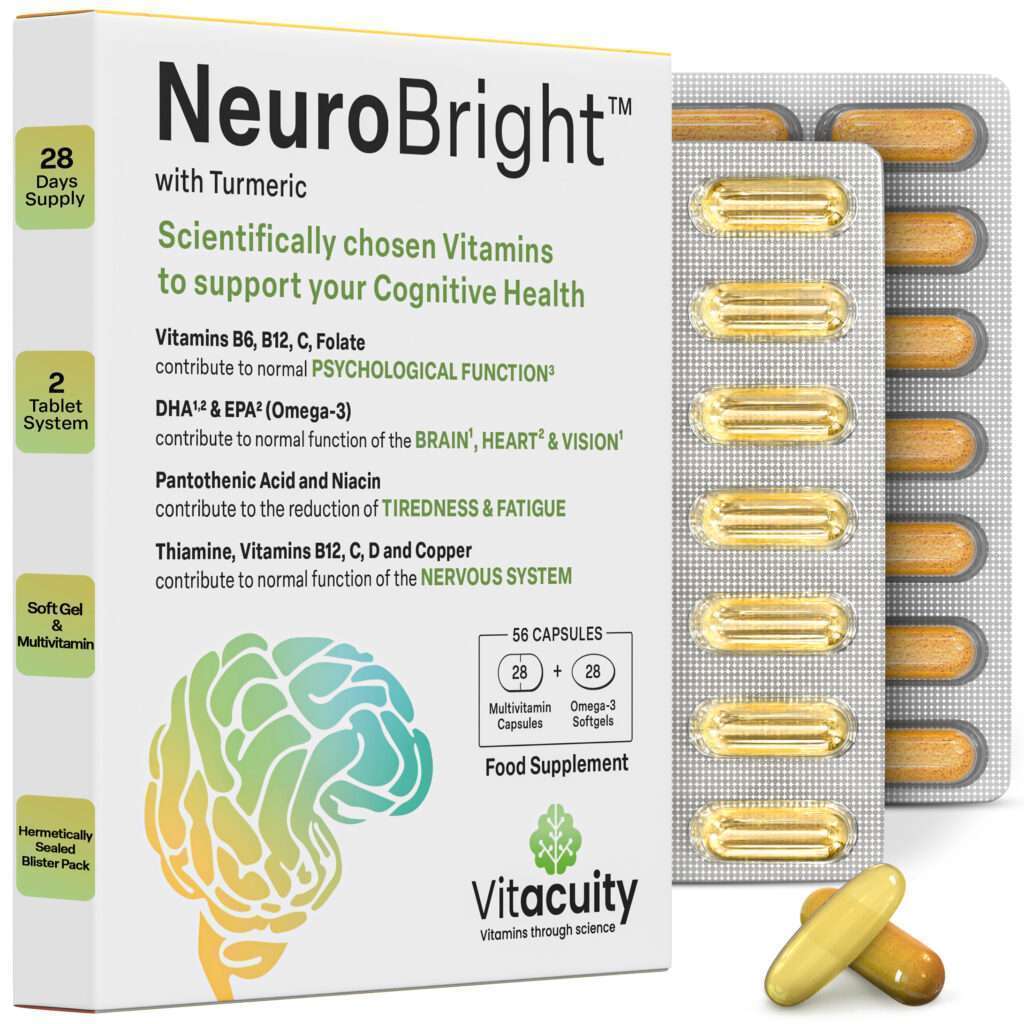
– Omega-3s (DHA/EPA): The evidence for memory and processing speed is among the most consistent in this space [2][11][15]. Unless you’re eating oily fish three times a week, a daily DHA/EPA supplement is a low-cost, low-risk intervention with a plausible mechanism and reasonable human trial support.
– Vitamin D: Deficiency is endemic in the UK, particularly in winter months. The 2026 meta-analysis found vitamin D3 was associated with improvements in visuospatial cognitive function [2][15]. At doses of 1,000–4,000 IU, the risk of toxicity is negligible. Supplement confidently, especially in autumn and winter.
– Melatonin and sleep: The same 2026 meta-analysis found melatonin alone significantly enhanced global cognitive function [2][15], and the NACC dataset showed melatonin use was notably higher in MCI and dementia groups [3], suggesting it’s something people reach for as cognition declines. Prioritising sleep quality is not optional for brain health.
Third: if your symptoms are persistent, progressive, or affecting daily function, get assessed. Not to alarm yourself, but because knowing whether you have MCI versus brain fog from nutritional depletion allows you to respond appropriately. GP referral to a memory clinic is available on the NHS, and neuropsychological testing gives you a baseline you can track over time.
Fourth: becoming intentional about brain health probably helps in itself, the strong placebo response in cognitive studies [14] tells us that people who pay attention to their brains, sleep, eat better, and engage more cognitively do better, regardless of which specific supplement they’re taking. That’s not a reason to avoid supplements. It’s a reason to think of supplementation as part of a broader commitment to your cognitive health, not a shortcut to bypass it.
The bottom line: most brain fog is not early dementia. But it is your brain asking for something. The evidence suggests that something is often quite basic, better sleep, more omega-3s, adequate B vitamins, enough vitamin D, and that addressing those fundamentals is worth doing not just because trials say so, but because the downside risk of trying is essentially zero and the upside is real.
[1] Multivitamins and cognitive health in older adults: bridging evidence, gaps, and controversies, a comprehensive narrative review (2026). DOI: 10.1097/MS9.0000000000004720 | https://pubmed.ncbi.nlm.nih.gov/41675823/ | https://www.ncbi.nlm.nih.gov/pmc/articles/PMC12889344/
[2] Nutritional supplements and cognition in healthy aging and mild cognitive impairment patients: a systematic review and network meta-analysis (2026). DOI: 10.1016/j.tjpad.2026.100518 | https://pubmed.ncbi.nlm.nih.gov/41764841/
[3] Prevalence of Reported Dietary Supplement Use in 2019 Older Adult (≥55 Years) National Alzheimer’s Coordinating Center Participants With Normal Cognition, Mild Cognitive Impairment or Dementia (2025). DOI: 10.1111/jhn.70049 | https://pubmed.ncbi.nlm.nih.gov/40170292/ | https://www.ncbi.nlm.nih.gov/pmc/articles/PMC12481669/
[4] The impact of GeNeurofil™ nutraceutical supplementation on psychometric assessment and biomarkers of neurodegeneration in cognitive impaired patients: a pilot study (2026). DOI: 10.1038/s41430-026-01791-6 | https://pubmed.ncbi.nlm.nih.gov/42521767/ | https://www.ncbi.nlm.nih.gov/pmc/articles/PMC13558051/
[5] Effects of Nucleotide-Rich Kluyveromyces fragilis and Saccharomyces cerevisiae Yeast Extracts on Cognitive Function in Older Adults with Mild Cognitive Impairment: A Randomized Placebo-Controlled Trial (2026). DOI: 10.3390/nu18121869 | https://pubmed.ncbi.nlm.nih.gov/42356257/ | https://www.ncbi.nlm.nih.gov/pmc/articles/PMC13304835/
[6] Dietary supplements for cognitive impairment (2017). https://pubmed.ncbi.nlm.nih.gov/29171642/
[7] Over-the-Counter Supplement Interventions to Prevent Cognitive Decline, Mild Cognitive Impairment, and Clinical Alzheimer-Type Dementia: A Systematic Review (2018). DOI: 10.7326/M17-1530 | https://pubmed.ncbi.nlm.nih.gov/29255909/
[8] Supplementing cognitive aging: a selective review of the effects of ginkgo biloba and a number of everyday nutritional substances (2010). https://pubmed.ncbi.nlm.nih.gov/20054730/
[9] Supplementation and Mitigating Cognitive Decline in Older Adults With or Without Mild Cognitive Impairment or Dementia: A Systematic Review (2024). DOI: 10.3390/nu16203567 | https://pubmed.ncbi.nlm.nih.gov/39458561/ | https://www.ncbi.nlm.nih.gov/pmc/articles/PMC11509913/
[10] In randomized controlled trials with nutrient supplementation, participants with subjective memory complaints should not be combined with those having a mild cognitive impairment diagnosis (2023). DOI: 10.1016/j.ajcnut.2023.08.027 | https://pubmed.ncbi.nlm.nih.gov/37867132/
[11] Dietary interventions and cognition: A systematic review of clinical trials (2020). DOI: 10.22365/jpsych.2020.313.248 | https://pubmed.ncbi.nlm.nih.gov/33099465/
[12] Preserving cognitive function (2022). DOI: 10.1016/j.ctim.2022.102859 | https://pubmed.ncbi.nlm.nih.gov/35850155/
[13] Multivitamins and cognitive health in older adults: bridging evidence, gaps, and controversies, a comprehensive narrative review (2026) [same paper as [1]]. DOI: 10.1097/MS9.0000000000004720 | https://pubmed.ncbi.nlm.nih.gov/41675823/ | https://www.ncbi.nlm.nih.gov/pmc/articles/PMC12889344/
[14] Citrus supplementation in subjective cognitive decline: results of a 36-week, randomized, placebo-controlled trial (2024). DOI: 10.1186/s12937-024-01039-8 | https://pubmed.ncbi.nlm.nih.gov/39482712/ | https://www.ncbi.nlm.nih.gov/pmc/articles/PMC11529263/
[15] Nutritional supplements and cognition in healthy aging and mild cognitive impairment patients: a systematic review and network meta-analysis (2026) [same paper as [2]]. DOI: 10.1016/j.tjpad.2026.100518 | https://pubmed.ncbi.nlm.nih.gov/41764841/
This article is for informational purposes only and does not constitute medical advice. Food supplements should not be used as a substitute for a varied and balanced diet and healthy lifestyle. If you are pregnant, breastfeeding, taking medication or have a medical condition, consult your doctor before taking any supplement. These statements have not been evaluated by the Food and Drug Administration (FDA) or the Medicines and Healthcare products Regulatory Agency (MHRA). This product is not intended to diagnose, treat, cure, or prevent any disease.
Quick Read Most magnesium supplements don’t reach your brain effectively because they struggle to cross the blood-brain barrier, the brain’s
Quick Read EPA and DHA are two distinct omega-3 fatty acids with different jobs in your brain. DHA is physically
The nutrients that matter, the forms that work, and the claims to ignore.