The Supplement Timing Question — Does When You Take Them Actually Matter?
Quick Read When you take supplements matters far less than whether you take them consistently. Most supplements work by building
We write a new article on supplements every day , all detailed, with citations.
Once a week we send an email containing a list of the last 7 days articles. Please sign up and also feel free to share the articles with friends and family who you think might benefit.
Simon Parrott – Vitacuity Ltd
Your brain begins shrinking in your thirties as neurons die and connections weaken. This process can accelerate dramatically in some people, but research suggests three nutrients may slow it significantly. A compound called homocysteine acts as a slow poison to brain tissue and can be lowered safely with B vitamins, while omega-3 fatty acids protect the neural “wiring,” and vitamin D supports brain protection through reducing inflammation.
B vitamins show the strongest evidence. A landmark study found that high-dose B vitamins (folic acid, B6, and B12) slowed brain shrinkage compared to placebo, and in people with elevated homocysteine, B vitamins reduced grey matter loss in brain regions vulnerable to Alzheimer’s disease by up to seven times. Omega-3 fatty acids consistently showed associations with larger hippocampus volume and better memory, with benefits strongest when omega-3 intake began in midlife. Vitamin D ranked among the top three nutrients in a review of 33 studies for reducing cognitive decline, though its evidence is less developed than the others.
All three nutrients work best together, and starting supplementation in your 40s and 50s appears more effective than waiting for memory problems. B vitamins, omega-3 fish oil, and vitamin D supplementation are inexpensive, safe, and widely available, making them practical investments in long-term brain health.
Verdict: Three nutrients, B vitamins, omega-3 fatty acids, and vitamin D, show promising to strong evidence for slowing brain shrinkage with age, particularly when started in midlife and taken together.
Here’s something most people don’t know: your brain starts shrinking in your thirties. Not dramatically, not all at once, but steadily, quietly, year by year, the brain you rely on for memory, focus, decision-making and emotional resilience is losing volume. By the time most people notice something is wrong, that process has been underway for decades. What if the most powerful thing you could do about it isn’t a prescription drug, a cutting-edge medical procedure, or even a radical lifestyle overhaul, but three nutrients you could start taking this week? The research is more compelling than most people realise. And it’s more specific than vague advice to “eat well.” From the Vitacuity database of over 1.77 million research papers, we identified 15 of the most relevant studies on this topic. Here’s what they actually say.
To understand why certain nutrients matter, you need to understand what brain shrinkage actually is, and why it accelerates in some people far more than others.
The technical term is brain atrophy. As we age, neurons die and aren’t replaced, synaptic connections weaken, and the grey matter (the thinking tissue of your brain) and white matter (the connective wiring between regions) both begin to shrink in volume [13]. A 2021 narrative review published in *Ageing Research Reviews* confirmed that literally all regions of the brain experience atrophy with age, but crucially, the *pattern* and *rate* of that atrophy determine whether it becomes cognitively devastating or merely a background process of normal ageing [13]. The hippocampus, your brain’s memory centre, is particularly vulnerable.
One of the key mechanisms driving accelerated atrophy is a compound called homocysteine. When homocysteine levels in the blood run high (a condition called hyperhomocysteinaemia), it acts like a slow poison to brain tissue, directly accelerating grey matter loss in the very regions most vulnerable to Alzheimer’s disease, including the medial temporal lobe [14]. The good news? Homocysteine can be lowered predictably and safely with B vitamins. The brain’s white matter integrity, the quality of the neural “wiring”, is also heavily influenced by what you eat, particularly your intake of omega-3 fatty acids [4].
A second key mechanism is what researchers call one-carbon (1C) metabolism, a fundamental metabolic network that governs DNA methylation, cell repair, and neurotransmitter production [2]. When this network is undernourished (specifically when it’s short of folate, B12, and choline), the brain pays a long-term price. And a third mechanism is simple structural maintenance: your brain’s neurons and synapses are built from phospholipids, fatty membrane structures, that require a constant supply of omega-3 fatty acids, choline, and B vitamins just to stay intact [12].
This is why nutritional researchers keep arriving at the same three categories: B vitamins, omega-3 fatty acids, and vitamin D. Let’s look at each in turn.
This is where the research gets genuinely remarkable, and unusually specific.
In 2010, a landmark randomised controlled trial published in *PLOS ONE* enrolled older adults with mild cognitive impairment (MCI) and measured their rate of brain atrophy using MRI over a two-year period [15]. Half received high-dose B vitamins (folic acid 0.8mg, B6 20mg, B12 0.5mg daily); half received placebo. The result was striking: B-vitamin treatment significantly slowed the rate of whole brain atrophy compared to placebo [15].
But that was just the beginning. A follow-up study published in 2013 in the *Proceedings of the National Academy of Sciences* took this further by looking not just at whole-brain volume, but at the *specific grey matter regions* most associated with Alzheimer’s disease [14]. In the placebo group, people with higher homocysteine levels at baseline showed the fastest grey matter loss in those regions. The B-vitamin group showed up to a seven-fold reduction in grey matter atrophy in those same vulnerable areas [14]. The study also demonstrated, using Bayesian network analysis, a clear causal chain: B vitamins lower homocysteine → lower homocysteine reduces grey matter atrophy → slower grey matter atrophy correlates with slowed cognitive decline [14]. This is one of the most compelling mechanistic chains in the nutritional neuroscience literature.
A smaller cross-sectional study published in 2008, using high-resolution MRI and voxel-based morphometry (a technique that maps brain volume region by region), found that adults aged 59–79 with greater vitamin B6 intake had significantly greater grey matter volume in key regions including the anterior cingulate cortex, middle temporal gyrus, and superior frontal gyrus [9]. Greater B12 intake was associated with more grey matter volume in the superior parietal sulcus [9]. Importantly, this study involved 32 participants and the effects were driven by supplementation rather than dietary intake alone, suggesting that food sources may not be sufficient to achieve the protective dose [9].
A 2023 review on one-carbon metabolism reinforced why these findings make biological sense [2]. Folate, B12, and choline all feed into the same metabolic network that governs DNA methylation and neuronal repair. When any one of these is deficient, the whole system runs less efficiently, and the brain bears the cost [2].
Evidence grade: Strong for homocysteine-lowering and brain atrophy reduction. Promising for specific grey matter preservation. This is among the best-supported nutritional interventions for brain health in the existing literature.
Your brain is roughly 60% fat, and a significant proportion of that fat is DHA (docosahexaenoic acid), one of the two key omega-3 fatty acids found in fish oil. This isn’t incidental. DHA is structurally woven into every neuron membrane and every synapse in your brain [12]. Without adequate DHA, the brain’s ability to maintain and repair itself is fundamentally compromised.
A 2023 observational study published in *Brain Sciences* followed 40 cognitively healthy older adults (mean age 76.3 years) who completed neurocognitive testing, blood draws for omega-3 levels, and structural brain MRI [3]. Higher EPA (eicosapentaenoic acid) and omega-3 index were significantly associated with better delayed memory recall and faster processing speed [3]. Both EPA and DHA were associated with greater total white matter volume, and EPA correlated specifically with greater entorhinal cortex thickness, a region critical for memory formation [3]. The entorhinal cortex, frontal pole, and total white matter volume in turn predicted higher scores on delayed memory recall [3].
A separate 2023 study published in *Cerebral Cortex* went further by asking whether omega-3 intake earlier in life, specifically midlife, predicts brain microstructure decades later [4]. Researchers followed 128 participants from the Rancho Bernardo Study of Healthy Aging, examining dietary omega-3 intake between 1984 and 1996, then measuring brain microstructure with advanced MRI (restriction spectrum imaging) an average of 22.8 years later. Higher midlife omega-3 intake was associated with greater structural integrity in key white matter tracts including the superior cortico-striatal fasciculus and the cingulum [4]. The effect was most pronounced in participants over 80 and in carriers of the APOE ε4 gene, the strongest known genetic risk factor for Alzheimer’s disease [4]. These associations held after adjusting for overall dietary pattern, health, and lifestyle factors [4].
A 2021 narrative review in *Ageing Research Reviews* examined 12 studies (8 cross-sectional, 3 longitudinal, 1 RCT) on omega-3 and brain volume in cognitively intact older adults [13]. The most consistent finding across studies was that higher omega-3 levels were associated with greater hippocampal volume [13]. Greater total grey matter volume, total brain volume, and lower white matter lesion volume were also associated with higher omega-3 levels in four of the reviewed studies [13]. The authors were appropriately cautious, noting that findings were brain-region dependent and that the field is not yet at the point of making firm clinical recommendations [13].
A 2024 systematic review in *Nutrients*, covering 33 primary studies and two decades of literature, concluded that supplementation with PUFAs (polyunsaturated fatty acids, including omega-3s) was among the most likely interventions to reduce cognitive decline, dementia, or Alzheimer’s disease in adults aged 65 and over [1].
Evidence grade: Promising to strong. Cross-sectional and longitudinal observational data are consistent and compelling. Randomised controlled trial evidence in humans is still limited. The mechanistic rationale is very well-established.
Most people know vitamin D as the “sunshine vitamin” for bones. Far fewer realise that vitamin D receptors are found throughout the brain, in the hippocampus, cerebellum, and cerebral cortex, and that deficiency in older adults is both extremely common and associated with worse cognitive outcomes [7].
A 2018 review in the *Proceedings of the Nutrition Society* noted “emerging evidence supporting a protective role” for vitamin D in brain health as part of a broader dietary analysis of nutrients and the ageing brain [7]. The 2024 systematic review in *Nutrients*, covering three decades of research across 33 trials, identified vitamin D supplementation alongside PUFAs and probiotics as the category most likely to reduce cognitive decline in older adults, ranking it above vitamins A, B, C, and E in this analysis [1]. This is a notable finding and worth sitting with: vitamin D, not the B vitamins or antioxidants that get more attention, came out among the top three in this large review.
The mechanistic logic is sound. Vitamin D supports neuroprotection by reducing neuroinflammation, supporting calcium signalling in neurons, and promoting the clearance of amyloid, the protein that accumulates in Alzheimer’s disease [1]. The challenge is that this area of research involves mostly observational data and shorter-duration trials, with fewer long-term RCTs than the B-vitamin literature. But the consistent signal across many studies, and the extraordinary prevalence of vitamin D deficiency in the UK population, particularly in winter months, makes this a practically significant finding.
Evidence grade: Promising. Consistent signal across observational and intervention studies, strong mechanistic rationale, but long-term RCT evidence in brain health specifically is still developing.
One finding from the literature deserves special attention because it changes how you should think about supplementation.
The 2024 systematic review noted something important: positive effects of B vitamin supplementation on cognitive decline were “only observed in non-aspirin users having high omega-3 fatty acid plasma levels” [1]. This is not a minor footnote. It suggests that B vitamins and omega-3s may work *synergistically*, that B vitamins are most effective at protecting the brain when omega-3 levels are already adequate. A 2025 review in *Nutrients* echoed this, noting that “multinutrient supplementation, particularly combinations of B vitamins and omega-3 fatty acids, appears beneficial for episodic memory” [5].
This aligns with the broader picture from the synaptic maintenance literature. A 2014 review in *Drugs & Aging* explained the mechanism clearly: synapses are built from phospholipids derived from choline, omega-3 fatty acids, and uridine monophosphate, with B vitamins acting as essential cofactors in the synthesis process [12]. If you’re short on omega-3s, the B vitamins don’t have the raw materials they need to do their job. Both are needed.
Evidence grade: Promising. The interaction finding is important but based on subgroup analysis within trials, it needs dedicated combination-therapy RCTs to confirm. The mechanistic logic is strong.
Honesty matters here. The research is genuinely exciting, but it has real limitations.
Sample sizes are often small. The 2008 B6/B12 brain volume study had only 32 participants [9]. The 2023 omega-3 brain volume study had 40 [3]. Cross-sectional studies can’t establish causation. Most of the omega-3 brain MRI studies were observational, not randomised trials [13].
The vitamin D evidence is the weakest of the three. Despite consistent observational associations and a plausible mechanism, there are no long-term RCTs specifically designed to test whether vitamin D supplementation prevents brain atrophy or reduces dementia risk at population scale. The 2024 review that ranked vitamin D highly was drawing on a heterogeneous mix of studies, and the authors themselves noted that “a gross heterogeneity of studies forbids the possibility of a direct comparison of the results” [1].
B vitamin benefits appear conditional. The 2013 Oxford study, the most compelling piece of evidence for B vitamins, found significant benefits only in participants with elevated homocysteine levels (above 11 µmol/L) [14]. In those with normal homocysteine, the effect was not significant. This matters practically: if your homocysteine is already well-controlled, B vitamins may not produce the same dramatic structural protection. The 2024 review also flagged that B vitamin benefits were limited to non-aspirin users with high omega-3 levels [1].
The omega-3 timing question. The 2023 Rancho Bernardo study found that *midlife* omega-3 intake predicted brain microstructure two decades later [4], which raises the uncomfortable possibility that starting in your 50s or 60s may be less effective than starting in your 40s. We don’t yet have enough data to know the optimal window.
Genotype matters. Some individuals respond differently to B vitamins depending on genetic variants (particularly MTHFR polymorphisms that affect folate metabolism) [1]. The omega-3 study also found that APOE ε4 carriers may benefit disproportionately from omega-3 [4]. Personalised nutrition is the direction the field is moving, but we’re not there yet for population-level recommendations.
So, what would a sensible, well-informed person actually do with all of this?
Here’s the practical reality: brain atrophy begins decades before symptoms appear. The window for meaningful intervention is not when memory problems start, it’s now, in your 40s and 50s. And the three most evidence-supported nutritional levers, B vitamins, omega-3s, and vitamin D, are all safe, inexpensive, and widely available.
On B vitamins: The B vitamins involved in this research, folate (B9), B6, and B12, are water-soluble, which means excess is excreted in your urine. There is no meaningful toxicity risk at the doses studied. The dose used in the landmark Oxford trials was folic acid 0.8mg, B6 20mg, B12 0.5mg daily [14, 15]. If you’re over 40, supplementing a quality B-complex that hits these ranges is a safe, practical default. The caveat worth knowing: if you have elevated homocysteine (a simple blood test), the evidence for benefit is strongest. If you’re on aspirin regularly, speak to your GP, the 2024 review flagged a potential interaction [1].
On omega-3s: The evidence points consistently to EPA and DHA from fish oil as the relevant forms, not ALA from flaxseed. A daily omega-3 supplement providing at least 1g combined EPA and DHA is reasonable based on the literature. The Rancho Bernardo data suggesting midlife intake matters [4] is an argument for starting now, not waiting. Omega-3 is safe at normal supplement doses, well-tolerated, and inexpensive.
On vitamin D: In the UK, the vast majority of people are deficient from October to April, and many are deficient year-round. The NHS already recommends supplementation for the general population in winter. For brain health purposes, 1,000–2,000 IU daily is a safe, practical dose. Vitamin D at normal supplementation doses is extremely hard to overdose on, deficiency is far more common and harmful than excess. Supplement daily through autumn and winter at minimum; many people benefit from year-round supplementation.
The combination point matters. If the research showing that B vitamins work best when omega-3 levels are adequate is correct [1, 5], then supplementing one without the other may mean leaving a significant proportion of the benefit on the table. Take them together.
This isn’t a guarantee against cognitive decline. No supplement is. But based on the totality of the evidence, including a 7-fold reduction in grey matter atrophy in vulnerable brain regions from B vitamins alone [14], consistent associations between omega-3 and hippocampal volume [13], and vitamin D appearing in the top tier of a 33-study systematic review [1], these three nutrients represent the most cost-effective, safe, and evidence-supported nutritional investment you can make in your brain’s long-term future.
Start now. The research suggests the earlier, the better.
[1] Supplementation and Mitigating Cognitive Decline in Older Adults With or Without Mild Cognitive Impairment or Dementia: A Systematic Review. (2024). *Nutrients*, 16(20), 3567. DOI: https://doi.org/10.3390/nu16203567 | PubMed: https://pubmed.ncbi.nlm.nih.gov/39458561/ | PMC: https://www.ncbi.nlm.nih.gov/pmc/articles/PMC11509913/
[2] The Role of One-Carbon Metabolism in Healthy Brain Aging. (2023). *Nutrients*, 15(18), 3891. DOI: https://doi.org/10.3390/nu15183891 | PubMed: https://pubmed.ncbi.nlm.nih.gov/37764675/ | PMC: https://www.ncbi.nlm.nih.gov/pmc/articles/PMC10537016/
[3] Omega-3 Fatty Acids, Cognition, and Brain Volume in Older Adults. (2023). *Brain Sciences*, 13(9), 1278. DOI: https://doi.org/10.3390/brainsci13091278 | PubMed: https://pubmed.ncbi.nlm.nih.gov/37759879/ | PMC: https://www.ncbi.nlm.nih.gov/pmc/articles/PMC10526215/
[4] Midlife omega-3 fatty acid intake predicts later life white matter microstructure in an age- and APOE-dependent manner. (2023). *Cerebral Cortex*, 33(3). DOI: https://doi.org/10.1093/cercor/bhac196 | PubMed: https://pubmed.ncbi.nlm.nih.gov/35584792/ | PMC: https://www.ncbi.nlm.nih.gov/pmc/articles/PMC9977375/
[5] Effects of Dietary Interventions on Cognitive Outcomes. (2025). *Nutrients*, 17(12), 1964. DOI: https://doi.org/10.3390/nu17121964 | PubMed: https://pubmed.ncbi.nlm.nih.gov/40573075/ | PMC: https://www.ncbi.nlm.nih.gov/pmc/articles/PMC12196293/
[6] Supplementing cognitive aging: a selective review of the effects of ginkgo biloba and a number of everyday nutritional substances. (2010). PubMed: https://pubmed.ncbi.nlm.nih.gov/20054730/
[7] Diet, nutrition and the ageing brain: current evidence and new directions. (2018). *Proceedings of the Nutrition Society*, 77(2). PubMed: https://pubmed.ncbi.nlm.nih.gov/29316987/
[8] Nutrients, age and cognitive function. (1998). *Current Opinion in Clinical Nutrition and Metabolic Care*, 1(6). DOI: https://doi.org/10.1097/00075197-199811000-00017 | PubMed: https://pubmed.ncbi.nlm.nih.gov/10565413/
[9] Greater intake of vitamins B6 and B12 spares gray matter in healthy elderly: a voxel-based morphometry study. (2008). PubMed: https://pubmed.ncbi.nlm.nih.gov/18281020/
[10] Alzheimer’s disease, amnestic mild cognitive impairment, and age-associated memory impairment: current understanding and progress toward integrative prevention. (2008). PubMed: https://pubmed.ncbi.nlm.nih.gov/18590347/
[11] Can Nutritional Adequacy Help Evade Neurodegeneration in Older Age? A Review. (2020). *Cureus*, 12(10), e10921. DOI: https://doi.org/10.7759/cureus.10921 | PubMed: https://pubmed.ncbi.nlm.nih.gov/33062461/ | PMC: https://www.ncbi.nlm.nih.gov/pmc/articles/PMC7556684/
[12] Rationale and clinical data supporting nutritional intervention in Alzheimer’s disease. (2014). *Drugs & Aging*, 31(3). PubMed: https://pubmed.ncbi.nlm.nih.gov/24635394/
[13] Associations of Omega-3 fatty acids with brain morphology and volume in cognitively healthy older adults: A narrative review. (2021). *Ageing Research Reviews*, 67, 101300. DOI: https://doi.org/10.1016/j.arr.2021.101300 | PubMed: https://pubmed.ncbi.nlm.nih.gov/33607289/
[14] Preventing Alzheimer’s disease-related gray matter atrophy by B-vitamin treatment. (2013). *Proceedings of the National Academy of Sciences*, 110(23). PubMed: https://pubmed.ncbi.nlm.nih.gov/23690582/
[15] Homocysteine-lowering by B vitamins slows the rate of accelerated brain atrophy in mild cognitive impairment: a randomized controlled trial. (2010). *PLOS ONE*. PubMed: https://pubmed.ncbi.nlm.nih.gov/20838622/
This article is for informational purposes only and does not constitute medical advice. Food supplements should not be used as a substitute for a varied and balanced diet and healthy lifestyle. If you are pregnant, breastfeeding, taking medication or have a medical condition, consult your doctor before taking any supplement. These statements have not been evaluated by the Food and Drug Administration (FDA) or the Medicines and Healthcare products Regulatory Agency (MHRA). This product is not intended to diagnose, treat, cure, or prevent any disease.
Quick Read When you take supplements matters far less than whether you take them consistently. Most supplements work by building
Quick Read Creatine is known as a muscle supplement, but emerging research suggests it may also boost brain performance. Your
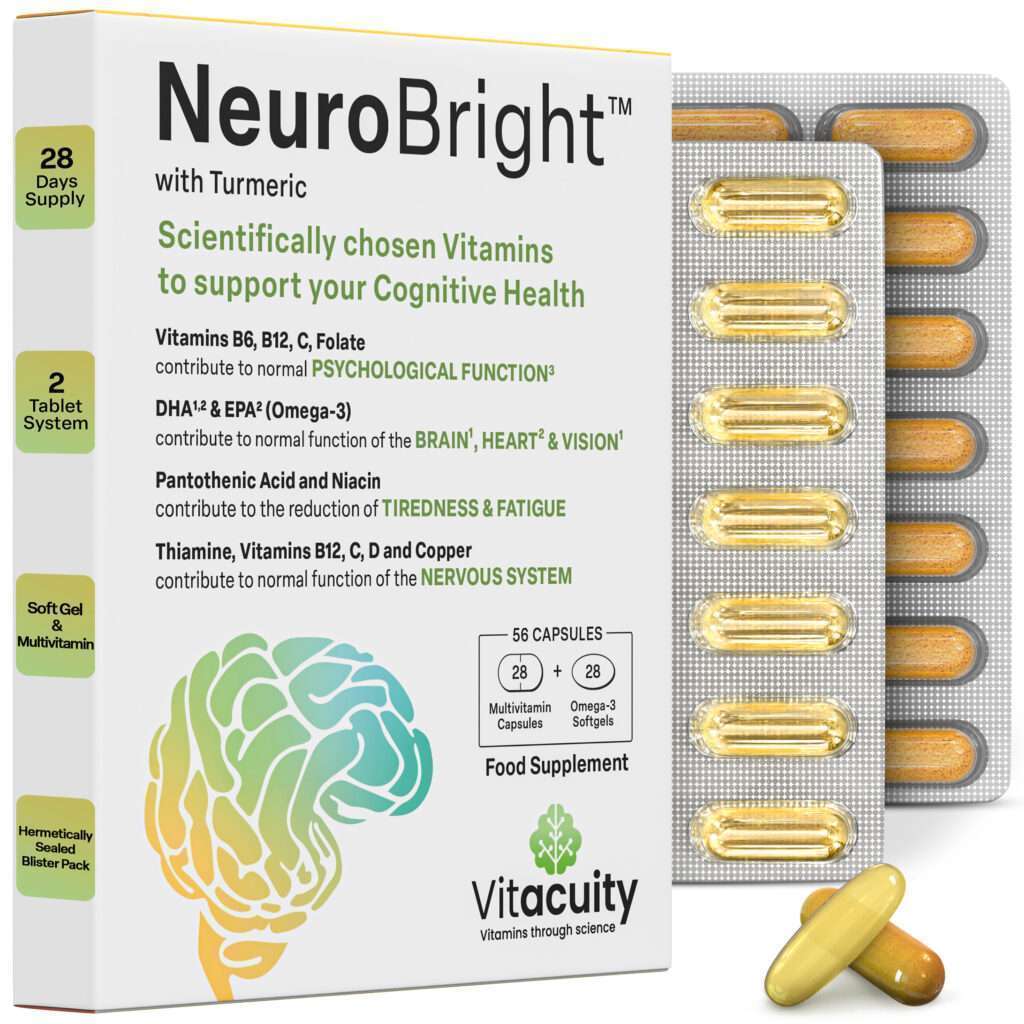
Free guide: The research behind brain health supplements
Plus our weekly research digest — straight to your inbox.
Just leave your email address.