Why Air Pollution Accelerates Cognitive Decline — And What You Can Do About It
Quick Read Tiny air pollution particles (PM2.5) from traffic and burning fuel are small enough to enter your bloodstream and
We write a new article on supplements every day , all detailed, with citations.
Once a week we send an email containing a list of the last 7 days articles. Please sign up and also feel free to share the articles with friends and family who you think might benefit.
Simon Parrott – Vitacuity Ltd
It’s one of the oldest arguments in medicine: can a wildflower really compete with a prescription? Back in the early 1990s, when researchers first began seriously investigating *Hypericum perforatum* — the yellow-flowered plant we call St. John’s Wort — the scientific establishment was sceptical. Herbal remedies were largely considered folklore, pleasant stories from a pre-pharmaceutical age. What happened next surprised almost everyone. Over the following three decades, a body of clinical evidence quietly accumulated that would eventually see St. John’s Wort recommended not just as an alternative to antidepressants, but as a legitimate, evidence-backed monotherapy for depression [1]. This is the story of that journey — and what it means for you today.
*VitacuityAI analysed 1.7 million research papers and selected the most relevant studies on this topic to build this evidence summary.*
St. John’s Wort is not a simple compound. It contains a rich mixture of bioactive molecules — including naphthodianthrones, phloroglucinol derivatives, flavonoids, bioflavonoids, proanthocyanidins, and chlorogenic acid [7]. The two that have attracted the most scientific attention are hyperforin and hypericin.
Here’s where it gets genuinely interesting. When researchers started asking *how* St. John’s Wort works on the brain, they expected a simple answer. They didn’t get one. What they found instead was that the plant appears to act across multiple neurotransmitter systems simultaneously [7].
Most conventional antidepressants have a relatively narrow mechanism — SSRIs, for instance, primarily boost serotonin availability. St. John’s Wort seems to take a broader approach. Its active components have been shown to influence serotonin, dopamine, noradrenaline, GABA, and glutamate pathways — essentially touching many of the chemical systems involved in mood regulation [7]. Think of it less like a precise pharmaceutical scalpel and more like a carefully balanced orchestra.
This multi-system action is likely both a strength and a source of complexity. It may explain why the herb shows broad effects — and also why understanding its mechanisms has taken researchers so long.
The story really begins in the mid-1990s, when the first rigorous clinical trials started comparing St. John’s Wort extracts against established antidepressants. By 1999, the picture was already striking. A review published that year noted “a significant amount of evidence” supporting *Hypericum perforatum* for depression — placing it in the same small category as Ginkgo biloba for dementia as one of the few herbal preparations with genuine clinical trial backing [4].
What made these early findings noteworthy was not just that the herb “worked” — it was *how well* it worked relative to the drugs it was being compared against. Clinical studies comparing St. John’s Wort with low-dose antidepressants (including maprotiline, amitriptyline, and imipramine at 75mg/day) found no significant difference between the treatments [9]. That is a remarkable sentence. A wildflower, performing comparably to established pharmaceuticals.
And critically — with fewer side effects. This was the recurring theme that made researchers sit up and pay attention.
Evidence grade: Strong for mild-to-moderate depression — multiple RCTs with consistent findings
As the trials accumulated through the late 1990s and 2000s, a consistent pattern emerged. Multiple antidepressant-controlled trials demonstrated that *Hypericum perforatum* and its active ingredients — hypericin and hyperforin — produce antidepressant effects similar to tricyclic antidepressants and SSRIs, but with fewer and milder side effects [14].
This is not a trivial finding. Tricyclic antidepressants and SSRIs are the gold standard of pharmaceutical depression treatment, used by hundreds of millions of people worldwide. The suggestion that a plant extract could match their efficacy — while causing less disruption to daily life — represents exactly the kind of finding that takes decades to properly absorb into mainstream medicine.
A 2019 review examining both in vitro, in vivo, and clinical evidence concluded that “St. John’s wort may exert potent antidepressant effects and represents an efficacious and safe treatment” for depression [14]. The same review was more cautious about other psychiatric conditions — appropriately so, given the relative lack of trial data beyond depression.
By 2021, St. John’s Wort had reached the point where it was being discussed not as an alternative curiosity but as part of the formal landscape of integrative medicine for depression [11]. And by 2023, a comprehensive review of nutraceuticals in mood disorders placed St. John’s Wort in a special category — one of the only nutraceuticals recommended as a monotherapy for depression, rather than merely as an add-on to conventional treatment [1]. That distinction matters enormously.
Evidence grade: Promising — observational survey data with significant results, but not a full RCT
One of the more intriguing chapters in the St. John’s Wort story involves seasonal affective disorder — the pattern of low mood, fatigue, sleep disruption and loss of libido that affects many people through the darker months of the year.
A 1999 study surveyed members of the SAD Association across eight weeks of treatment with a standardised *Hypericum* extract [5]. The results were notable. In 168 patients using St. John’s Wort alone, the mean symptom score fell from 21.3 to 13.0 (on a 44-point scale, p < 0.001). In a further 133 patients combining the herb with light therapy, scores fell from 20.6 to 11.8 (also p < 0.001) [5].
Crucially, there were significant improvements across the specific symptoms that define SAD: anxiety, loss of libido, and insomnia all improved in both groups [5]. The only meaningful difference between the herb-alone group and the combined group was that sleep improved slightly more when light therapy was added.
Honest caveat: this was a postal survey rather than a blinded randomised controlled trial, so it sits below the highest level of evidence. Self-selection bias is a real concern. But the effect sizes are substantial, and the results align with the broader body of RCT data on St. John’s Wort for depression more generally.
Evidence grade: Promising in mechanism — animal and in vitro data are strong; full human mechanistic trials still needed
A 2022 deep-dive into the neuroscience of St. John’s Wort and neurotransmitter systems found both impressive breadth and honest complexity [7]. The herb’s effects span multiple chemical systems — serotonin, dopamine, noradrenaline, GABA, and beyond — which is consistent with why it appears to affect mood across several dimensions rather than in one narrow way.
However, researchers also noted that St. John’s Wort “can induce inconsistent effects on neurotransmitter levels” [7]. This isn’t a red flag — it’s a reflection of how complex the brain actually is, and how difficult it is to measure neurotransmitter changes reliably in living humans. What the review also identified as a promising frontier for future research: glutamate and acetylcholine, two neurotransmitters whose precise role in depression remains incompletely understood, and where St. John’s Wort’s effects could be particularly interesting to investigate further [7].
The 2025 animal model research adds an intriguing layer. Using a translational rodent model that tests “affective bias” — essentially whether animals interpret ambiguous signals positively or negatively, a key marker researchers use to study antidepressant-like effects — St. John’s Wort was one of only two treatments to produce a significant positive affective bias [6]. The researchers noted that this pattern mirrors what is seen with conventional antidepressants in the same model. Other supplements tested in the same study — including Rhodiola, Valerian, and 5-HTP — did not produce the same effect [6].
Yes, this is animal research. But it’s valuable animal research: it gives us a mechanistic window that human trials, for obvious ethical and practical reasons, cannot always provide.
Evidence grade: Conflicted in some sub-analyses — but the weight of evidence is clearly positive
Here is the honest part of the story that is worth understanding. Not every trial of St. John’s Wort produced positive results. Some found it no better than placebo. Headlines were written. Sceptics declared the herb debunked.
But look at *why* the results varied, and the picture becomes much clearer:
Different doses and extracts. St. John’s Wort is not a single standardised compound. Different preparations contain different concentrations of hyperforin and hypericin — the active ingredients. Studies using poorly standardised extracts were always going to underperform against those using pharmaceutical-grade preparations. This is not a failure of the herb; it is a failure of manufacturing consistency.
Different severities of depression. The evidence is consistently stronger for mild-to-moderate depression than for severe depression. Some of the negative trials recruited patients with more severe symptoms — a population where even standard antidepressants often struggle. Comparing St. John’s Wort to an SSRI in severely depressed patients and finding it inferior is not the same as saying it doesn’t work for the far larger population with mild-to-moderate low mood.
Different eras of comparison drugs. Some older trials compared St. John’s Wort to antidepressants that are now considered outdated or used at lower-than-optimal doses [9]. The comparison was sometimes as much about what was on the other side of the trial as about St. John’s Wort itself.
The 2023 nutraceuticals review, which synthesised the full body of evidence, lands clearly: St. John’s Wort is recommended as a monotherapy for depression — not as a “possibly might help” footnote, but as a legitimate primary intervention [1]. That is the weight of three decades of research, distilled.
Every good piece of science opens as many doors as it closes. Here is where the honest gaps in our St. John’s Wort knowledge currently sit:
Long-term safety data is incomplete. Most trials run for weeks or a few months. We have limited formal data on what happens with continuous use over years. The safety profile so far appears good — but “appears acceptable” is not the same as “fully characterised” [1].
Mechanisms remain partially understood. We know St. John’s Wort influences multiple neurotransmitter systems, but the precise sequence of events — which molecule does what, in which order, in which brain region — is not yet fully mapped [7]. Glutamate and acetylcholine, in particular, warrant much more investigation.
Drug interactions are a real concern. This is the one area where caution is genuinely warranted. St. John’s Wort is known to interact with a range of medications — including certain contraceptives, anticoagulants, and antiretrovirals — through effects on liver enzymes. The research chunks above don’t cover this in detail, but any clinically honest account of St. John’s Wort must acknowledge it. If you take prescription medications, this is a conversation worth having with a GP or pharmacist before starting.
The SAD evidence needs upgrading. The 1999 survey data on seasonal affective disorder is suggestive and encouraging [5], but a proper, blinded RCT in a SAD-specific population has not yet been done. The results would be genuinely interesting.
We don’t have good data on diverse populations. Most trials have been conducted in relatively narrow demographic groups. How age, sex, ethnicity and other health conditions interact with St. John’s Wort’s effects remains underexplored [1].
Here is what three decades of research actually tells us, in plain English.
St. John’s Wort is one of the most studied herbal interventions in the history of medicine. The evidence that it can help with mild-to-moderate depression is, at this point, genuinely strong — not a matter of wishful thinking or anecdote, but of multiple controlled trials comparing it to pharmaceutical antidepressants [1][4][9][14]. It appears to work across multiple brain chemistry pathways, it has a favourable side effect profile compared to many conventional options, and it has been formally endorsed as a monotherapy — not just an add-on — by a comprehensive 2023 nutraceuticals review [1].
For someone in the 40-65 age range experiencing the low-level, persistent low mood that doesn’t quite qualify for a clinical diagnosis but is undeniably affecting quality of life — the kind of mood dip that creeps in with stress, seasonal change, hormonal shifts, or the accumulated weight of a demanding life — the research case for St. John’s Wort is about as clear as natural supplement evidence gets.
Practical steps, based on what the research actually supports:
1. Use a standardised extract. The variability in trial results is largely explained by variability in preparation quality. Look for products standardised to a defined percentage of hypericin or hyperforin — the active compounds that the research has actually tested [7][14].
2. Give it time. As with conventional antidepressants, the evidence suggests effects build over weeks rather than appearing overnight. The SAD survey ran for eight weeks [5]; most clinical trials run for six to twelve weeks. Don’t judge it after ten days.
3. Think about seasonality. If your mood reliably dips in autumn and winter, the SAD data — though not yet from a gold-standard RCT — is encouraging enough to make it a sensible seasonal option [5].
4. Check your medications first. This is the one genuine caveat. St. John’s Wort interacts with a number of common prescription drugs. If you take regular medication, check with a pharmacist before starting. This is practical caution, not excessive hand-wringing.
5. Remember the evidence does not support it for severe depression. If your low mood is significantly impairing your ability to function — affecting work, relationships, your ability to get through the day — please talk to your GP. St. John’s Wort is well evidenced for mild-to-moderate symptoms. Severe depression is a different clinical picture entirely.
The story of St. John’s Wort is, ultimately, a story about science doing what it’s supposed to do: taking something dismissed as folk medicine, subjecting it to rigorous testing over thirty years, and arriving at a nuanced, honest, useful answer. Not “miracle cure.” Not “useless herb.” Something much more interesting: a genuinely effective, well-tolerated option for a very common human experience — and one that more people probably deserve to know about.
[1] Nutraceuticals in mood disorders: current knowledge and future directions (2023). DOI: 10.1097/YCO.0000000000000826 | https://pubmed.ncbi.nlm.nih.gov/36044293/
[4] Dietary supplements and natural products as psychotherapeutic agents (1999). DOI: 10.1097/00006842-199909000-00012 | https://pubmed.ncbi.nlm.nih.gov/10511018/
[5] Hypericum in seasonal affective disorder (SAD) (1999). DOI: 10.1185/03007999909115171 | https://pubmed.ncbi.nlm.nih.gov/10216809/
[6] Investigating the effects of different herbal preparations, 5-hydroxytryptophan and involuntary exercise on affective bias modification in male Lister Hooded rats (2025). DOI: 10.1097/FBP.0000000000000826 | https://pubmed.ncbi.nlm.nih.gov/40172490/
[7] St. John’s wort (*Hypericum perforatum*) and depression: what happens to the neurotransmitter systems? (2022). DOI: 10.1007/s00210-022-02229-z | https://pubmed.ncbi.nlm.nih.gov/35294606/
[9] Dietary supplements used in the treatment of depression, anxiety, and sleep disorders (1999). https://pubmed.ncbi.nlm.nih.gov/10711131/
[11] Advances in Alternative and Integrative Medicine in the Treatment of Depression: A Review of the Evidence (2021). DOI: 10.34172/aim.2021.59 | https://pubmed.ncbi.nlm.nih.gov/34196207/
[14] *Hypericum perforatum* in the treatment of psychiatric and neurodegenerative disorders: Current evidence and potential mechanisms of action (2019). DOI: 10.1002/jcp.27781 | https://pubmed.ncbi.nlm.nih.gov/30461013/
[15] Mood disorders and complementary and alternative medicine: a literature review (2013). https://pubmed.ncbi.nlm.nih.gov/23700366/
This article is for informational purposes only and does not constitute medical advice. Food supplements should not be used as a substitute for a varied and balanced diet and healthy lifestyle. If you are pregnant, breastfeeding, taking medication or have a medical condition, consult your doctor before taking any supplement. These statements have not been evaluated by the Food and Drug Administration (FDA) or the Medicines and Healthcare products Regulatory Agency (MHRA). This product is not intended to diagnose, treat, cure, or prevent any disease.
Quick Read Tiny air pollution particles (PM2.5) from traffic and burning fuel are small enough to enter your bloodstream and
Quick Read Saffron contains compounds called crocin and crocetin that appear to protect memory and slow cognitive decline through multiple
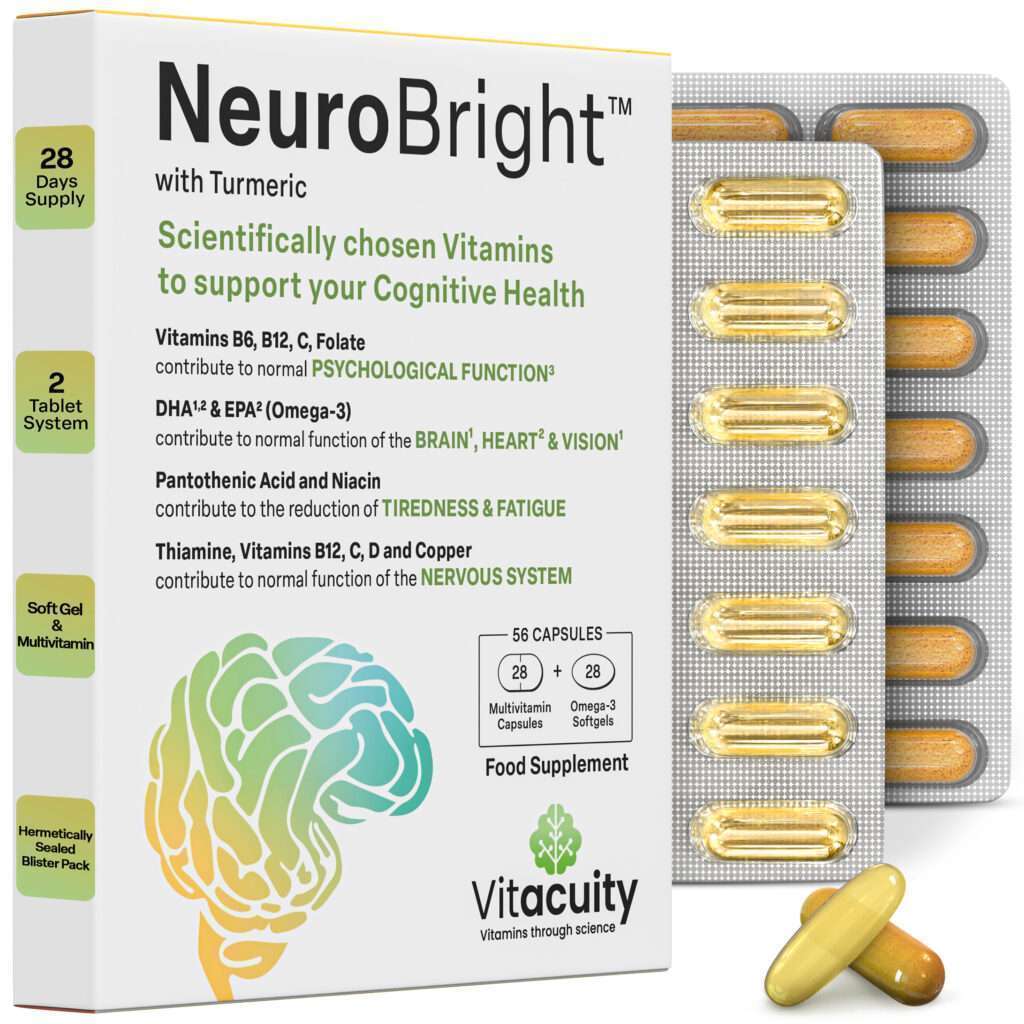
Free guide: The research behind brain health supplements
Plus our weekly research digest — straight to your inbox.
Just leave your email address.