Curcumin And Depression — The Inflammation Connection
Quick Read Depression may involve chronic, low-grade inflammation in the brain, not just a chemical imbalance. Curcumin, the active compound
We write a new article on supplements every day , all detailed, with citations.
Once a week we send an email containing a list of the last 7 days articles. Please sign up and also feel free to share the articles with friends and family who you think might benefit.
Simon Parrott – Vitacuity Ltd
Saffron, the expensive golden spice, shows genuine promise for treating low mood and mild depression. Multiple clinical trials found it produced moderate improvements compared to placebo, with one 202-person study showing 72% of participants experienced clinically meaningful improvement. The main active compounds, crocin and safranal, appear to work through multiple pathways: they boost serotonin availability, reduce brain inflammation by quieting the brain’s immune cells, support brain cell health, and protect against cellular damage.
The research is promising but has limitations. Many trials are small, and there’s evidence of publication bias. While the science shows saffron suppresses inflammatory pathways in the brain, it doesn’t consistently lower inflammation markers in the bloodstream. Long-term effects beyond 12 weeks remain unknown, and saffron works best for people with moderate symptoms rather than very mild mood fluctuations.
For someone experiencing low mood or anxiety that isn’t severe enough for prescription medication, standardized saffron extract at 28-30mg daily appears reasonably worth considering. The safety profile is excellent with no serious side effects reported. However, saffron is not a replacement for pharmaceutical treatment in serious depression, and discussing it with your doctor makes sense if you’re already taking medication.
Verdict: Saffron shows a genuine but modest benefit for subclinical to moderate depression, with solid safety, though larger and longer studies are needed to fully understand who benefits most and for how long effects last.
What if one of the world’s most expensive spices, the same one that gives paella its golden hue and costs more per gram than gold, turned out to be one of the more genuinely interesting natural approaches to low mood we’ve seen in recent clinical research? And what if the reason it works has less to do with serotonin than most people assume, and more to do with something quietly happening in your brain’s immune system?
That’s the story we want to tell you today. Not a miracle cure story. Not a headline-grabbing oversell. But a genuinely fascinating piece of nutritional science that Vitacuity’s research team identified while analysing over 1.77 million research papers, and one that deserves a clear-eyed, honest look.
Saffron (*Crocus sativus L.*) is derived from the dried stigmas of the crocus flower. Three stigmas per flower, harvested entirely by hand. It takes roughly 150,000 flowers to produce a single kilogram of saffron, which is why it commands extraordinary prices. But the compounds inside those tiny red threads are pharmacologically active in ways that researchers are only beginning to understand.
The two main active constituents are crocin (which gives saffron its vivid colour) and safranal (which gives it its distinctive aroma). Together, these compounds appear to work on the brain through several mechanisms simultaneously, which is part of what makes saffron so scientifically interesting, and part of what makes it hard to study cleanly [1].
Here’s what the research suggests is happening:
Serotonin modulation. Saffron appears to weakly inhibit the reuptake of serotonin, similar in principle to how SSRIs (selective serotonin reuptake inhibitors, the most commonly prescribed antidepressants) work, though less potently. This means more serotonin stays available in the gaps between neurons [15].
Neuroinflammation suppression. This is where it gets particularly interesting. Chronic low-grade brain inflammation, specifically the activation of microglial cells (the brain’s immune cells) and the release of pro-inflammatory signalling molecules called cytokines, is increasingly understood to play a role in depression. Saffron appears to put the brakes on this process by suppressing a key inflammatory pathway called NF-κB signalling [3].
Neuroplasticity restoration. Your hippocampus, the brain region most associated with memory and mood regulation, shrinks under chronic stress. Saffron appears to upregulate BDNF (brain-derived neurotrophic factor), essentially a fertiliser for brain cells, which helps restore hippocampal health and the brain’s capacity to adapt and rewire itself [3].
Antioxidant activity. Oxidative stress, an imbalance between free radicals and the body’s ability to neutralise them, also damages brain cells. Crocin has demonstrated antioxidant properties that may protect neurons from this damage [4].
In other words, saffron isn’t doing one thing. It’s doing several things at once, which is either its greatest strength or its greatest complexity, depending on how you look at it.
Evidence grade: Promising to Strong, multiple RCTs exist, with effect sizes that are hard to ignore, though many individual trials are small and a large placebo effect is consistently noted.
The volume of clinical research on saffron and depression is, frankly, more substantial than most people realise. A 2019 systematic review and meta-analysis pooled 23 randomised controlled trials and found that saffron had a large positive effect size compared to placebo for both depressive symptoms (g = 0.99) and anxiety symptoms (g = 0.95) [8]. When used as an adjunct to antidepressant medication, the effect size was even larger (g = 1.23) [8].
To put that in context: an effect size above 0.8 is generally considered “large” in psychology research. These are not trivial numbers.
A separate meta-analysis from 2020, covering 21 trials, found that saffron significantly reduced scores on the Beck Depression Inventory (BDI), a standard measure of depressive symptoms, with a weighted mean difference of -4.86 points (95% CI: -6.58 to -3.14) [7]. It also significantly reduced anxiety scores on the Beck Anxiety Inventory by -5.29 points, and improved sleep quality on the Pittsburgh Sleep Quality Index by -2.22 points [7].
These findings are consistent across multiple meta-analyses, which is meaningful. When different teams of researchers independently pool different sets of trials and keep arriving at similar conclusions, that’s science working as it should.
One of the most important studies in our research set, and one worth examining in detail, was published in 2025, making it among the most current evidence available [5].
This was a rigorous, 12-week, randomised, double-blind, placebo-controlled trial involving 202 adults aged 18-70 experiencing subclinical depressive symptoms (meaning low mood that affects quality of life but doesn’t meet the clinical threshold for a diagnosis of major depression). Participants received either 28mg of standardised saffron extract (Affron) daily or a placebo [5].
The results were striking. Compared to placebo, saffron was associated with greater improvements in depression scores, with 72.3% of participants in the saffron group achieving a clinically significant change (defined as a reduction of 7 or more points on the depression scale) compared to 54.3% in the placebo group, a statistically significant difference (P = 0.010) [5].
The effect size (Cohen’s d = 0.39) was moderate, which is honest. Saffron is not Prozac. But for a natural compound with an excellent safety profile and no serious adverse events reported, a moderate effect in 202 people over 12 weeks is genuinely clinically relevant, particularly for the millions of people who experience low mood that doesn’t quite qualify for pharmaceutical treatment [5].
One important nuance: the placebo response in this study was large. Many participants in the placebo group also improved significantly. This is common in depression research and doesn’t diminish the saffron findings, but it does mean we should interpret results with appropriate humility [5].
A 2015 pilot RCT explored whether crocin, saffron’s primary active carotenoid, could boost the effects of existing antidepressant medication in 40 patients diagnosed with major depressive disorder (MDD) [13].
Patients were split into two groups: both received a standard SSRI (fluoxetine, sertraline or citalopram), but one group also received 30mg of crocin daily for four weeks. The results were notable. The crocin group showed significantly greater improvements across all measures: BDI scores fell by an average of 17.6 points in the crocin group versus 6.15 points in the placebo group. Anxiety scores (BAI) dropped by 12.7 points versus 2.6 points in placebo [13].
The limitations are real and worth naming: 40 people is a small sample, four weeks is a short trial, and self-report measures have inherent limitations. The authors acknowledge all of this. But the size of the differences, not just statistical significance, but the actual numbers, is hard to ignore as a signal worth investigating further [13].
Evidence grade: Conflicted, and this is where honest science requires careful handling.
Here’s the headline finding on inflammation that surprised us: despite the compelling mechanistic evidence that saffron suppresses inflammatory pathways, the human clinical data on blood markers of inflammation is mixed.
A 2021 meta-analysis of eight RCTs found that saffron supplementation did not produce statistically significant reductions in CRP, TNF-α, or IL-6 when looking at the pooled data as a whole [12]. A similar finding came from the 2020 meta-analysis, which also found no significant effect on CRP levels [7].
So is the anti-inflammatory story dead? Not quite, and this is where subgroup analysis becomes illuminating.
The same 2021 meta-analysis found that when you look only at participants with elevated baseline inflammation (CRP ≥ 3 mg/L), saffron *did* produce significant reductions in CRP. Similarly, saffron reduced TNF-α in non-diabetic participants and in those under 50 with elevated baseline levels [12]. A 2025 meta-analysis focused specifically on crocin (the isolated active compound) found that it *did* reduce both CRP and IL-6 in RCTs [4].
Why the conflicting results? Likely a combination of factors: different doses, different formulations (whole extract vs. isolated crocin), different populations, different baseline levels of inflammation, and different durations. The overall weight of evidence suggests that saffron’s anti-inflammatory effects are most likely to be meaningful in people who already have elevated inflammation, which, incidentally, may be a significant proportion of people experiencing depression [12].
Meanwhile, at the animal and cellular level, the evidence for saffron’s anti-inflammatory mechanisms is compelling. A 2025 mouse study found that saffron extract significantly reduced neuroinflammation by suppressing microglial activation and the NF-κB pathway, while also restoring hippocampal BDNF levels, essentially demonstrating a complete mechanistic story from inflammation suppression to neuroplasticity recovery [3].
The honest summary on inflammation: the mechanism is real and well-characterised; the translation into measurable blood markers in humans is inconsistent across studies. This doesn’t mean it isn’t happening, inflammation in the brain may not always be reflected in peripheral blood markers. But we cannot currently point to robust, consistent evidence that taking saffron will lower your CRP levels. What we can say is that the anti-inflammatory pathway is biologically plausible and may be one of several mechanisms explaining the mood benefits observed in clinical trials.
One of the more interesting recent debates in saffron research concerns *who* it helps most. Most of the positive RCT data has involved people experiencing clinically significant depression or subclinical symptoms. But a 2025 placebo-controlled study of 51 healthy adults with only mild, subclinical neuropsychiatric symptoms found a more nuanced picture [2].
In that trial, saffron extract over six weeks did not significantly improve the primary composite outcome of depression, anxiety and fatigue scores. However, it *did* improve participants’ own perception of their mental health on the SF-12 questionnaire (mean score at six weeks: 44.6 in the saffron group vs. 53.8 in the placebo group, P = 0.04). There were no significant effects on measured inflammatory markers [2].
The researchers also noted an interesting metabolomic finding: saffron significantly modulated N-acetyl-phenylalanine, an amino acid derivative, though what this means for mood or brain function remains to be understood [2].
This matters because it suggests saffron may work best when there is something meaningful to work against, a moderate or significant level of depressive symptoms rather than very mild background mood fluctuations in otherwise healthy people. Though the authors are careful to note that the improved self-reported mental health score is a genuine signal that warrants replication in larger, better-powered trials [2].
Let’s be honest about the gaps, because there are meaningful ones.
Publication bias is a real concern. The 2019 meta-analysis explicitly flagged that Egger’s regression test found evidence of publication bias in the saffron literature [8]. This means there may be negative trials that never made it to print, which would make the pooled effect sizes look more impressive than they truly are. This is a genuine limitation of the field.
Most trials are small. The 2025 Affron trial with 202 participants is the largest to date [5]. Many earlier trials had 40-80 participants, large enough to detect an effect, but not large enough to give us deep confidence about who specifically benefits, at what dose, for how long, and under what conditions.
We don’t yet understand the inflammation mechanism in humans clearly. The NF-κB suppression and BDNF upregulation story is compelling in mice [3], but translating animal findings to human biology is always uncertain. The failure to consistently reduce CRP, TNF-α and IL-6 in human trials [7][12] means the anti-inflammatory story needs substantially more human research before we can describe it as proven.
Long-term data is limited. The longest trials we have are 12 weeks [5]. We don’t know what happens with saffron supplementation over 6 months or a year, whether effects are maintained, whether tolerance develops, or whether there are any long-term safety considerations.
The best formulation isn’t settled. Whole saffron extract, standardised extracts (like Affron), and isolated crocin have all been tested, and they’re not the same thing. Crocin appears particularly promising for anti-inflammatory effects [4], but how this compares to standardised whole extracts in head-to-head trials hasn’t been cleanly established.
Regional diversity is lacking. Many trials have been conducted in Iran, where saffron has both cultural significance and established supply chains. Whether results translate equally to other populations with different dietary patterns and genetic backgrounds is an open question [8].
Here’s the honest picture, as a sensible, well-read friend would put it to you.
Saffron is not a pharmaceutical-grade antidepressant. It is not going to lift someone out of severe clinical depression. But for the far larger population of people who experience what most of us recognise, low mood, irritability, anxious background hum, disrupted sleep, a general sense of not quite feeling like yourself, the evidence is more compelling than most people realise.
Multiple meta-analyses, a well-conducted 202-person RCT, and a consistent mechanistic story across several pathways all point in the same direction: standardised saffron extract at around 28-30mg daily appears to meaningfully help with subclinical to moderate depressive symptoms [5][7][8]. The effect is modest, not miraculous. The placebo effect in depression trials is always substantial. But the signal is real, replicated, and consistent enough that it deserves to be taken seriously.
The inflammation angle is the most intellectually exciting part of this story, and the most uncertain. The mouse data is elegant [3]. The human blood marker data is inconsistent [7][12]. Our honest interpretation: the anti-inflammatory mechanism is almost certainly happening in the brain, it may be one of the key reasons saffron helps mood, and the failure to detect it in peripheral blood markers doesn’t mean it isn’t real, it may just mean we’re measuring in the wrong place.
What would a sensible, informed person actually do?
If you’re in your 40s, 50s or 60s, experiencing low mood, disrupted sleep or a background sense of anxiety that doesn’t quite warrant a GP conversation about antidepressants, saffron is a genuinely reasonable thing to consider. Standardised extracts (look for Affron or similar standardised forms) at 28-30mg daily are the doses used in the clinical literature [5][13]. The safety profile across trials is excellent, with no serious adverse events reported.
It is water-soluble (crocin is a water-soluble carotenoid [4]), and at these doses there is no evidence of accumulation or toxicity risk. This is not a compound that requires testing before you try it. The risk-benefit calculation here is straightforward: the potential upside is meaningful, the downside risk is negligible at therapeutic doses.
If you’re already on antidepressant medication, the adjunctive data is intriguing [13], but this is one area where a brief conversation with your prescribing doctor makes sense before adding anything to your regimen.
And if you try it for 8-12 weeks and notice nothing? That’s a legitimate outcome too. Saffron isn’t for everyone. The research suggests it helps a meaningful proportion of people, not everyone. That’s honest, and it’s worth knowing going in.
The bigger picture here is this: the idea that depression is purely a serotonin-deficiency problem has been slowly dismantled by research over the past two decades. The inflammation angle, the idea that chronic low-grade brain inflammation drives mood disorders, is one of the more promising frontiers in modern psychiatry. Saffron, with its dual action on both serotonergic and neuroinflammatory pathways, sits right at the intersection of that new understanding [1][15]. That alone makes it worth watching.
[1] From Mood to Memory: Unlocking Saffron’s Potential in Brain Health (2025). Cureus. DOI: 10.7759/cureus.82924 | https://pubmed.ncbi.nlm.nih.gov/40416274/ | https://www.ncbi.nlm.nih.gov/pmc/articles/PMC12103703/
[2] Effect of saffron extract supplementation on mood in healthy adults with subclinical symptoms of depression: a randomized, double-blind placebo-controlled study (2025). American Journal of Clinical Nutrition. DOI: 10.1016/j.ajcnut.2025.09.050 | https://pubmed.ncbi.nlm.nih.gov/41047129/
[3] Antidepressant-Like Effect of Saffron (Crocus sativus L.) in Mice Exposed to Chronic Unpredictable Mild Stress via Attenuating Neuroinflammation and Recovering Neuroplasticity (2025). Molecular Nutrition & Food Research. DOI: 10.1002/mnfr.70201 | https://pubmed.ncbi.nlm.nih.gov/40772362/
[4] Crocin Supplementation on Inflammation and Oxidative Stress: A Systematic Review and Meta-Analysis (2025). Phytotherapy Research. DOI: 10.1002/ptr.8380 | https://pubmed.ncbi.nlm.nih.gov/39632602/
[5] An Examination into the Effects of a Saffron Extract (Affron) on Mood and General Wellbeing in Adults Experiencing Low Mood: A Randomized, Double-Blind, Placebo-Controlled Trial (2025). The Journal of Nutrition. DOI: 10.1016/j.tjnut.2025.05.024 | https://pubmed.ncbi.nlm.nih.gov/40414301/
[7] The effects of saffron (Crocus sativus L.) on mental health parameters and C-reactive protein: A meta-analysis of randomized clinical trials (2020). Complementary Therapies in Medicine. DOI: 10.1016/j.ctim.2019.102250 | https://pubmed.ncbi.nlm.nih.gov/31987241/
[8] Effect of saffron supplementation on symptoms of depression and anxiety: a systematic review and meta-analysis (2019). Nutrition Reviews. DOI: 10.1093/nutrit/nuz023 | https://pubmed.ncbi.nlm.nih.gov/31135916/
[9] Saffron (Crocus sativus L.) and major depressive disorder: a meta-analysis of randomized clinical trials (2013). https://pubmed.ncbi.nlm.nih.gov/24299602/
[12] Effects of saffron (Crocus sativus L.) supplementation on inflammatory biomarkers: A systematic review and meta-analysis (2021). Phytotherapy Research. DOI: 10.1002/ptr.6748 | https://pubmed.ncbi.nlm.nih.gov/32525606/
[13] Crocin, the main active saffron constituent, as an adjunctive treatment in major depressive disorder: a randomized, double-blind, placebo-controlled, pilot clinical trial (2015). Journal of Affective Disorders. DOI: 10.1016/j.jad.2014.11.035 | https://pubmed.ncbi.nlm.nih.gov/25484177/
[15] Saffron (Crocus sativus) for depression: a systematic review of clinical studies and examination of underlying antidepressant mechanisms of action (2014). Human Psychopharmacology: Clinical and Experimental. DOI: 10.1002/hup.2434 | https://pubmed.ncbi.nlm.nih.gov/25384672/
This article is for informational purposes only and does not constitute medical advice. Food supplements should not be used as a substitute for a varied and balanced diet and healthy lifestyle. If you are pregnant, breastfeeding, taking medication or have a medical condition, consult your doctor before taking any supplement. These statements have not been evaluated by the Food and Drug Administration (FDA) or the Medicines and Healthcare products Regulatory Agency (MHRA). This product is not intended to diagnose, treat, cure, or prevent any disease.
Quick Read Depression may involve chronic, low-grade inflammation in the brain, not just a chemical imbalance. Curcumin, the active compound
Quick Read Cold exposure, particularly ice baths, activates a biological stress response called hormesis, where controlled stress triggers the body
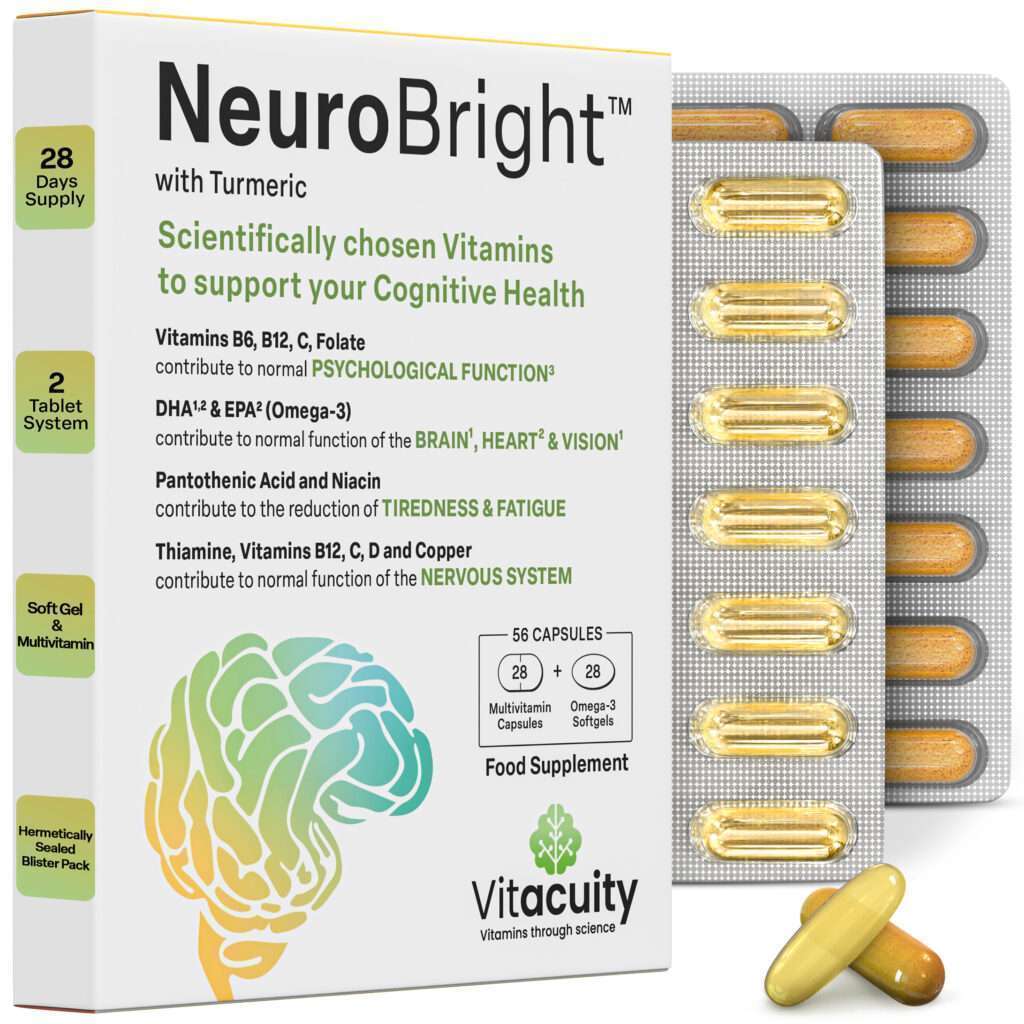
Free guide: The research behind brain health supplements
Plus our weekly research digest — straight to your inbox.
Just leave your email address.