Creatine And Working Memory — Not Just For The Gym
Quick Read Creatine is known as a muscle supplement, but emerging research suggests it may also boost brain performance. Your
We write a new article on supplements every day , all detailed, with citations.
Once a week we send an email containing a list of the last 7 days articles. Please sign up and also feel free to share the articles with friends and family who you think might benefit.
Simon Parrott – Vitacuity Ltd
Ginkgo biloba’s reputation as a memory supplement is more complicated than headlines suggest. Research shows it does not improve memory in healthy adults with normal brain function, despite multiple well-designed studies testing exactly that. However, the story changes for people with mild memory problems or early cognitive decline, where multiple controlled trials found genuine improvements in attention, memory, and mental sharpness.
The confusion exists because studies used different doses (ranging from 80mg to 720mg daily), different timeframes (two weeks to two years), different product quality, and tested different groups of people. When researchers studied the right formulation (a standardised extract called EGb 761) in the right population (people with existing memory problems) for long enough (at least six to eight weeks), benefits appeared. In healthy people, the same approach produced no measurable effect.
If you’re noticing subtle changes in memory or concentration in middle age, a quality standardised ginkgo extract at 120mg daily is a low-risk option backed by reasonable evidence, though you should avoid it if you take blood thinners or certain psychiatric medications. If your memory is currently sharp, ginkgo is unlikely to make it sharper, regardless of marketing claims.
Verdict: Ginkgo biloba shows genuine promise for people with existing mild cognitive decline, but no meaningful benefit for cognitively healthy adults.
What if one of the most studied herbal supplements in history still hasn’t given us a straight answer? That’s the curious, fascinating, and ultimately useful story of ginkgo biloba. For decades, millions of people, particularly across Europe and Asia, reached for ginkgo as their go-to brain supplement, trusting centuries of traditional use and a growing pile of scientific interest. Then came the big clinical trials of the early 2000s, and suddenly headlines were declaring ginkgo a fraud, a placebo dressed in ancient bark. But here’s what those headlines missed: the real story is far more interesting, and far more useful, than either the hype or the backlash. To understand where we are today, you have to understand where this journey began, and why the research conflicts in the way that it does.
Long before ginkgo became a fixture on UK health food shelves, it was already a serious pharmaceutical product in Germany and France. European researchers in the 1980s and early 1990s were working with a precisely standardised extract, known as EGb 761, containing 24% flavonoid glycosides and 6% terpene lactones, and their early results were genuinely promising [7][8].
By 1991, a double-blind, placebo-controlled trial published results showing that elderly patients over 50 with mild to moderate memory impairment who took 40mg of standardised ginkgo extract three times daily for six months showed measurable improvements on cognitive tests. Performance on the Digit Copying subtest of the Kendrick battery improved significantly at both 12 and 24 weeks, and speed of response on a computerised classification task showed significant superiority over placebo at 24 weeks [10]. The sample was small, just 27 patients with complete data, but the methodology was solid for its era, and it pointed in an exciting direction.
The thinking at the time was this: ginkgo’s active compounds appeared to work through multiple pathways simultaneously, improving cerebral blood flow, acting as antioxidants, and scavenging damaging free radicals [7][8]. Researchers proposed four primary mechanisms: vasoregulatory effects, cognition-enhancing properties, stress-alleviating actions, and even gene-regulatory effects [8]. A 1998 review of approximately 1,200 patients across good-quality placebo-controlled studies suggested cognitive effects were real, within the range of a 25% reduction in symptoms, with memory, concentration, and alertness improving first, and tinnitus and dizziness following later [7]. Scientists believed they might be onto something significant, not just for dementia but perhaps for healthy ageing more broadly.
Here’s what decades of research has taught us since.
Ginkgo biloba extract is not a single compound, and this is crucial to understanding why the research is so complicated. The leaves of the ginkgo tree contain flavonoid glycosides, terpene lactones (including ginkgolides and bilobalide), biflavones, and numerous other bioactive components [4]. Researchers believe these compounds work together rather than in isolation, a so-called polyvalent action [8].
The proposed mechanisms are genuinely plausible. By improving blood flow to the brain, ginkgo might help neurons receive more oxygen and glucose, the brain’s primary fuel. Its antioxidant properties may help protect neurons from oxidative stress, which accumulates with age. Its anti-inflammatory effects may also play a role in slowing age-related neurological changes [11]. Dosages used across clinical trials range from 80mg to 720mg per day, over periods of two weeks to two years [11], and this enormous variation in approach is, as we’ll see, a large part of why the evidence looks so inconsistent.
The 2002 trial published in JAMA was a landmark moment, and not the one ginkgo’s advocates were hoping for [1]. This was a well-designed, randomised, double-blind, placebo-controlled trial involving 230 healthy adults over 60, all with normal cognitive function (Mini-Mental State Examination scores above 26). Participants took 40mg of ginkgo three times per day, exactly as manufacturers recommended, for six weeks. The result? No significant differences between the ginkgo and placebo groups on any measure: verbal and non-verbal learning, memory, attention, concentration, naming, verbal fluency, or self-reported memory function [1]. Two hundred and three participants (88%) completed the protocol, a high completion rate, lending the result credibility.
A similar story emerged from a 2001 study of 60 healthy male volunteers, who took two 60mg tablets of standardised ginkgo daily for five days [2]. Again, results were largely non-significant across a battery of memory and cognitive tests, with the exception of one measure (Sternberg Memory Scanning), a finding too isolated to build a conclusion on [2].
A large prospective cohort study involving 3,500 volunteers found that neither ginkgo users (n=40) nor ginseng users showed enhanced performance across eight memory tests compared to controls [5]. The conclusion was blunt: long-term use of ginkgo in healthy adults did not produce measurable memory benefits [5].
Evidence grade for healthy adults: Conflicted, but the weight of evidence suggests limited benefit for those with no existing cognitive impairment.
Here is where the story shifts, and where the positive arc of this research becomes visible. The 1991 Tanakan trial, though small, found meaningful improvements in cognitively impaired older adults over six months on standardised EGb 761 [10]. A 1998 review drawing on approximately 1,200 patients with dementia or cerebral insufficiency found consistent evidence of benefit, describing a 25% reduction in cognitive symptoms in well-controlled trials [7]. Memory, concentration, and alertness were specifically identified as early responders to treatment, with a minimum of four to six weeks required before pronounced effects appeared [7].
A 2009 selective review of 29 randomised controlled trials, covering 209 placebo-drug comparisons across multiple cognitive domains, found consistent evidence that chronic ginkgo administration improves selective attention, some executive processes, and long-term memory for both verbal and non-verbal material [6]. Crucially, this pattern was clearest in trials involving people with mild cognitive impairment, depression, or multiple sclerosis, not in cognitively healthy individuals [6]. The review called the pattern “encouraging” but urged cautious interpretation, noting significant gaps and methodological inconsistencies across studies [6].
Evidence grade for mild cognitive impairment and early dementia: Promising, multiple controlled trials showing benefit, particularly with standardised EGb 761 extract, though sample sizes are often modest.
A 2011 double-blind, placebo-controlled trial focused specifically on middle-aged healthy volunteers and examined whether EGb 761 might have targeted effects on distinct memory functions [9]. The framing mattered: rather than asking “does ginkgo improve memory?” (a blunt question), the researchers asked “which specific memory processes might respond?” This more precise approach, also advocated in the 2009 review [6], is arguably why earlier broad-brush trials missed effects that more targeted studies began to find.
A 2012 meta-analysis specifically examined ginkgo as a cognitive enhancer in healthy individuals [3]. While this meta-analysis confirmed the overall pattern of limited effect in the cognitively healthy, it underscored that the question of specificity matters, and that different cognitive domains may respond differently.
If you’ve been following along, you’ll have noticed something: the studies don’t simply say “ginkgo works” or “ginkgo doesn’t work.” They say something more nuanced: *it depends on who is taking it, what formulation they’re using, at what dose, for how long, and which cognitive function you’re measuring.*
Here are the key reasons the evidence conflicts:
1. Population differences. Cognitively impaired adults respond differently from cognitively healthy adults. This is perhaps the most important factor. A supplement that improves blood flow and reduces oxidative stress may produce measurable gains in a brain that is already struggling, but create no detectable difference in a brain that is already functioning well [1][6][7].
2. Dose and duration variation. Trials have used doses ranging from 80mg to 720mg daily, for periods of two weeks to two years [11]. Short trials (five to six weeks) may simply be too brief to show effects that require at least four to six weeks to emerge [7]. A supplement studied at wildly different doses across different eras of medicine is going to produce wildly different results.
3. Standardisation of extract. Not all ginkgo is EGb 761. European pharmaceutical-grade trials used a precisely defined extract. Consumer-grade over-the-counter products vary significantly in their active compound concentrations [4][8]. A trial of standardised EGb 761 and a trial of a generic supermarket ginkgo capsule are not, in any meaningful sense, testing the same thing.
4. Which cognitive functions were tested. Broad neuropsychological batteries used in early trials may have lacked the sensitivity to detect specific improvements in selective attention or long-term memory encoding [6]. As the 2009 review noted, studies with better-targeted psychometric tools found more consistent patterns of benefit [6].
5. Era of medicine and changing baselines. Trials from 1991 and trials from 2012 are operating in different landscapes of nutritional science, background supplement use, and population health. These contextual factors matter.
Let’s be honest, and this is one of the things we think matters most at Vitacuity, where we’ve analysed over 1.77 million research papers to bring you findings like these.
There are real gaps in the ginkgo story.
We don’t know the optimal dose or duration for cognitive benefit, even in the populations where effects have been observed. Dosages across trials span an enormous range (80mg to 720mg daily), and the relationship between dose and response has never been properly mapped [11].
We don’t know which chemical compound or compounds are doing the most work. Ginkgo extract is a complex mixture of flavonoids, terpenes, and other components. Researchers have proposed that multiple compounds act in synergy [8], but the specific bioactive drivers of cognitive effects remain unidentified [4]. Until we know this, we can’t properly optimise supplementation.
We don’t know whether ginkgo protects the healthy brain over time. Most positive findings come from studies of cognitively impaired populations. The long-term question, can ginkgo slow the rate of cognitive decline in healthy middle-aged adults before problems begin?, remains unanswered by the current body of research.
We don’t know the long-term safety profile fully. The 2013 review noted possible interactions with monoamine oxidase inhibitors, alprazolam, haloperidol, warfarin, and nifedipine [11], which is clinically important, particularly for the over-60 population who are most likely to be taking one or more of these medications.
Methodological limitations remain a problem throughout the literature. Many studies have small samples, short durations, and varied outcome measures that make direct comparison difficult [6][8]. The 1998 review noted that much of the positive European evidence relied partly on self-assessment questionnaires rather than objective psychometric tools [8], a meaningful limitation.
So here’s the honest, practical answer to the question you came here with: *does ginkgo biloba actually work for memory?*
The answer, in 2024, is: it depends, and the nuance matters.
If you are a cognitively healthy adult in your 40s or 50s hoping ginkgo will sharpen your recall the way a morning espresso sharpens your attention, the honest answer is that the evidence doesn’t strongly support that. Multiple well-designed trials in healthy adults found no significant benefit at standard consumer doses over short periods [1][2][5]. You shouldn’t be misled by marketing that overstates what the research shows.
But if you are someone in midlife who is noticing early subjective changes in memory, concentration, or mental sharpness, the picture is meaningfully more positive. The evidence base, across multiple controlled trials and reviewed systematically, suggests that standardised ginkgo extract (particularly EGb 761, at 120mg daily or more) shows genuine promise for people with mild cognitive impairment, early-stage memory decline, or age-related cerebral insufficiency [6][7][10]. The 2009 review of 29 RCTs found consistent evidence of improvement in selective attention, executive processes, and long-term memory, particularly with chronic use over sufficient duration [6]. A minimum of four to six weeks of consistent supplementation appears necessary before effects emerge [7].
The practical wisdom here is this: ginkgo is not a morning-after memory pill for healthy people, and never was. It is a compound with a plausible and well-described mechanism, improving cerebral circulation, reducing oxidative stress, protecting neurons, that appears most meaningful when the brain is beginning to need that kind of support.
What a sensible, informed person might actually do:
– If you are noticing subtle changes in memory or concentration in your 40s or 50s, a standardised ginkgo extract (look specifically for EGb 761 or products standardised to 24% flavonoid glycosides and 6% terpene lactones) at 120mg daily is a low-risk, modestly evidence-supported intervention worth considering. – Give it at least six to eight weeks before evaluating whether it is doing anything for you. Effects, where they occur, take time [7]. – If you are taking blood thinners (particularly warfarin), MAO inhibitors, or other medications, speak with your GP before adding ginkgo, the interaction risk is real and documented [11]. – Don’t expect miracles if your cognition is currently healthy and sharp. The evidence simply doesn’t support ginkgo as a general cognitive enhancer in that context [1][3]. – If you do supplement, buy quality. The difference between pharmaceutical-grade EGb 761 and a poorly standardised generic product matters more with ginkgo than almost any other supplement, because the active compound profile varies enormously between products [4][8].
The story of ginkgo biloba is not one of failure. It is one of science doing its job, gradually, sometimes messily, but honestly, separating the situations where a compound helps from the situations where it doesn’t. That’s not a reason for doubt. It’s a reason for precision.
[1] Ginkgo for memory enhancement: a randomized controlled trial. (2002). *JAMA*. DOI: 10.1001/jama.288.7.835 | https://pubmed.ncbi.nlm.nih.gov/12186600/
[2] The effect of Ginkgo biloba on memory in healthy male volunteers. (2001). *Physiology & Behavior*. DOI: 10.1016/s0031-9384(01)00510-8 | https://pubmed.ncbi.nlm.nih.gov/11495672/
[3] Is Ginkgo biloba a cognitive enhancer in healthy individuals? A meta-analysis. (2012). https://pubmed.ncbi.nlm.nih.gov/23001963/
[4] Ginkgo biloba and Memory: An Overview. (1998). https://pubmed.ncbi.nlm.nih.gov/27414695/
[5] The memory-enhancing effects of Ginseng and Ginkgo biloba in healthy volunteers. (2004). *Psychopharmacology*. DOI: 10.1007/s00213-003-1675-8 | https://pubmed.ncbi.nlm.nih.gov/14647971/
[6] Ginkgo biloba: specificity of neuropsychological improvement, a selective review in search of differential effects. (2009). https://pubmed.ncbi.nlm.nih.gov/19551805/
[7] Clinical improvement of memory and other cognitive functions by Ginkgo biloba: review of relevant literature. (1998). https://pubmed.ncbi.nlm.nih.gov/10178638/
[8] Therapeutic value of Ginkgo biloba in reducing symptoms of decline in mental function. (1999). *Journal of Pharmacy and Pharmacology*. DOI: 10.1211/0022357991772817 | https://pubmed.ncbi.nlm.nih.gov/10411212/
[9] Specific memory effects of Ginkgo biloba extract EGb 761 in middle-aged healthy volunteers. (2011). https://pubmed.ncbi.nlm.nih.gov/21802920/
[10] A double-blind, placebo controlled study of Ginkgo biloba extract (‘tanakan’) in elderly outpatients with mild to moderate memory impairment. (1991). https://pubmed.ncbi.nlm.nih.gov/2044394/
[11] Ginkgo biloba: indications, mechanisms, and safety. (2013). https://pubmed.ncbi.nlm.nih.gov/23538078/
[12] Can ginkgo biloba dust off mental cobwebs? (2001). https://pubmed.ncbi.nlm.nih.gov/11307670/
[13] Ginkgo and memory. (2003). *JAMA*. DOI: 10.1001/jama.289.5.547-a | https://pubmed.ncbi.nlm.nih.gov/12578473/
[14] The lowdown on Ginkgo biloba. (2003). *Scientific American*. DOI: 10.1038/scientificamerican0403-86 | https://pubmed.ncbi.nlm.nih.gov/12661320/
[15] Ginkgo and memory. (2003). *JAMA*. DOI: 10.1001/jama.289.5.546-c | https://pubmed.ncbi.nlm.nih.gov/12578475/
This article is for informational purposes only and does not constitute medical advice. Food supplements should not be used as a substitute for a varied and balanced diet and healthy lifestyle. If you are pregnant, breastfeeding, taking medication or have a medical condition, consult your doctor before taking any supplement. These statements have not been evaluated by the Food and Drug Administration (FDA) or the Medicines and Healthcare products Regulatory Agency (MHRA). This product is not intended to diagnose, treat, cure, or prevent any disease.
Quick Read Creatine is known as a muscle supplement, but emerging research suggests it may also boost brain performance. Your
Quick Read Struggling to find the right word after 40 is completely normal and affects most people. Your brain retrieves
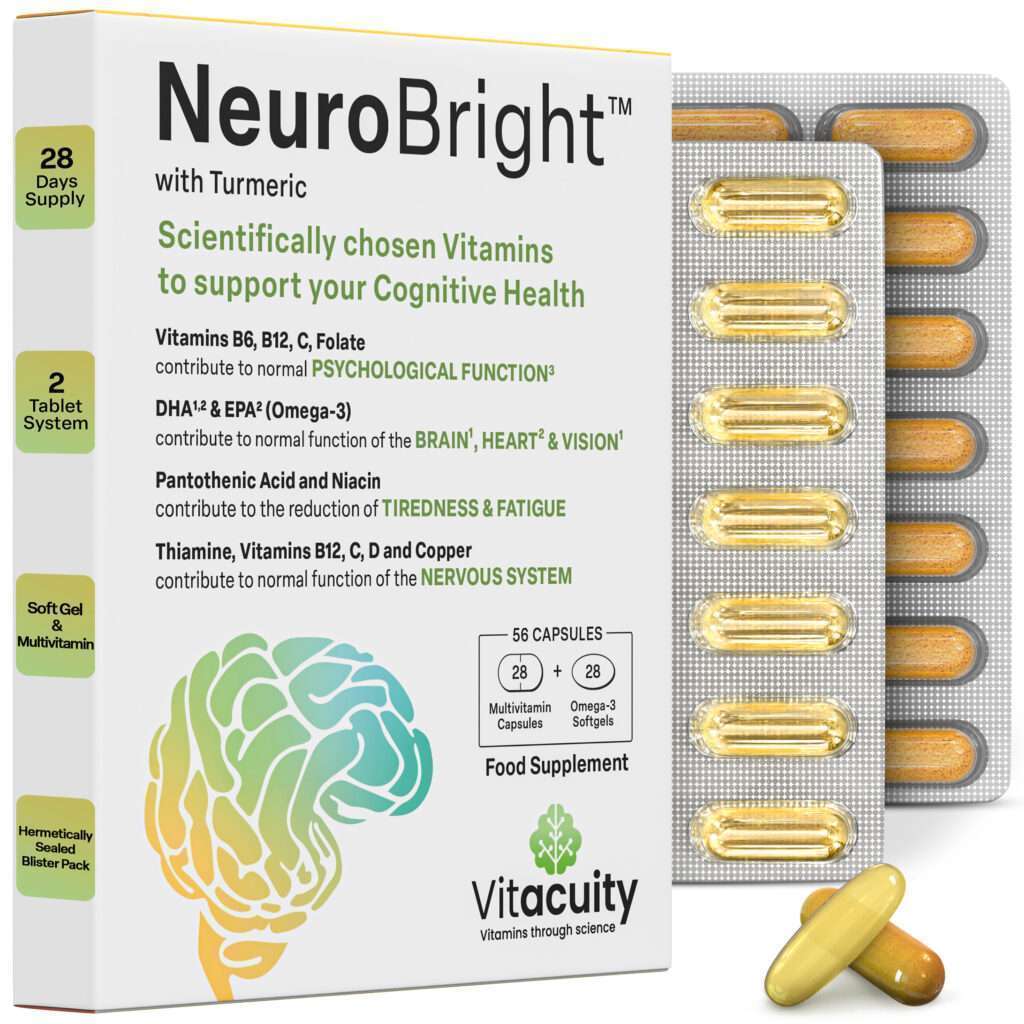
Free guide: The research behind brain health supplements
Plus our weekly research digest — straight to your inbox.
Just leave your email address.