The Supplement Timing Question — Does When You Take Them Actually Matter?
Quick Read When you take supplements matters far less than whether you take them consistently. Most supplements work by building
We write a new article on supplements every day , all detailed, with citations.
Once a week we send an email containing a list of the last 7 days articles. Please sign up and also feel free to share the articles with friends and family who you think might benefit.
Simon Parrott – Vitacuity Ltd
Magnesium is involved in over 300 processes in your body, including how your brain forms memories and learns. It acts as a gatekeeper for the brain connections that control these functions. Many people over 50 have low magnesium levels due to poor diet and reduced absorption, which can contribute to age-related brain decline through inflammation and stress.
Most magnesium supplements struggle to reach the brain. However, a newer form called magnesium L-threonate was specifically designed to cross into the brain itself. Early human studies show it can raise brain magnesium levels and improve cognitive performance, though the research is still limited to smaller studies. Other nutrients like vitamin D, omega-3s, and probiotics also show promise for brain health.
The safest approach is combining a Mediterranean-style diet rich in magnesium-containing foods (leafy greens, nuts, seeds, wholegrains) with supplementation if needed. Standard magnesium is safe and affordable. If brain health is a priority, magnesium L-threonate may be worth considering, though it costs more and isn’t yet proven to prevent dementia.
Verdict: Magnesium is a biologically sound, low-risk intervention for brain health, but works best as part of a broader nutritional strategy rather than as a standalone solution.
What if one of the most common mineral deficiencies in people over 50 was quietly making it harder to think, remember, and focus, and most of us weren’t even aware it was happening? Magnesium is one of those nutrients that rarely makes headlines. It doesn’t have the glamour of omega-3s or the cultural cachet of turmeric. And yet it sits quietly at the centre of hundreds of biological processes, including several that are directly relevant to how your brain ages. Vitacuity has analysed over 1.77 million research papers to bring you the most relevant findings on this topic, and what they reveal about magnesium and cognitive decline is genuinely worth your attention.
Magnesium is one of the most abundant essential minerals in the human body [7]. It’s involved in over 300 enzymatic reactions, and crucially for brain health, it plays a central role in regulating the activity of NMDA receptors, the switches in your brain that control learning and memory. Think of NMDA receptors as the gatekeepers of synaptic plasticity: the brain’s ability to form new connections and strengthen existing ones. Magnesium helps keep those gates properly calibrated.
As we age, magnesium levels in the body tend to decline, through reduced dietary intake, poorer gut absorption, and increased excretion. This matters because low magnesium has been associated with increased neuroinflammation, oxidative stress, and impaired synaptic signalling: three of the key biological processes implicated in age-related cognitive decline [6].
The challenge with magnesium supplementation, however, has historically been one of bioavailability. Many common forms of magnesium, oxide, citrate, and others, are absorbed reasonably well in the gut but struggle to cross the blood-brain barrier in meaningful amounts. This is where the form of magnesium you take starts to matter a great deal [7].
Evidence grade: Promising, some human data but small samples and relatively short duration
The most research-backed magnesium compound specifically for brain health is magnesium L-threonate, also known by its proprietary name Magtein®. Unlike other forms of magnesium, it was specifically developed to cross the blood-brain barrier and raise magnesium levels in the brain itself, not just in the blood [7].
A double-blind, randomised controlled trial examined the effects of Magtein® supplementation in adult participants and assessed its impact on cognition and brain magnesium levels [7]. The researchers found that magnesium L-threonate was effective at increasing brain magnesium concentrations, something that standard magnesium supplements have historically struggled to do, and observed improvements in cognitive performance in the supplemented group compared to placebo.
It’s important to be transparent here: the study population included East Asian adults, and the sample size was modest. This means we can’t generalise these findings too broadly yet. But the mechanism is compelling and the direction of the results is consistent with what we’d expect based on magnesium’s known role in synaptic function [7]. This is genuinely promising early human evidence, not proof, but not nothing either.
Evidence grade: Promising to conflicted, results vary by nutrient, population, and study design
It would be misleading to discuss magnesium in isolation from the broader picture of nutritional approaches to cognitive health. A 2024 systematic review, one of the most comprehensive in recent years, examined thirty-three primary studies investigating how micronutrient supplementation affects cognitive decline in adults aged 65 and over, including those with normal cognition, mild cognitive impairment (MCI), and Alzheimer’s disease [1].
The headline finding was that vitamin D, probiotics, and omega-3 polyunsaturated fatty acids (PUFAs) showed the strongest evidence for reducing cognitive decline or dementia risk among the nutrients studied. Vitamins A, B, C, and E were found to be relatively less effective, though with important caveats around B vitamins and omega-3 levels [1]. Magnesium was noted alongside a broader list of minerals investigated across studies, pointing to its recognised relevance in neuroprotection [6].
A separate comprehensive narrative review from 2023, evaluating randomised controlled trials, observational studies, and meta-analyses, similarly identified a complex relationship between nutritional supplementation and cognitive health, with some supplements showing real promise and others demonstrating only context-dependent effectiveness [3]. The review underlined how critically important dosage, bioavailability, and individual variation are when interpreting results. These are exactly the factors that make the form of magnesium you take so relevant.
Evidence grade: Strong for dietary patterns; promising for individual nutrients including magnesium
A 2018 narrative review specifically examining nutritional prevention of cognitive decline highlighted magnesium as one of several dietary components associated with neuroprotective effects [6]. The review noted that certain dietary patterns, particularly the Mediterranean diet and the DASH diet (Dietary Approaches to Stop Hypertension), have been linked to slower rates of cognitive decline and reduced incidence of Alzheimer’s disease. Both of these dietary patterns are, notably, higher in magnesium-rich foods such as leafy greens, nuts, seeds, and wholegrains.
The review also discussed how multiple nutrients and dietary components likely act synergistically, meaning the combined effect of a magnesium-rich, anti-inflammatory diet may be greater than the effect of any single nutrient taken in isolation [6]. This is an important nuance. Magnesium doesn’t operate alone; it works alongside omega-3s, B vitamins, antioxidants, and other compounds that together support brain structure and function over time.
A 2018 systematic review of over-the-counter supplement interventions for preventing cognitive decline, MCI, and clinical Alzheimer’s-type dementia found that the evidence base for many individual supplements remained uncertain at that time [8]. This was a broad review, and the honest conclusion was that while some supplements showed promise, large-scale high-quality RCT evidence was still lacking across the board.
What has emerged since 2018, however, particularly with the development and testing of magnesium L-threonate, is a more targeted and biologically plausible approach to magnesium supplementation for brain health [7]. The key insight is that raising serum magnesium isn’t the same as raising brain magnesium, and that distinction may explain why earlier, less bioavailable forms of magnesium showed inconsistent cognitive results.
This is where we owe you honesty, because the gaps in the research are real.
The magnesium L-threonate human evidence is still early. The most relevant human trial [7] used a modest sample size of East Asian adults, which limits how confidently we can generalise the findings to other populations. We need larger, longer, and more diverse trials before we can say with confidence that magnesium L-threonate slows cognitive decline in the broad population.
We don’t yet have a large-scale RCT specifically examining magnesium supplementation and dementia risk over many years. Most of the magnesium-related cognitive research is either mechanistic (how magnesium works in the brain in theory), observational (people who eat more magnesium tend to have better cognitive outcomes), or short-term supplementation studies. Long-duration RCTs, the gold standard, are still largely absent for magnesium specifically [8].
Optimal dosage and form remain unclear. We know that standard magnesium supplements (oxide, citrate) are unlikely to raise brain magnesium significantly [7], but the optimal dose of magnesium L-threonate for cognitive benefit in humans hasn’t been definitively established.
The synergy question is unresolved. The 2024 systematic review [1] and the 2023 narrative review [3] both point to the likelihood that nutrients work better in combination than in isolation, but we don’t yet have good data telling us precisely which combinations, at what doses, for which populations, and at what stage of cognitive ageing.
Individual variation matters enormously. The research consistently shows that people respond differently to supplementation based on genetics, baseline nutrient status, age, existing diet, and other health factors [1][3]. What works well for one person may have minimal effect in another.
Here’s how a sensible, well-informed person should think about magnesium and brain health, practically, not academically.
Magnesium deficiency is genuinely common, especially in people over 50. Dietary surveys consistently show that a large proportion of adults don’t reach the recommended daily intake through food alone. The modern diet, high in processed foods, low in leafy greens, nuts, and seeds, makes this worse. If you’re not actively eating a Mediterranean-style diet rich in magnesium-containing whole foods, there’s a real chance your levels are suboptimal [6].
Standard magnesium supplementation is safe, well-tolerated, and cheap. Magnesium is water-soluble in terms of its excretion dynamics, excess is cleared through the kidneys rather than accumulating to toxic levels at normal supplementation doses. At sensible doses (typically 200–400mg per day), the risk is minimal and the potential benefit, given how widespread suboptimal magnesium is, is meaningful. You don’t need to test your magnesium levels before supplementing at standard doses. The practical default for most people is: just supplement.
If cognitive health is a priority, consider magnesium L-threonate specifically. The evidence for its ability to cross the blood-brain barrier and raise brain magnesium concentrations is more compelling than for other forms [7]. It costs more than standard magnesium, but the biological rationale for why it might be more effective for brain-specific benefits is stronger. It’s not proven to prevent dementia, we’re not there yet, but the direction of the evidence is encouraging.
Think about magnesium as part of a broader nutritional approach, not a magic bullet. The strongest evidence for nutritional protection against cognitive decline sits at the level of dietary patterns, Mediterranean-style eating, adequate omega-3s, vitamin D sufficiency, and a diet rich in diverse whole foods [1][6]. Magnesium is an important piece of that picture, not the whole picture.
Start with what you eat. Spinach, kale, pumpkin seeds, almonds, dark chocolate, wholegrains, and legumes are all excellent magnesium sources. Building these into daily habits is the foundation. Supplementation, particularly with a brain-bioavailable form, is a sensible addition on top of that, not a substitute for it.
The bottom line: magnesium is one of the most biologically plausible, safe, and affordable interventions for supporting brain health as you age. The evidence is promising rather than definitive, but the risk of doing nothing, in a population where deficiency is common and the consequences for brain health are real, almost certainly outweighs the very low risk of supplementing sensibly.
[1] Supplementation and Mitigating Cognitive Decline in Older Adults With or Without Mild Cognitive Impairment or Dementia: A Systematic Review (2024). DOI: 10.3390/nu16203567 | https://pubmed.ncbi.nlm.nih.gov/39458561/ | https://www.ncbi.nlm.nih.gov/pmc/articles/PMC11509913/
[2] Cognitive Decline and Vitamins (2025). https://pubmed.ncbi.nlm.nih.gov/39958203/
[3] Improving Cognitive Function with Nutritional Supplements in Aging: A Comprehensive Narrative Review of Clinical Studies Investigating the Effects of Vitamins, Minerals, Antioxidants, and Other Dietary Supplements (2023). DOI: 10.3390/nu15245116 | https://pubmed.ncbi.nlm.nih.gov/38140375/ | https://www.ncbi.nlm.nih.gov/pmc/articles/PMC10746024/
[4] The Role of Omega-3 Fatty Acid Supplementation in Slowing Cognitive Decline Among Elderly Patients With Alzheimer’s Disease: A Systematic Review of Randomized Controlled Trials (2024). https://pubmed.ncbi.nlm.nih.gov/39659348/
[5] N-3 Polyunsaturated Fatty Acids in Elderly with Mild Cognitive Impairment: A Systemic Review and Meta-Analysis (2024). https://pubmed.ncbi.nlm.nih.gov/36776054/
[6] Nutritional prevention of cognitive decline and dementia (2018). https://pubmed.ncbi.nlm.nih.gov/29957766/
[7] A Magtein® Randomised Controlled Trial (2022). DOI: 10.3390/nu14245235 | https://pubmed.ncbi.nlm.nih.gov/36558392/ | https://www.ncbi.nlm.nih.gov/pmc/articles/PMC9786204/
[8] Over-the-Counter Supplement Interventions to Prevent Cognitive Decline, Mild Cognitive Impairment, and Clinical Alzheimer-Type Dementia: A Systematic Review (2018). https://pubmed.ncbi.nlm.nih.gov/29255909/
[9] Supplementation and Mitigating Cognitive Decline in Older Adults With or Without Mild Cognitive Impairment or Dementia: A Systematic Review (2024) [duplicate reference, same study as [1]]. DOI: 10.3390/nu16203567 | https://pubmed.ncbi.nlm.nih.gov/39458561/ | https://www.ncbi.nlm.nih.gov/pmc/articles/PMC11509913/
[10] Use of Vitamin E and C Supplements for the Prevention of Cognitive Decline (2017). https://pubmed.ncbi.nlm.nih.gov/27708183/
[11] Improved cognitive-cerebral function in older adults with chromium supplementation (2010). https://pubmed.ncbi.nlm.nih.gov/20423560/
[12] Cognitive Decline and Vitamins (2025) [duplicate reference, same study as [2]]. https://pubmed.ncbi.nlm.nih.gov/39958203/
[13] Improving Cognitive Function with Nutritional Supplements in Aging (2023) [duplicate reference, same study as [3]]. DOI: 10.3390/nu15245116 | https://pubmed.ncbi.nlm.nih.gov/38140375/ | https://www.ncbi.nlm.nih.gov/pmc/articles/PMC10746024/
[14] Effects of Anserine/Carnosine Supplementation on Mild Cognitive Impairment with APOE4 (2019). DOI: 10.3390/nu11071626 | https://pubmed.ncbi.nlm.nih.gov/31319510/ | https://www.ncbi.nlm.nih.gov/pmc/articles/PMC6683059/
[15] Can Curcumin Counteract Cognitive Decline? Clinical Trial Evidence and Rationale for Combining ω-3 Fatty Acids with Curcumin (2018). https://pubmed.ncbi.nlm.nih.gov/29659685/
This article is for informational purposes only and does not constitute medical advice. Food supplements should not be used as a substitute for a varied and balanced diet and healthy lifestyle. If you are pregnant, breastfeeding, taking medication or have a medical condition, consult your doctor before taking any supplement. These statements have not been evaluated by the Food and Drug Administration (FDA) or the Medicines and Healthcare products Regulatory Agency (MHRA). This product is not intended to diagnose, treat, cure, or prevent any disease.
Quick Read When you take supplements matters far less than whether you take them consistently. Most supplements work by building
Quick Read Creatine is known as a muscle supplement, but emerging research suggests it may also boost brain performance. Your
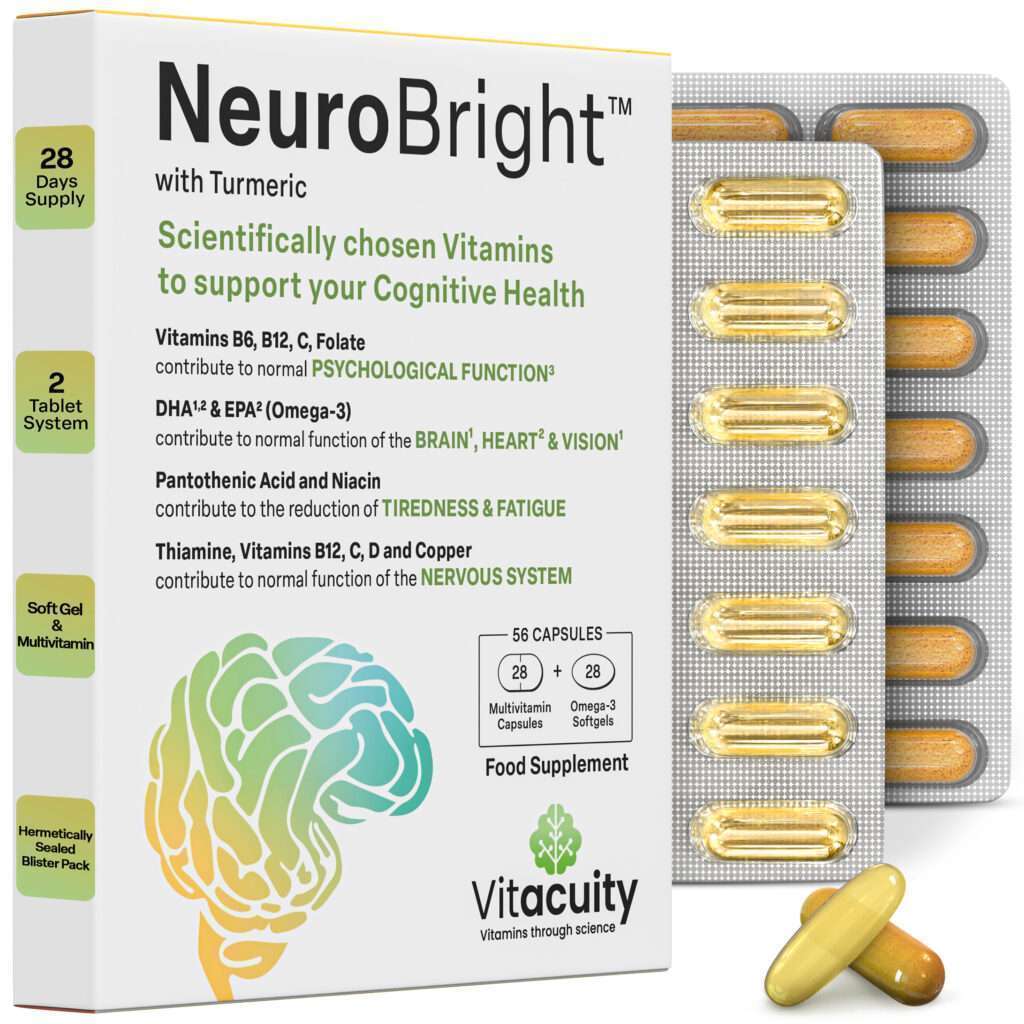
Free guide: The research behind brain health supplements
Plus our weekly research digest — straight to your inbox.
Just leave your email address.