The Supplement Timing Question — Does When You Take Them Actually Matter?
Quick Read When you take supplements matters far less than whether you take them consistently. Most supplements work by building
We write a new article on supplements every day , all detailed, with citations.
Once a week we send an email containing a list of the last 7 days articles. Please sign up and also feel free to share the articles with friends and family who you think might benefit.
Simon Parrott – Vitacuity Ltd
Choline is a nutrient your brain uses to make acetylcholine, a chemical messenger essential for attention, learning and memory. Your neurons cannot produce choline themselves, so it must come from food (eggs, dairy, meat) or supplements. A small 12-week study of adults over 60 found that 300mg daily of egg yolk choline improved verbal memory scores compared to placebo. Choline also builds cell membranes and influences which genes related to learning are active in your brain.
Most people don’t eat enough choline, particularly those who avoid animal products. While the evidence for choline’s benefits is promising, it mostly comes from older adults or people with memory problems, not healthy midlife adults. The research shows that forms called alpha-GPC and citicoline are more effective at supporting brain function than simple choline supplements.
If your diet is low in eggs and dairy, eating more choline-rich foods or considering an alpha-GPC supplement may support your brain’s language and memory systems. However, larger and longer studies in younger healthy adults are still needed to confirm the full picture.
Verdict: Choline shows promising evidence for supporting verbal memory, especially in older adults, but more research is needed in healthy midlife people before definitive recommendations can be made.
What if the reason you sometimes struggle to find the right word, that frustrating tip-of-the-tongue feeling that seems to happen more often in your forties and fifties, isn’t simply “getting older,” but is partly a reflection of what you’re eating? Most people have never heard of choline. It doesn’t have the cultural cachet of omega-3s or the marketing muscle of vitamin D. Yet this quiet, unassuming nutrient sits at the very heart of how your brain encodes, retrieves and processes verbal information. Vitacuity has analysed over 1.77 million research papers and selected the most relevant findings on this topic, and what they reveal about choline’s role in language and memory is genuinely worth understanding.
To understand why choline matters for language and verbal memory, you need to understand one neurotransmitter: acetylcholine.
Acetylcholine is the brain’s primary chemical messenger for attention, learning and memory, and choline is its direct precursor. That means your brain cannot make acetylcholine without an adequate supply of choline. Your neurons, critically, cannot synthesise choline themselves, it has to come from your diet or supplementation and be delivered through the bloodstream [10].
Here’s the chain of events: you eat choline-rich foods (eggs, dairy, meat), choline enters your circulation, crosses into the brain, and is used to synthesise acetylcholine in cholinergic neurons. When these neurons fire, as happens constantly during reading, conversation, word retrieval and verbal reasoning, acetylcholine is released into the synapse. After it does its job, it’s broken down back into choline, and roughly 50% of that choline is recaptured and recycled by a high-affinity transporter to be used again [10].
This is a beautifully efficient system. But it depends on one thing: having enough choline in the first place.
Choline also plays a second, less well-known role. Beyond acetylcholine, it is an essential building block of phosphatidylcholine, a phospholipid that forms a major structural component of every cell membrane in your brain [7]. Healthy neuronal membranes are essential for efficient signal transmission; they determine how fluidly and accurately electrical signals pass between neurons. When membranes degrade, as they can with age or nutritional insufficiency, signal transduction slows and becomes less precise [7].
And there is a third mechanism: choline is a methyl donor. Through its conversion to betaine, choline contributes to a biochemical pathway that regulates gene expression in the brain via DNA and histone methylation. This means choline doesn’t just fuel your neurons today, it influences which genes related to learning and memory are switched on or off [9][12]. It shapes the brain at a surprisingly deep level.
The clearest human evidence linking choline to language-related cognition comes from a 2023 randomised, double-blind, placebo-controlled trial conducted in Japan [1]. Researchers gave 41 healthy adults aged 60–80 either 300mg per day of egg yolk choline or a placebo for 12 weeks.
The results on verbal memory were statistically significant and appeared at both the 6-week and 12-week marks. The choline group showed meaningfully higher scores on verbal memory tests, including delayed verbal recall, compared to the placebo group. Plasma free choline levels were also measurably higher in the supplemented group by week six, confirming the choline was actually reaching the bloodstream [1].
Evidence grade: Promising, this was a properly controlled randomised trial with clear verbal memory findings. However, the sample was small (41 participants after dropouts), the study lasted only 12 weeks, and the population was exclusively Japanese adults over 60. Larger, longer, more diverse trials are needed before we can call this definitive.
One nuance worth noting honestly: the same study found that the choline group showed *lower* processing speed scores on one specific test (symbol digit coding) at week six, compared to placebo. This is an unusual and poorly understood finding, and the researchers themselves flagged it. It may be a statistical artefact in a small sample, or it may reflect something real about the trade-off between different cognitive systems at certain doses. It warrants further investigation [1].
A 2025 study examined the relationship between dietary choline intake trajectories and cognitive function in a middle-aged and older Chinese population [4]. This epidemiological approach, tracking choline intake patterns over time rather than in a short intervention, adds a different and valuable dimension to the picture.
The research found associations between choline intake and cognitive performance, consistent with the broader body of literature suggesting that adequate dietary choline consumption is linked to better cognitive outcomes in ageing populations.
A 2012 review also noted that in a cohort of normal elderly people, verbal and visual memory function correlated positively with the amount of dietary choline consumed, a finding that aligns with the mechanistic story of acetylcholine and cholinergic neurotransmission [12].
Evidence grade: Promising, observational and cohort data cannot prove causation, but the consistent direction of findings across multiple populations strengthens the case that dietary choline intake matters for cognitive health, including verbal function.
This is perhaps the most surprising finding in the choline literature, and one that most people, even those interested in nutrition, are unaware of.
Choline is a methyl donor. Through its conversion to betaine, it feeds into a pathway that produces S-adenosylmethionine (SAM), the brain’s primary methyl group donor. SAM is used to methylate DNA and histones, which are the mechanisms by which genes are switched on or off [9][12].
What this means practically: choline doesn’t just fuel acetylcholine synthesis right now. It influences which genes related to learning, memory and synaptic plasticity are expressed in your brain, including genes involved in the biochemical machinery of memory formation [12].
Studies in rodents have shown that choline intake during sensitive developmental periods improves cognitive function in adulthood and helps prevent age-related memory decline, effects that persist long after the choline exposure itself has ended. These changes correlate with altered patterns of DNA and histone methylation in cortical and hippocampal tissue [12].
Evidence grade: Early stage for the epigenetic mechanism in humans, the epigenetic pathway is well-characterised in animal models and the biochemistry is understood in human cells, but controlled human trials specifically testing this epigenetic route are not yet available. The mechanistic logic is compelling; the human proof is still catching up.
Not all choline supplements are equal, and this matters considerably if you’re trying to support cognition rather than just tick a nutritional box.
The research distinguishes clearly between different forms [2][7][10]:
Free choline and lecithin (phosphatidylcholine): Early clinical trials using these forms showed disappointing results for cognitive enhancement. The likely reason is that free choline administration increases blood choline levels but does not reliably increase acetylcholine synthesis or release in the brain. For choline to serve as an ACh precursor, it needs to be incorporated into phospholipids in brain tissue first, free choline largely fails to do this effectively [10].
Choline alphoscerate (alpha-GPC): This is a different matter. Alpha-GPC has demonstrated the ability to increase acetylcholine release in the rat hippocampus, facilitates learning and memory in animal models, and has shown improvements in memory and attention in clinical studies of patients with mild cognitive impairment and dementia [13]. A 2025 review describes choline alphoscerate as a cholinergic precursor with well-established efficacy on cognitive function in patients with mild cognitive impairment (MCI), Alzheimer’s disease, and cognitive impairment of vascular origin, with emerging evidence of broader neuroprotective effects [5].
Citicoline (CDP-choline): Another well-absorbed form with documented effects on cholinergic neurotransmission in cerebrovascular and neurodegenerative contexts [7].
Egg yolk choline: The 2023 Japanese RCT used egg yolk choline (300mg/day), which contains a mix of phosphatidylcholine, lysophosphatidylcholine and alpha-GPC, a natural combination that may explain why it showed verbal memory benefits [1].
Evidence grade for alpha-GPC and citicoline: Promising, with a stronger base of human clinical data than free choline or lecithin, particularly in older adults and those with early cognitive decline. For healthy younger adults, the evidence is thinner but mechanistically sound.
Here is a sobering reality check. Despite choline being essential for brain health, most people, across multiple population groups, do not reach their adequate intake [15].
The main dietary sources of choline are eggs, dairy and meat [15]. This means that people who reduce or eliminate animal products are at particular risk of insufficient intake. Pregnant and breastfeeding women have higher choline requirements and are especially vulnerable to suboptimal levels. But the problem extends well into middle age and beyond, populations where cognitive health becomes an increasing priority.
A 2019 review confirmed that choline-related functions are dysregulated in several neurodegenerative diseases, and that early nutritional intervention including methyl donors such as choline can improve cognitive function across the lifespan [9]. A 2017 review similarly emphasised choline’s neuroprotective properties and the risks posed by insufficient intake [8].
The irony is striking: one of the most critical nutrients for brain health is one of the most commonly under-consumed, and most people have never been told to think about it.
Verbal processing isn’t just about having enough acetylcholine, it’s also about the structural integrity of the neurons doing the signalling. Choline-containing phospholipids, particularly phosphatidylcholine, are fundamental structural components of neuronal cell membranes [7].
Healthy membranes support efficient signal transduction, the transmission of electrical signals along and between neurons. As we age, membrane composition changes, and cholinergic neurotransmission tends to decline. This is precisely why choline-containing phospholipids have been studied as a therapeutic approach for age-related cognitive impairment: they address both the neurotransmitter supply problem and the membrane integrity problem simultaneously [7][13].
A 2013 review summarised the evidence clearly: while early approaches using simple choline and lecithin failed, compounds like alpha-GPC and citicoline showed meaningful effects in clinical studies by working on both of these pathways rather than just one [7].
Evidence grade: Promising, the membrane mechanism is well-established biochemically; the clinical translation is supported by human trials in cognitively impaired populations, with less data in healthy adults.
Honesty is important here, because the choline research, while genuinely interesting, has real gaps.
The verbal processing question specifically: Most human research measures “verbal memory” as part of broader cognitive batteries. We don’t yet have trials that isolate choline’s effect on language processing specifically, word retrieval, verbal fluency, or the kind of tip-of-the-tongue failures that people in their fifties often notice. The verbal memory improvements seen in the 2023 Japanese RCT [1] are strongly suggestive, but “verbal memory” and “language processing” are related but not identical constructs.
Healthy adults in midlife: The majority of human trial data comes from older adults (60+) or those with existing cognitive impairment. We have far less controlled trial data in healthy people aged 40–60 who are trying to maintain rather than restore cognitive function.
Optimal dose and form: The Japanese RCT used 300mg/day of egg yolk choline and found verbal memory benefits [1]. Animal studies use varying doses. Clinical trials of alpha-GPC have used doses typically between 400–1200mg/day [13]. The optimal dose for healthy midlife adults, and whether egg yolk choline, alpha-GPC, or citicoline is the best choice, remains genuinely unclear.
The processing speed anomaly: The 2023 RCT found that choline supplementation was associated with *lower* processing speed scores at 6 weeks in one specific test. This unexpected finding hasn’t been explained, and it highlights how much we still don’t understand about choline’s full cognitive profile at different doses [1].
Long-term effects: The longest human trials reviewed here run to 12 weeks [1]. We don’t yet have data on whether the verbal memory benefits of choline supplementation persist, grow or plateau over months and years.
Animal vs human translation: Several findings in this area, particularly around epigenetics, amyloid reduction and neuroprotection, come from animal studies [11][12][14]. These are mechanistically fascinating but cannot be directly applied to human supplementation recommendations without further clinical trials.
So what should a sensible, informed person aged 40–65 actually do with this information?
First, be honest with yourself about your diet. If you eat eggs regularly (two to three per day would get you close to adequate intake), dairy and some meat, you may be getting reasonable choline. If you avoid these foods, whether by choice or habit, there is a real and well-documented risk that your choline intake is insufficient [15]. This isn’t scaremongering. It’s a nutritional gap that most people have never thought about.
On supplementation: Choline is water-soluble. Excess is excreted. The risk of toxicity at normal supplement doses is low, and the risk of deficiency is real and documented across the research. There is no compelling reason to wait for a blood test before considering supplementation if you’re eating a low-choline diet.
On form: If you’re going to supplement, the evidence suggests that alpha-GPC (choline alphoscerate) or citicoline are likely more effective at supporting brain acetylcholine than simple choline bitartrate or lecithin [2][7][10][13]. The 2023 Japanese RCT showed verbal memory benefits from 300mg/day of egg yolk choline, a mixed natural form [1]. Alpha-GPC in the range of 300–600mg daily is a reasonable practical starting point based on the clinical data available.
What would a sensible, informed person actually do? They’d prioritise eggs in their diet (the yolk is where the choline is, don’t discard it). They’d consider an alpha-GPC or citicoline supplement if their diet is lacking. They’d be realistic about the fact that this isn’t a guarantee of perfect word recall, it’s about maintaining the neurochemical infrastructure that good verbal thinking depends on. And they’d be patient: the 2023 RCT saw meaningful improvements by 6 weeks, but the full effect continued to develop at 12 weeks [1].
The bigger picture? Your brain’s language system, the ability to find the right word, hold a sentence in mind, recall names and details, depends on cholinergic signalling. That signalling depends on choline. And choline depends, day by day, on what you eat. That is a genuinely empowering piece of information, because it means this particular aspect of brain ageing is, at least partly, within your control.
[1] Effects of egg yolk choline intake on cognitive functions and plasma choline levels in healthy middle-aged and older Japanese: a randomized double-blinded placebo-controlled parallel-group study (2023). DOI: 10.1186/s12944-023-01844-w | https://pubmed.ncbi.nlm.nih.gov/37340479/ | https://www.ncbi.nlm.nih.gov/pmc/articles/PMC10280906/
[2] Choline supplements: An update (2023). DOI: 10.3389/fendo.2023.1148166 | https://pubmed.ncbi.nlm.nih.gov/36950691/ | https://www.ncbi.nlm.nih.gov/pmc/articles/PMC10025538/
[3] Choline and Fish Oil Can Improve Memory of Mice through Increasing Brain DHA Level (2023). https://pubmed.ncbi.nlm.nih.gov/37174337/
[4] Association between dietary choline intake trajectories and cognitive function in middle-aged and older population (2025). DOI: 10.3760/cma.j.cn112338-20240906-00559 | https://pubmed.ncbi.nlm.nih.gov/39965825/
[5] Choline alphoscerate: insights between acquired certainties and future perspectives (2025). https://pubmed.ncbi.nlm.nih.gov/40842650/
[7] Choline-containing phospholipids: relevance to brain functional pathways (2013). https://pubmed.ncbi.nlm.nih.gov/23314552/
[8] Neuroprotective Actions of Dietary Choline (2017). https://pubmed.ncbi.nlm.nih.gov/28788094/
[9] Neuroprotective Effects of Choline and Other Methyl Donors (2019). DOI: 10.3390/nu11122995 | https://pubmed.ncbi.nlm.nih.gov/31817768/ | https://www.ncbi.nlm.nih.gov/pmc/articles/PMC6950346/
[10] Pathways of acetylcholine synthesis, transport and release as targets for treatment of adult-onset cognitive dysfunction (2008). https://pubmed.ncbi.nlm.nih.gov/18289004/
[11] Choline Supplementation Ameliorates Behavioral Deficits and Alzheimer’s Disease-Like Pathology in Transgenic APP/PS1 Mice (2019). DOI: 10.1002/mnfr.201801407 | https://pubmed.ncbi.nlm.nih.gov/31298459/
[12] Choline nutrition programs brain development via DNA and histone methylation (2012). https://pubmed.ncbi.nlm.nih.gov/22483275/
[13] Choline alphoscerate (alpha-glyceryl-phosphoryl-choline) an old choline-containing phospholipid with a still interesting profile as cognition enhancing agent (2013). https://pubmed.ncbi.nlm.nih.gov/24156263/
[14] Chronic choline supplementation improves cognitive and motor performance via modulating oxidative and neurochemical status in rats (2017). https://pubmed.ncbi.nlm.nih.gov/28642069/
[15] Importance of choline in cognitive function (2021). DOI: 10.20960/nh.03351 | https://pubmed.ncbi.nlm.nih.gov/32993309/
This article is for informational purposes only and does not constitute medical advice. Food supplements should not be used as a substitute for a varied and balanced diet and healthy lifestyle. If you are pregnant, breastfeeding, taking medication or have a medical condition, consult your doctor before taking any supplement. These statements have not been evaluated by the Food and Drug Administration (FDA) or the Medicines and Healthcare products Regulatory Agency (MHRA). This product is not intended to diagnose, treat, cure, or prevent any disease.
Quick Read When you take supplements matters far less than whether you take them consistently. Most supplements work by building
Quick Read Creatine is known as a muscle supplement, but emerging research suggests it may also boost brain performance. Your
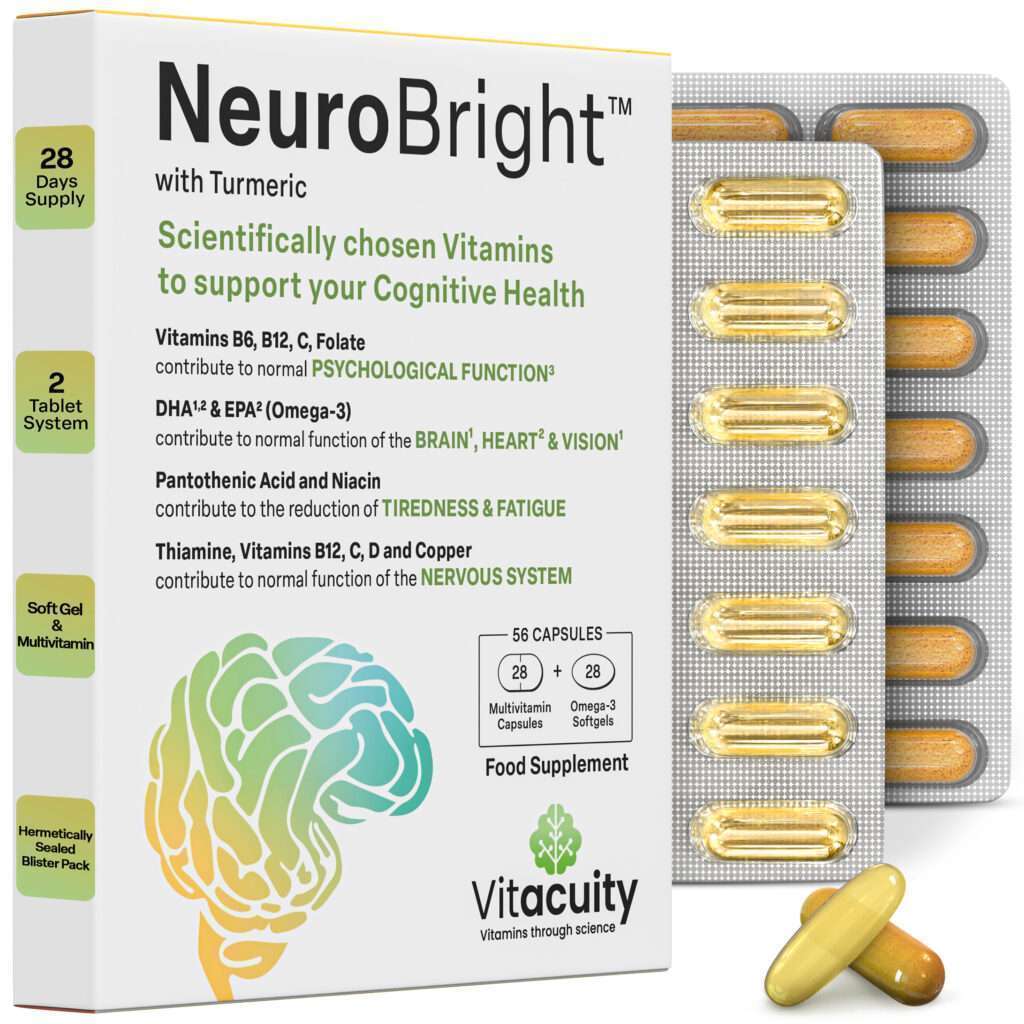
Free guide: The research behind brain health supplements
Plus our weekly research digest — straight to your inbox.
Just leave your email address.