
The Difference Between Brain Fog And Early Cognitive Decline — How To Tell
Quick Read Brain fog, a temporary cloudiness caused by poor sleep, stress, or nutritional gaps, is far more common than
We write a new article on supplements every day , all detailed, with citations.
Once a week we send an email containing a list of the last 7 days articles. Please sign up and also feel free to share the articles with friends and family who you think might benefit.
Simon Parrott – Vitacuity Ltd
Early cognitive decline may be slowed by specific nutrients, particularly if you start supplementing in your forties and fifties, before symptoms appear. Clinical trials show the strongest evidence for omega-3 fatty acids (especially DHA), B vitamins (particularly in people with high homocysteine levels), vitamin D, and phosphatidylserine. However, the evidence is mixed and often inconsistent. Benefits tend to appear in early-stage decline rather than advanced disease, and individual results vary based on genetics and other factors.
The research shows real signals worth taking seriously, but no supplement has been proven to prevent dementia across all populations. Most studies last only one to two years, so we lack long-term data on what happens across decades. Supplements appear to work best as part of a broader strategy that includes diet, exercise, and cognitive training, rather than as standalone treatments.
If you’re concerned about brain health, omega-3s, B vitamins, and vitamin D appear safe and reasonably supported by evidence. The downside of supplementing with these nutrients is minimal, making them sensible baseline options. Timing matters enormously, so earlier intervention is preferable to waiting for cognitive problems to appear.
Verdict: Some supplements show genuine promise for slowing early cognitive decline, particularly omega-3s and B vitamins, but the evidence remains mixed and works best as part of an overall brain-health strategy rather than as a replacement for it.
What if the most important window for protecting your brain isn’t your seventies, it’s right now, in your forties and fifties, before any noticeable symptoms appear? Most people assume cognitive decline is something that happens *to* them, something genetic, something inevitable. But a growing body of clinical research is quietly challenging that assumption. Not with miracle cures or dramatic reversals, but with a more nuanced, more hopeful story: that the trajectory of early cognitive decline may be meaningfully influenced by what you put into your body, and crucially, *when* you start.
Vitacuity has analysed over 1.77 million research papers and selected the most relevant studies on this topic. What follows is an honest account of what the clinical trials actually show, the promising signals, the genuine limitations, and what a sensible, informed person might actually do with this information.
To understand why supplements might matter at all, it helps to understand what early cognitive decline actually looks like at the biological level.
The brain is not a static organ. It constantly remodels itself, building and pruning synaptic connections, managing inflammation, maintaining the integrity of neuronal membranes. This process is profoundly dependent on nutritional inputs. The membranes that wrap every neuron are made partly from phospholipids, which in turn require dietary precursors, including omega-3 fatty acids, choline, and uridine, to be synthesised and maintained [6]. When those inputs are insufficient, synaptic integrity can quietly deteriorate, years before any clinical symptom appears.
Inflammation and oxidative stress are also central to the story. As we age, the brain becomes more vulnerable to both, and several micronutrients, including B vitamins, vitamin D, and omega-3s, have demonstrated roles in modulating these pathways [2, 7].
The concept of *mild cognitive impairment* (MCI) is clinically important here. MCI sits in a grey zone between normal ageing and dementia, measurable changes in memory or thinking that don’t yet interfere significantly with daily life. It is at this stage, and ideally before it, that nutritional interventions appear most likely to have meaningful effect. Studies consistently show that interventions in advanced Alzheimer’s disease show little benefit, while those targeting early or pre-symptomatic decline show more promise [1, 4].
Timing, in other words, is everything.
Let’s be honest from the outset: the overall evidence base for supplements and cognitive decline is *not* uniformly strong. A major systematic review published in 2017, covering a wide range of interventions including physical activity, B vitamins, nutraceuticals, and antihypertensives, found mostly low-strength evidence that these had little to no benefit for preventing age-related cognitive decline or MCI [12]. Methodological problems were widespread, inconsistent cognitive outcome measures, short follow-up periods, and high dropout rates in longer studies.
A Cochrane review from 2018 looking specifically at vitamins and minerals in MCI reached a similarly cautious conclusion: evidence was very limited, and for B vitamins in particular, there was no compelling evidence of benefit across six to 24 months of supplementation, at least not in the general MCI population [10, 14].
So why are we writing this article? Because the full picture is considerably more nuanced than those headline findings suggest, and the nuance is where the genuinely useful information lives.
Evidence grade: Conflicted, with an important subgroup signal
This is where things get interesting. A 10-year systematic review of long-term RCTs published in the *British Journal of Nutrition* (2018), covering 25 studies conducted between 2006 and 2016, found that B vitamins were among the most consistently studied supplements for cognition in older adults, and four of those trials found genuine benefits [8].
One standout study in 266 participants with MCI, run over two years, found that B vitamin supplementation improved executive function (p=0.015) and improved Mini-Mental State Examination (MMSE) scores, but *only in participants with baseline homocysteine above 11.3 µmol/l* [8]. A third B-vitamin trial (n=900, duration two years) reported improved immediate recall (p=0.046) and delayed recall (p=0.013). A fourth (n=856, two years) showed a slower rate of cognitive decline on the MMSE (p=0.05) [8].
The Cochrane review added a crucial detail: one study found evidence of a *slower rate of brain atrophy* over two years in participants taking B vitamins, a genuinely striking finding, even from a single study [10].
Here is where the nuance becomes clinically important. The B vitamin effect does not appear to be universal, it appears strongest in people with elevated homocysteine levels, a common and underdiagnosed condition in older adults. High homocysteine is a known risk factor for brain atrophy and cognitive decline, and B vitamins (particularly B6, B12, and folate) are the primary mechanism by which the body clears it.
There’s another layer: a separate finding suggests that B vitamins only produced cognitive benefits in people with *high baseline omega-3 levels*, meaning the two interventions may be synergistic rather than independent [8, 2]. This is not a reason for doubt, it is a reason to consider both together.
Evidence grade: Conflicted, timing and disease stage appear critical
A 2024 systematic review of 11 RCTs examining omega-3 (particularly DHA) supplementation in MCI and Alzheimer’s disease found a consistent pattern: benefits were most evident in *early-stage* cognitive decline, while effects in more advanced Alzheimer’s were negligible [1, 9].
Specifically, DHA supplementation showed benefits for memory and hippocampal volume preservation in some early-stage studies, the hippocampus being the brain region most associated with memory formation, and one of the first areas to atrophy in Alzheimer’s disease [1].
A separate 2019 systematic review of RCTs from 2010–2017 found that 10 out of 14 trials showed positive outcomes on at least one cognitive domain, including working memory, executive function, verbal memory, and perceptual speed [11]. These are not trivial domains; they are the functions most likely to affect everyday life in someone in their fifties or sixties.
One DHA-specific RCT (n=402, 18 months) found a slower rate of cognitive change, but only in participants who *did not carry the APOE ε4 gene variant*, which is a known genetic risk factor for Alzheimer’s [8]. This genetic interaction is important: it suggests that omega-3 supplementation may be particularly valuable in the majority of the population who don’t carry this high-risk variant, while results may differ for those who do.
A 2025 review of supplements in Alzheimer’s disease cited omega-3 at approximately 2g/day as one of the more evidence-supported regimens, while also acknowledging that study variability made firm conclusions difficult [5].
The honest summary: omega-3 supplementation is not a cure or a guaranteed protector, but the signal, particularly for early-stage decline and in those without APOE ε4, is real, consistent enough to be meaningful, and the safety profile is excellent.
Evidence grade: Promising, but earlier stage than omega-3 or B vitamins
A broad 2024 systematic review covering 33 primary studies found that among all the micronutrients examined, vitamin D and probiotics showed the most consistent signal for reducing cognitive decline, outperforming vitamins A, B, C, and E when looking at the broader literature [2].
This is a somewhat surprising finding, and it deserves qualification: the review authors noted that B vitamin benefits appeared conditional on factors like homocysteine levels and omega-3 status, which may have diluted their apparent effect in population-level analyses [2]. The vitamin D finding, by contrast, appeared more consistent across different populations.
The mechanism is plausible: vitamin D receptors are found throughout the brain, and the vitamin plays a role in neuroprotection, neurogenesis, and inflammation modulation [2, 7]. Deficiency is extremely common in the UK, particularly in winter months, and the population most at risk of cognitive decline (older adults) is also the population most likely to be deficient.
Probiotics likely exert their effect through the gut-brain axis, a bidirectional communication pathway between the microbiome and the central nervous system that is increasingly recognised as a factor in neuroinflammation and cognitive function [2, 5]. A 2026 network meta-analysis of 29 trials (n=2,000) found that a probiotic-selenium combination showed the strongest effect on MMSE scores among all supplements tested, though the absolute effect size was modest [3].
Evidence grade: Promising, particularly phosphatidylserine; multinutrients show logical rationale
Phosphatidylserine (PS) is a phospholipid that forms a critical part of neuronal cell membranes. It has been studied as a supplement for cognitive decline on the basis that brain phospholipid content declines with age [7].
The 2026 network meta-analysis found that phosphatidylserine at 100mg improved MMSE scores compared to placebo (MD = -1.14, 95% CI -1.86 to -0.41) [3]. A 2025 review listed PS at 300mg/day as one of the supplements with demonstrated benefits, though it noted study variability [5].
The rationale for multinutrient approaches is scientifically sound and deserves a mention. A 2014 review in *Aging & Disease* noted that no single nutrient has shown definitive benefit in a standalone RCT, but that combining precursors (uridine monophosphate, choline, omega-3s) alongside B vitamins and other cofactors might produce synergistic effects on synaptic membrane synthesis [6]. This led to the development of Souvenaid®, a multinutrient drink that showed improved memory performance in patients with mild Alzheimer’s in clinical trials [6]. The logic here is compelling: the brain doesn’t use nutrients in isolation, and neither should a nutritional strategy.
Evidence grade: Promising for some specific compounds; early stage for others
A 2024 meta-analysis of 35 studies involving 4,974 participants found that supplementation with natural compounds for at least six weeks produced significant improvements in ADAS-Cog scores (a standard cognitive assessment tool) with a pooled standardised mean difference of -2.88 (95% CI -4.26 to -1.50, p<0.01) [4]. A suggestive improvement in MMSE scores was also observed (p=0.04) [4].
The 2026 network meta-analysis identified several specific supplements with evidence-backed MMSE improvements: *Cosmos caudatus* (an edible tropical plant), spirulina, and plant extracts alongside probiotics with selenium [3].
For herbal supplements like Ginkgo biloba and Bacopa monnieri, a 2023 systematic review of 21 RCTs found that 14 out of 21 reported improvements in at least one cognitive domain in the intervention group compared to control [15]. However, the same review assessed 14 of those 21 studies as having a high risk of methodological bias, an important caveat [15]. The honest conclusion: there are signals here, but the evidence quality needs to improve before firm recommendations can be made.
Let’s be candid about the limitations, because they matter.
The timing problem. Most studies enrol people who already have MCI or early Alzheimer’s. We have very little high-quality trial data on supplementation in people aged 40–60 who are cognitively normal but want to protect their brain. The intervention that works at age 55 may look very different from one that shows benefit at age 72.
The dosing question. Across all the supplements reviewed, optimal dosages remain poorly defined. The 2025 review noted specific regimens, curcumin at 800mg/day, omega-3 at 2g/day, resveratrol at 600mg/day, phosphatidylserine at 300mg/day, but acknowledged that dose-response data is thin [5]. Most trials used different doses, different formulations, and different durations, making direct comparison difficult [1, 4].
The genetic interaction. The APOE ε4 finding with DHA [8], and the homocysteine threshold finding with B vitamins [8, 10], both point in the same direction: individual biology matters enormously. The supplement that slows decline in one person may do nothing for another. We don’t yet have the clinical infrastructure to personalise supplementation at scale.
The assessment tool problem. The 2026 network meta-analysis found that supplements which improved MMSE scores often showed no effect on ADAS-Cog scores, a more sensitive tool for Alzheimer’s-specific decline [3]. This discrepancy tells us that cognitive outcomes are being measured inconsistently across studies, making it hard to know what “improvement” actually means in practice.
The long-term data gap. The 2017 evidence review noted that attrition is a major problem in longer studies [12]. Most RCTs in this space run for one to two years. Brain health across a lifetime is a decades-long story, and we don’t yet have the longitudinal data to match.
What we can say honestly: the research points to real signals, particularly for omega-3s, B vitamins in those with elevated homocysteine, vitamin D, and phosphatidylserine. But the evidence is nowhere near strong enough to say “take this and you won’t get dementia.” Anyone who tells you otherwise is overselling.
So, what would a sensible, well-informed person actually do with all of this?
First, recognise that *early* is the operative word. The consistent thread across this entire body of research is that nutritional interventions show the most meaningful effect in early or pre-symptomatic stages of decline, not in advanced disease [1, 4]. If you’re reading this in your forties or fifties, you are likely in the most important window. Don’t wait for symptoms to appear before thinking about this.
Omega-3s (DHA/EPA), supplement daily, without hesitation. The safety profile is excellent, the signal for early cognitive protection is consistent across multiple systematic reviews [1, 11], and the broader cardiovascular and anti-inflammatory benefits make this a sensible baseline for almost anyone. Around 2g/day is the dose cited in the most positive studies [5]. This is a water-soluble context doesn’t apply, omega-3 is fat-soluble, but the safety profile at standard doses means there is no meaningful risk of harm.
B vitamins, especially B6, B12, and folate, supplement daily. These are water-soluble; excess is excreted in urine, so daily supplementation is the safe, practical default. If you’re over 50, B12 absorption declines with age regardless of diet. The homocysteine-lowering effect is real and meaningful; the brain atrophy findings warrant serious attention [8, 10]. You don’t need to test your homocysteine before starting, the downside of supplementing is essentially zero, and the potential upside is significant.
Vitamin D, supplement confidently, particularly through autumn and winter in the UK. Deficiency is common, the brain-protective signal is real, and toxicity at standard doses (1,000–4,000 IU) is not a meaningful risk. The 2024 review rated vitamin D among the most consistently protective supplements in this space [2]. This is a simple, cheap, low-risk intervention with a plausible benefit.
Phosphatidylserine, if you want to go further, there is a reasonable evidence base for 100–300mg/day [3, 5]. It’s not a first-line supplement in terms of evidence strength, but the signal is coherent and the safety profile is good.
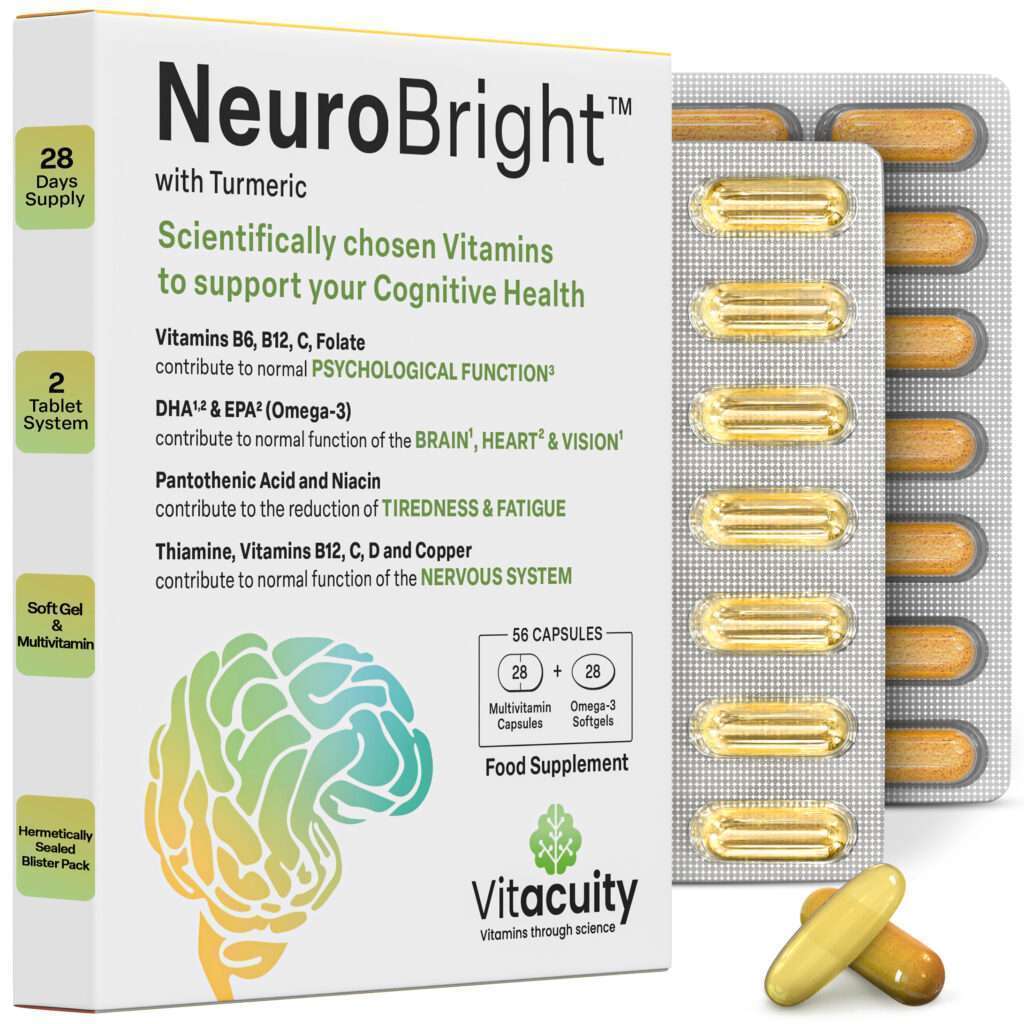
Consider a multinutrient approach. The science suggests these nutrients work synergistically, not independently [6]. B vitamins appear to work better in people with high omega-3 levels [8]. Omega-3s appear to support the same synaptic membrane pathways that choline and phospholipids contribute to [6, 7]. If you’re going to supplement, consider doing so comprehensively rather than picking a single ingredient.
What doesn’t appear to work (at standard doses, in unselected populations): high-dose vitamin E alone [10], and vitamins A, C, and E as standalone interventions showed relatively weak signals across the broader review literature [2]. This doesn’t mean antioxidants are useless, but they’re not where the strongest cognitive signal lives.
Finally, one honest acknowledgement: supplements are not a substitute for the basics. The Mediterranean diet pattern, rich in oily fish, vegetables, legumes, and olive oil, has been associated with reduced MCI incidence [7], and there is moderate-strength evidence that cognitive training improves performance in trained domains [12]. Supplements work best as part of a broader strategy, not as a replacement for one.
The research is not yet definitive. But it is directional. And direction, taken early, is exactly what matters.
[1] The Role of Omega-3 Fatty Acid Supplementation in Slowing Cognitive Decline Among Elderly Patients With Alzheimer’s Disease: A Systematic Review of Randomized Controlled Trials (2024). https://pubmed.ncbi.nlm.nih.gov/39659348/
[2] Supplementation and Mitigating Cognitive Decline in Older Adults With or Without Mild Cognitive Impairment or Dementia: A Systematic Review (2024). DOI: 10.3390/nu16203567 | https://pubmed.ncbi.nlm.nih.gov/39458561/ | https://www.ncbi.nlm.nih.gov/pmc/articles/PMC11509913/
[3] The impact of supplements on cognitive function for Alzheimer’s disease or mild cognitive impairment: a systematic review and network meta-analysis (2026). DOI: 10.1080/1028415X.2026.2703619 | https://pubmed.ncbi.nlm.nih.gov/42494057/
[4] Improving cognitive impairment through chronic consumption of natural compounds/extracts: a systematic review and meta-analysis of randomized controlled trials (2024). DOI: 10.3389/fnagi.2024.1531278 | https://pubmed.ncbi.nlm.nih.gov/39949865/ | https://www.ncbi.nlm.nih.gov/pmc/articles/PMC11821934/
[5] Exploring the Efficacy and Safety of Nutritional Supplements in Alzheimer’s Disease (2025). DOI: 10.3390/nu17050922 | https://pubmed.ncbi.nlm.nih.gov/40077790/ | https://www.ncbi.nlm.nih.gov/pmc/articles/PMC11901643/
[6] Rationale and clinical data supporting nutritional intervention in Alzheimer’s disease (2014). https://pubmed.ncbi.nlm.nih.gov/24635394/
[7] Dietary supplements for cognitive impairment (2017). https://pubmed.ncbi.nlm.nih.gov/29171642/
[8] Effect of long-term nutraceutical and dietary supplement use on cognition in the elderly: a 10-year systematic review of randomised controlled trials (2018). DOI: 10.1017/S0007114517003452 | https://pubmed.ncbi.nlm.nih.gov/29310724/
[9] The Role of Omega-3 Fatty Acid Supplementation in Slowing Cognitive Decline Among Elderly Patients With Alzheimer’s Disease: A Systematic Review of Randomized Controlled Trials (2024). https://pubmed.ncbi.nlm.nih.gov/39659348/
[10] Vitamin and mineral supplementation for preventing dementia or delaying cognitive decline in people with mild cognitive impairment (2018). DOI: 10.1002/14651858.CD011905.pub2 | https://pubmed.ncbi.nlm.nih.gov/30383288/ | https://www.ncbi.nlm.nih.gov/pmc/articles/PMC6378925/
[11] Omega-3 fatty acids and cognitive decline: a systematic review (2019). DOI: 10.20960/nh.02496 | https://pubmed.ncbi.nlm.nih.gov/31215788/
[12] Interventions to Prevent Age-Related Cognitive Decline, Mild Cognitive Impairment, and Clinical Alzheimer’s-Type Dementia (2017). https://pubmed.ncbi.nlm.nih.gov/28759193/
[13] Supplementing cognitive aging: a selective review of the effects of ginkgo biloba and a number of everyday nutritional substances (2010). https://pubmed.ncbi.nlm.nih.gov/20054730/
[14] Vitamin and mineral supplementation for preventing dementia or delaying cognitive decline in people with mild cognitive impairment, Methods (2018). DOI: 10.1002/14651858.CD011905.pub2 | https://pubmed.ncbi.nlm.nih.gov/30383288/ | https://www.ncbi.nlm.nih.gov/pmc/articles/PMC6378925/
[15] A systematic review of the safety and efficacy on cognitive function of herbal and nutritional medicines in older adults with and without subjective cognitive impairment (2023). DOI: 10.1186/s13643-023-02301-6 | https://pubmed.ncbi.nlm.nih.gov/37592293/ | https://www.ncbi.nlm.nih.gov/pmc/articles/PMC10433666/
This article is for informational purposes only and does not constitute medical advice. Food supplements should not be used as a substitute for a varied and balanced diet and healthy lifestyle. If you are pregnant, breastfeeding, taking medication or have a medical condition, consult your doctor before taking any supplement. These statements have not been evaluated by the Food and Drug Administration (FDA) or the Medicines and Healthcare products Regulatory Agency (MHRA). This product is not intended to diagnose, treat, cure, or prevent any disease.
Quick Read Brain fog, a temporary cloudiness caused by poor sleep, stress, or nutritional gaps, is far more common than
Quick Read Most magnesium supplements don’t reach your brain effectively because they struggle to cross the blood-brain barrier, the brain’s
The nutrients that matter, the forms that work, and the claims to ignore.