Creatine And Working Memory — Not Just For The Gym
Quick Read Creatine is known as a muscle supplement, but emerging research suggests it may also boost brain performance. Your
We write a new article on supplements every day , all detailed, with citations.
Once a week we send an email containing a list of the last 7 days articles. Please sign up and also feel free to share the articles with friends and family who you think might benefit.
Simon Parrott – Vitacuity Ltd
Some symptoms often blamed on aging, like brain fog and poor memory, may actually stem from B vitamin deficiency rather than cognitive decline. B vitamins (especially B6, B9, and B12) help clear a harmful substance called homocysteine from the blood. When homocysteine builds up, it damages brain cells, reduces blood flow to the brain, and interferes with processes that keep neurons working properly. Research consistently shows B vitamins reliably lower homocysteine levels, and a recent analysis found they produce a small but real cognitive benefit in older adults.
The evidence is strongest in people who are actually deficient in B12 or have elevated homocysteine. For this group, B vitamin supplementation can produce meaningful cognitive improvement. In the general population without deficiency, the benefits are more modest but still measurable. B vitamins are water-soluble, meaning excess is safely excreted, and deficiency becomes increasingly common over age 50 as stomach acid declines and B12 absorption drops.
Current research shows B vitamins are unlikely to reverse established dementia but may help slow brain shrinkage in at-risk people. Important gaps remain, including optimal dosing and exactly when supplementation works best. For most people over 50, the safety profile and low cost make supplementation a reasonable choice, particularly if diet has any nutritional gaps.
Verdict: B vitamin supplementation reliably lowers harmful homocysteine and shows modest but genuine cognitive benefits, especially for people with deficiency or elevated homocysteine, making it a low-risk intervention worth considering for brain health maintenance in midlife and beyond.
What if some of what we’re quietly attributing to “getting older”, the foggy mornings, the words that won’t come, the flat mood that lingers without obvious cause, isn’t inevitable neurological decline at all, but a nutritional gap that costs less than a cup of coffee a day to address?
That’s not a marketing line. It’s a genuine question that thousands of research papers have been wrestling with for decades. And the answer, it turns out, is nuanced, honest, and, for many people reading this, genuinely worth knowing.
Here’s the thing about B vitamin deficiency: it doesn’t announce itself with a dramatic symptom. It creeps in. The fatigue you blame on a busy week. The slightly slower recall you put down to stress. The low mood that doesn’t quite lift. All of these can be signs of inadequate B6, B9 (folate), or B12, and in older adults, those deficiencies are far more common than most people realise [10]. The problem is that they look almost identical to the early signs of cognitive decline. Which raises a question worth sitting with: how many people are on a waiting list to see a neurologist when what they actually need is a blood test and a better supplement routine?
Let’s look at what the research actually shows.
To understand why B vitamins matter so much for your brain, you need to know about one molecule: homocysteine.
Homocysteine is an amino acid that builds up in your blood when certain chemical processes in the body aren’t running properly. Think of it as exhaust fumes, a by-product of normal metabolism that, in small amounts, is handled easily. But when B vitamins, particularly B6, B9, and B12, are in short supply, the enzymes that clear homocysteine can’t do their job. Levels rise. And elevated homocysteine is, to put it plainly, bad news for the brain [10].
We’re talking about three distinct mechanisms of harm [13]:
Neurotoxicity, homocysteine is directly toxic to neurons, the cells that carry your thoughts and memories.
Vasotoxicity, it damages the blood vessels that supply the brain, reducing blood flow and increasing the risk of small vessel disease.
Methylation impairment, B vitamins are essential for a process called methylation, which maintains DNA, produces neurotransmitters (the brain’s chemical messengers), and keeps nerve cells insulated and functioning. When methylation breaks down, so does a lot of what keeps your brain running smoothly.
The result of all three? Accelerated brain atrophy, measurable shrinkage of brain tissue, that on a brain scan can look worryingly like early-stage neurodegeneration [1][3].
The good news is that homocysteine is highly responsive to B vitamin supplementation. This part of the science is not in dispute. The question, and it’s the right question to ask, is whether lowering it actually translates into better cognitive outcomes. That’s where the story gets more complicated, and more interesting.
Evidence grade: Strong, multiple RCTs with consistent findings
Before we get to the cognitive outcomes, it’s worth being clear about what B vitamins reliably do: they lower homocysteine. Substantially.
A 2017 meta-analysis of four RCTs found that B vitamin supplementation (folate combined with B12 and/or B6) produced a pooled reduction in homocysteine of -3.625 μmol/L compared to placebo (95% CI: -5.642 to -1.608, p < 0.001) [6]. That’s a clinically meaningful drop.
A 2021 meta-analysis of 21 RCTs involving 7,571 participants confirmed this: B supplement groups showed a mean homocysteine reduction of -4.59 μmol/L (95% CI: -5.51 to -3.67, p < 0.01) [15]. Eleven separate trials. Thousands of participants. Consistent result.
And a 2020 RCT of 279 older adults with mild cognitive impairment (MCI) and elevated homocysteine (≥10.0 μmol/L) found that daily supplementation with methylcobalamin 500μg and folic acid 400μg for 24 months brought mean homocysteine down from 13.9 to 9.3 μmol/L [14]. Again, a robust and reliable effect.
Here’s why this matters even before we discuss cognitive outcomes: homocysteine elevation is independently associated with brain atrophy, white matter damage, and dementia risk [13]. If you can lower it safely, cheaply, and consistently, which B vitamins demonstrably can, that is a meaningful intervention. The debate is over whether that biochemical improvement translates into measurable cognitive benefit in trial conditions. But “the trial didn’t measure a cognitive benefit over 24 months” is not the same as “there is no benefit.” More on that below.
Evidence grade: Strong, high-certainty evidence from a 2025 meta-analysis of 17 RCTs
The most rigorous piece of research in our database on this topic is a 2025 systematic review and meta-analysis published in *Nutrition Reviews*, which analysed 17 RCTs involving 5,275 participants aged 60 and over [1][11].
The headline finding: when outlier studies and methodologically weaker single-blind trials were removed from the analysis, the authors found high-certainty evidence (GRADE = high) of a small but statistically significant improvement in global cognitive function after B vitamin supplementation (Hedges’ g = 0.110; 95% CI: 0.034 to 0.186), with negligible heterogeneity between studies (I² = 15.39%) [1][11].
To be clear about what “small” means here: this isn’t a dramatic transformation. It’s a modest, real, statistically robust effect. The same analysis found that the effect size did not differ meaningfully between people with intact cognition, mild cognitive impairment, or dementia, suggesting B vitamins offer some degree of benefit across the cognitive spectrum, not just in those who are already declining.
Crucially, earlier and less well-controlled analyses of this same body of evidence produced much larger-looking effect sizes (Hedges’ g = 0.423), which, when scrutinised, turned out to be inflated by outlier studies. The 2025 team stripped those out. What remained was smaller but far more reliable. A small effect you can trust is more useful than a large effect you can’t [1][11].
Evidence grade: Promising, open-label study, no placebo control, but striking results
The population-level trials tell one story. But what happens when you look specifically at people who are genuinely deficient in B12?
A 2022 multi-centre study from Japan examined 39 dementia clinic patients with confirmed vitamin B12 deficiency (mean age 80.1 years) [12]. All were given B12 supplementation and reassessed after a median of 56 days.
The results were striking: mean MMSE scores (a standard cognitive screening tool, scored out of 30) improved from 20.5 to 22.9, a statistically significant increase (p < 0.001). Simultaneously, homocysteine dropped from 22.9 to 11.5 nmol/mL (p < 0.001). The degree of cognitive improvement correlated directly with baseline homocysteine levels, the higher the starting homocysteine, the more the patients improved [12].
This is important context for interpreting the mixed results from general-population trials. When you give B vitamins to people who aren’t deficient, you’d expect a smaller effect. When you give them to people who are deficient, and whose cognitive symptoms may partly *be* a consequence of that deficiency, the response can be meaningfully different.
The limitation here is significant: this was an open-label, single-arm study (no placebo group), which means we can’t rule out some degree of placebo effect or regression to the mean. But the magnitude of homocysteine reduction and its correlation with cognitive improvement is hard to entirely dismiss [12].
Evidence grade: Conflicted, lowering homocysteine is proven; translating that into cognitive benefit in trials has been inconsistent, and here’s why
Here’s the honest complication in this story, and it’s one that a 2016 review in the *Annual Review of Nutrition* put particularly well [13].
Most of the RCTs that found *no* cognitive benefit from B vitamins, and there are several, were testing the wrong people. They enrolled participants without elevated homocysteine, without confirmed B vitamin deficiency, or who were already in advanced stages of cognitive decline where brain damage was likely irreversible. In those contexts, of course a nutritional intervention won’t move the dial much.
The 2016 review makes the case that the trials designed with these factors in mind, targeting people with elevated homocysteine and adequate omega-3 levels, and running for longer periods, have shown clearer results, including a slowing of atrophy in brain regions specifically vulnerable in Alzheimer’s disease [13].
A 2019 systematic review of 31 RCTs (10 in cognitively impaired participants, 21 in those without impairment) found that B vitamins effectively lowered homocysteine but didn’t produce significant improvement in MMSE scores overall [7]. But the authors themselves were careful to note: “lack of evidence of effect should not necessarily be interpreted as evidence of no effect”, acknowledging that trial design limitations (short duration, mixed populations, variable supplement protocols) may be obscuring a real signal [7].
Meanwhile, a 2024 meta-analysis of nine RCTs found no significant effect of B12 supplementation alone on cognitive memory function (SMD: -0.03; p = 0.18) [5]. But again, this analysis included the general population, not people with confirmed deficiency, a distinction that matters enormously.
The pattern is becoming clear: B vitamins appear to matter most when deficiency or elevated homocysteine is already present. Testing this in unselected general populations produces noise. The signal is in the at-risk group.
Evidence grade: Promising, supported by brain imaging data and mechanistic evidence
Beyond cognitive test scores, there’s an imaging angle to this story that deserves attention.
Multiple lines of evidence, drawn together in a 2025 comprehensive review of vitamins and dementia [3] and the 2016 homocysteine review [13], show that B vitamin deficiency is associated with measurable brain atrophy. Not just cognitive test scores going down, but actual, visible shrinkage of brain tissue on MRI, particularly in regions associated with memory.
B vitamin supplementation, especially when homocysteine is elevated, has shown promise in slowing this atrophy [13]. And the 2022 Japanese study found that MMSE improvements after B12 supplementation were not correlated with hippocampal atrophy at baseline, suggesting that the cognitive recovery happened through mechanisms other than structural reversal, possibly through the restoration of methylation and neurotransmitter function [12].
Why does this matter? Because brain atrophy is an early indicator of cognitive decline, it shows up before people score badly on memory tests. If B vitamins can slow atrophy in people with elevated homocysteine, the window for intervention may be earlier than most clinical trials have tested [3][13].
Let’s be honest about the gaps, and there are real ones.
The dose question is unresolved. Different trials have used wildly different doses of B6, B9, and B12, and we don’t yet have a clear “optimal dose” for cognitive protection. The 2025 meta-analysis noted that dose didn’t emerge as a significant moderating factor [1][11], but this may reflect the messiness of the data rather than a genuine dose-independence.
Timing probably matters enormously, but we don’t know exactly when. The weight of evidence suggests that B vitamins work best as prevention, not treatment, and that people already in moderate-to-advanced cognitive decline are unlikely to see significant reversal [13]. But the exact window of greatest opportunity hasn’t been nailed down.
We still can’t be certain that lowering homocysteine causes cognitive protection. The association is strong and the mechanisms are plausible, but the translation from “lower homocysteine” to “better brain outcomes” hasn’t been consistently demonstrated in trial conditions [6][7]. It remains possible, though increasingly unlikely, that homocysteine is a marker of something else, rather than a direct driver of damage.
Individual variation is real but poorly understood. The 2021 narrative review on folic acid noted that “individual variability suggests the importance of personalised nutritional interventions” [9]. Some people will respond much better than others, possibly based on genetic variants in homocysteine metabolism (like the MTHFR gene variant), baseline nutritional status, or other factors we haven’t fully mapped.
Most research has focused on B6, B9, and B12. The wider B complex, B1, B2, B3, B5, biotin, plays supporting roles in brain health, but the direct evidence for their cognitive effects is thinner [3]. We’re drawing conclusions from the most-studied members of the family.
Here’s what a sensible, well-read friend, one who had read all of these papers, would actually tell you.
The cognitive decline that affects people in their 50s, 60s and beyond is not a single thing. Some of it is inevitable. Some of it is lifestyle. And some of it, for a meaningful proportion of people, is nutritional. Specifically, B vitamin status.
The evidence tells us this with confidence: B vitamins lower homocysteine reliably and substantially. High homocysteine is genuinely bad for the brain. In people with confirmed B12 deficiency, treating that deficiency can produce meaningful cognitive improvement. Across broader populations, the best available 2025 evidence shows a small but statistically robust cognitive benefit from supplementation, with high certainty [1][11].
The research also tells us honestly: B vitamins are not a cure for Alzheimer’s disease, and they won’t reverse established dementia. That’s not what they’re for.
But here’s the practical logic, and it’s hard to argue with: B vitamins, B6, B9, and B12, are water-soluble. Your body doesn’t store excess; it excretes it. The risk of supplementing is extremely low. The risk of deficiency, particularly in adults over 50, who absorb B12 less efficiently from food as stomach acid declines with age, is real and common [10]. Testing homocysteine and B12 levels is possible, but not always easy to access or affordable as routine monitoring.
So what would a sensible, informed person do?
Supplement daily with a quality B complex. It’s one of the lowest risk, most physiologically rational interventions available for brain health maintenance in midlife and beyond. If your diet is already excellent and varied, you may not need it, but you won’t be harmed by taking it. If your diet has any gaps, if you’re over 50, if you’re experiencing any of the symptoms described above, the risk-benefit calculation is clearly in favour of supplementing.
Pay particular attention to B12. This is the vitamin most likely to become depleted with age, regardless of diet quality, because absorption depends on a stomach enzyme (intrinsic factor) that declines over time [8][10]. Methylcobalamin forms are worth considering, this is the form used in several of the more successful trials [14].
Folic acid (B9) matters too, not just in pregnancy, but throughout life. It’s central to homocysteine clearance and DNA methylation [9][13].
If you’re experiencing cognitive symptoms, it’s worth asking your GP to check your B12 and homocysteine levels. Not to replace neurological assessment, but as a simple, cheap first step that could rule out a very treatable cause.
And remember: the research described here was drawn from over 1.77 million papers reviewed by Vitacuity, with the most relevant evidence selected for this topic. The signal from B vitamins and brain health is consistent enough, safe enough, and cheap enough that acting on it is the sensible choice, not the reckless one.
[1] Efficacy of B Vitamin Supplementation on Global Cognitive Function in Older Adults: A Systematic Review and Meta-analysis (2025). *Nutrition Reviews*. DOI: 10.1093/nutrit/nuaf155 | https://pubmed.ncbi.nlm.nih.gov/40966571/
[2] Effectiveness of vitamin-B supplements on cognition in older adults: A meta-analysis (2023). https://pubmed.ncbi.nlm.nih.gov/36940509/
[3] The role of vitamins in dementia prevention and cognitive health: A comprehensive review (2025). *Journal of Alzheimer’s Disease*. DOI: 10.1177/13872877251379700 | https://pubmed.ncbi.nlm.nih.gov/40971320/
[4] Cognitive Decline and Vitamins (2025). https://pubmed.ncbi.nlm.nih.gov/39958203/
[5] Assessment of Vitamin B12 Efficacy on Cognitive Memory Function and Depressive Symptoms: A Systematic Review and Meta-Analysis (2024). *Cureus*. DOI: 10.7759/cureus.73350 | https://pubmed.ncbi.nlm.nih.gov/39655146/ | https://www.ncbi.nlm.nih.gov/pmc/articles/PMC11628180/
[6] Efficacy of Vitamin B Supplementation on Cognition in Elderly Patients With Cognitive-Related Diseases (2017). https://pubmed.ncbi.nlm.nih.gov/28248558/
[7] Effect of Vitamin B Supplementation on Cognitive Function in the Elderly: A Systematic Review and Meta-Analysis (2019). *Drugs & Aging*. DOI: 10.1007/s40266-019-00649-w | https://pubmed.ncbi.nlm.nih.gov/30949983/
[8] Vitamin B12 in the treatment and prevention of cognitive disorders in the elderly (2022). *Zhurnal Nevrologii i Psikhiatrii imeni S.S. Korsakova*. DOI: 10.17116/jnevro202212201143 | https://pubmed.ncbi.nlm.nih.gov/35175702/
[9] Effects of Supplementation with Folic Acid and Its Combinations with Other Nutrients on Cognitive Impairment and Alzheimer’s Disease: A Narrative Review (2021). *Nutrients*. DOI: 10.3390/nu13092966 | https://pubmed.ncbi.nlm.nih.gov/34578844/ | https://www.ncbi.nlm.nih.gov/pmc/articles/PMC8470370/
[10] B vitamins and the aging brain (2010). https://pubmed.ncbi.nlm.nih.gov/21091944/
[11] Efficacy of B Vitamin Supplementation on Global Cognitive Function in Older Adults: A Systematic Review and Meta-analysis (2025). *Nutrition Reviews*. DOI: 10.1093/nutrit/nuaf155 | https://pubmed.ncbi.nlm.nih.gov/40966571/
[12] Influences of Vitamin B12 Supplementation on Cognition and Homocysteine in Patients with Vitamin B12 Deficiency and Cognitive Impairment (2022). *Nutrients*. DOI: 10.3390/nu14071494 | https://pubmed.ncbi.nlm.nih.gov/35406106/ | https://www.ncbi.nlm.nih.gov/pmc/articles/PMC9002374/
[13] Homocysteine, B Vitamins, and Cognitive Impairment (2016). *Annual Review of Nutrition*. DOI: 10.1146/annurev-nutr-071715-050947 | https://pubmed.ncbi.nlm.nih.gov/27431367/
[14] A randomized placebo-controlled trial of using B vitamins to prevent cognitive decline in older mild cognitive impairment patients (2020). *Clinical Nutrition*. DOI: 10.1016/j.clnu.2019.11.005 | https://pubmed.ncbi.nlm.nih.gov/31787369/
[15] The preventive efficacy of vitamin B supplements on the cognitive decline of elderly adults: a systematic review and meta-analysis (2021). *BMC Geriatrics*. DOI: 10.1186/s12877-021-02253-3 | https://pubmed.ncbi.nlm.nih.gov/34134667/ | https://www.ncbi.nlm.nih.gov/pmc/articles/PMC8207668/
This article is for informational purposes only and does not constitute medical advice. Food supplements should not be used as a substitute for a varied and balanced diet and healthy lifestyle. If you are pregnant, breastfeeding, taking medication or have a medical condition, consult your doctor before taking any supplement. These statements have not been evaluated by the Food and Drug Administration (FDA) or the Medicines and Healthcare products Regulatory Agency (MHRA). This product is not intended to diagnose, treat, cure, or prevent any disease.
Quick Read Creatine is known as a muscle supplement, but emerging research suggests it may also boost brain performance. Your
Quick Read Struggling to find the right word after 40 is completely normal and affects most people. Your brain retrieves
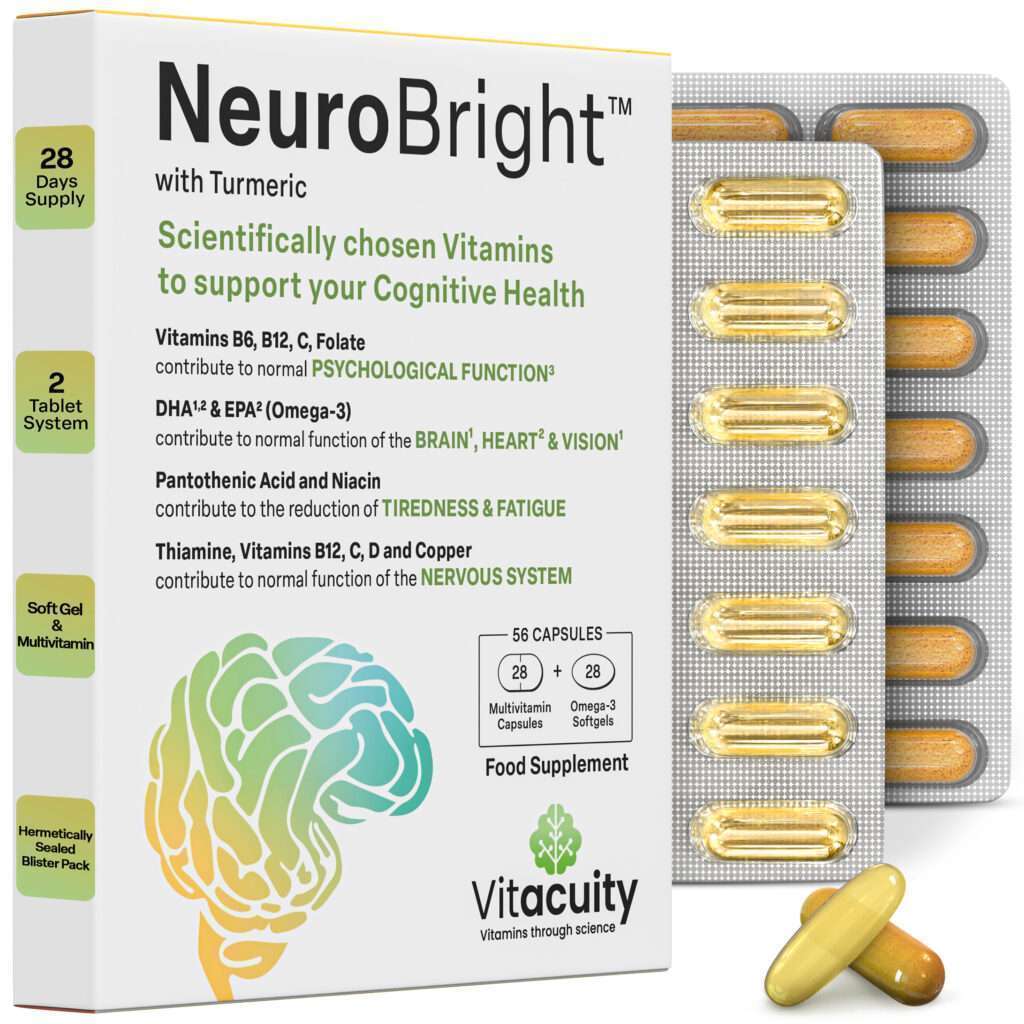
Free guide: The research behind brain health supplements
Plus our weekly research digest — straight to your inbox.
Just leave your email address.