Why Air Pollution Accelerates Cognitive Decline — And What You Can Do About It
Quick Read Tiny air pollution particles (PM2.5) from traffic and burning fuel are small enough to enter your bloodstream and
We write a new article on supplements every day , all detailed, with citations.
Once a week we send an email containing a list of the last 7 days articles. Please sign up and also feel free to share the articles with friends and family who you think might benefit.
Simon Parrott – Vitacuity Ltd
Vitamin E’s reputation for brain protection comes from solid science. Your brain consumes a lot of oxygen and produces harmful byproducts called free radicals that damage cells. Vitamin E acts as an antioxidant, neutralising these free radicals before they can cause harm. Large studies show that vitamin E as part of a regular diet or in multivitamin supplements is linked to better cognitive outcomes, and people with cognitive decline have lower vitamin E levels in their blood than healthy people.
However, when researchers tested very high doses of isolated alpha-tocopherol (one form of vitamin E) in people already showing signs of cognitive decline, it did not slow the progression to dementia. The problem may be that most trials tested only one form of vitamin E in isolation, when vitamin E is actually a family of eight compounds that likely work better together. Early research on tocotrienols, another branch of the vitamin E family, shows promise but needs more human testing.
The takeaway is that megadose supplements of single vitamin E forms are not the answer, but eating vitamin E-rich foods or taking a balanced multivitamin containing mixed forms of vitamin E remains a reasonable, safe approach as part of broader brain-healthy nutrition.
Verdict: Vitamin E shows genuine promise for brain health through diet and balanced supplements, but very high-dose single-form supplements have not proven effective for slowing cognitive decline.
What if one of the most talked-about brain-protective nutrients has been tested in almost entirely the wrong way for decades? That’s the quietly uncomfortable story sitting beneath the vitamin E and cognitive decline research, and it’s worth understanding, because the full picture is far more nuanced, and arguably far more hopeful, than the headline “vitamin E doesn’t work” would have you believe.
Most people who’ve looked into supplements for brain health have encountered some version of this narrative: vitamin E was exciting, trials were run, it didn’t deliver, move on. But here’s what that summary misses. The vast majority of clinical trials tested just one form of vitamin E, alpha-tocopherol, in isolation, often at high doses, in people who already had established Alzheimer’s disease. That’s a very specific, very limited test. Vitamin E is actually a family of eight related compounds, four tocopherols and four tocotrienols, and emerging research suggests the other members of that family may be doing some of the most interesting work. Meanwhile, studies looking at vitamin E *as part of diet and lifestyle*, rather than as a single high-dose pill, tell a quite different, more encouraging story.
At Vitacuity, we’ve analysed over 1.77 million research papers and selected the most relevant studies on this topic. Here’s what the evidence actually says.
To understand why vitamin E was ever considered a candidate for brain protection, you need to understand oxidative stress, and why the ageing brain is particularly vulnerable to it.
Your brain is metabolically greedy. It consumes roughly 20% of your body’s oxygen despite being only 2% of your body weight. That high oxygen consumption generates toxic byproducts called free radicals, unstable molecules that damage cell membranes, proteins, and DNA. This process is called oxidative stress, and it’s implicated in the gradual neuronal damage that underpins cognitive decline and Alzheimer’s disease [13].
Vitamin E is fat-soluble, which means it integrates into the fatty membranes of brain cells, precisely where free radical damage tends to occur. It acts as an antioxidant, neutralising free radicals before they can cause structural damage. In the context of Alzheimer’s, this matters because amyloid-beta plaques, the protein clumps associated with the disease, appear to trigger free radical production, which then accelerates tau protein dysfunction (the other hallmark of Alzheimer’s), creating a damaging cycle [13].
There’s also evidence from animal studies that vitamin E supplementation activates protective genes: specifically SIRT1 (linked to cellular longevity), Nrf2 (which regulates the body’s own antioxidant defences), and Calstabin2 (associated with cellular stress response) [5]. The mechanism is biologically coherent and well-supported at the cellular level. The question, and it’s a genuinely important one, is how well this translates into measurable cognitive benefit in humans.
The largest and most comprehensive review to date on this topic, published in *Nutrition Research* in 2025, systematically analysed 43 clinical studies involving 80,488 participants [1]. It’s an important piece of work, and its conclusions deserve careful reading.
The headline finding? Vitamin E consumed as part of a dietary pattern or as part of a multivitamin supplement, alongside other vitamins, minerals, and herbs, was associated with a protective effect against cognitive impairment [1]. Of the 43 studies, 18 focused on dietary vitamin E and 24 on multivitamins containing vitamin E. Together, these represent the bulk of the positive findings.
The catch, and it’s an honest one the researchers themselves acknowledge, is that it’s very difficult to isolate vitamin E’s specific contribution when it’s consumed alongside dozens of other nutrients. The protective effect may reflect the synergistic action of a whole dietary pattern or a broad-spectrum supplement, rather than vitamin E acting alone [1].
What stood out as a limitation? Only *one* study in the entire 43-paper review investigated vitamin E as a standalone supplement for cognitive protection [1]. That’s a striking gap. Most of what we know comes from population-level dietary data, not controlled trials of vitamin E supplements in isolation.
Evidence grade: Promising for dietary and combined supplementation. Limited for standalone vitamin E supplements.
One of the more compelling lines of evidence comes not from supplement trials but from biomarker research. A 2021 meta-analysis published in *Nutritional Neuroscience* examined peripheral blood levels of tocopherol (the main form of vitamin E in circulation) across studies of age-related cognitive decline and Alzheimer’s disease [12].
The finding: people with Alzheimer’s disease and those experiencing age-related cognitive decline consistently showed *lower* circulating levels of both alpha-tocopherol and gamma-tocopherol compared to cognitively healthy older adults [12].
This is an important signal, even if it can’t tell us definitively about cause and effect. Low vitamin E status is associated with worse cognitive outcomes. Whether that’s because low vitamin E *causes* cognitive decline, or whether it’s a downstream consequence of the disease process, or both, remains an open question. But the association itself is consistent and worth noting.
Evidence grade: Promising. Consistent association between lower vitamin E blood levels and cognitive decline, but causation not established.
Now for the less encouraging finding, and it’s important to understand exactly what it does and doesn’t tell us.
A Cochrane systematic review, updated in 2017, examined randomised controlled trial evidence for vitamin E in Alzheimer’s disease and mild cognitive impairment (MCI) [7][8]. The most relevant trial for people with MCI found that three years of treatment with high-dose vitamin E, 1,000 IU of alpha-tocopherol *twice daily* (2,000 IU total), probably did not reduce the risk of progressing from MCI to Alzheimer’s dementia (hazard ratio 1.02; 95% CI 0.74 to 1.41; n=516) [14]. The same trial found no significant effect on overall cognitive function, episodic memory, processing speed, or daily functional performance [14].
A separate 2024 systematic review that pooled 33 primary studies also concluded that vitamin E supplementation was “relatively ineffective” compared to vitamin D, probiotics, and omega-3 fatty acids when it came to reducing cognitive decline or dementia progression [2][15].
This is where honest communication matters. These are real negative findings from well-designed trials, and they should not be minimised. But they tell a specific story: high-dose alpha-tocopherol alone, at 2,000 IU daily, in people already showing signs of MCI, does not appear to slow progression to Alzheimer’s. That’s a narrower conclusion than “vitamin E doesn’t work for the brain.”
Evidence grade for high-dose standalone alpha-tocopherol supplementation: Conflicted-to-weak. The RCT evidence for prevention of MCI-to-dementia progression does not support it. Dietary and combined supplementation data are more encouraging.
Here’s where things get genuinely interesting for the future of this field. Vitamin E is not just alpha-tocopherol. It includes a closely related group of compounds called tocotrienols, which share the antioxidant core structure but differ in their chemical tails, a difference that affects how they move through biological tissues, including the brain.
A 2025 scoping review in the *International Journal of Molecular Sciences* systematically analysed 42 studies on tocopherol and tocotrienol supplementation in humans over the past decade [4]. Its findings are nuanced:
– Alpha- and gamma-tocopherols are associated with improved cognitive performance, reduced neuroinflammation, and preservation of synaptic proteins in human studies [4]. – Tocotrienols show lower overall plasma bioavailability (meaning they don’t circulate in the blood as readily), but they appear to concentrate selectively in certain brain regions, where they may offer structural protection, particularly to white matter, the fatty insulation around nerve fibres [4]. – The two groups of compounds may actually work *together*, with complementary mechanisms suggesting that combined supplementation could be superior to either alone [4].
A narrative review on MCI specifically found that 11 out of 22 studies showed some neuroprotective effect of vitamin E, tocopherols, or tocotrienols on the progression of MCI, but the results were genuinely mixed and researchers were careful to call them equivocal [11].
The honest conclusion from this body of work is that tocotrienols are understudied in humans, most of the compelling mechanistic data comes from cell and animal research, but the biology is interesting enough that dismissing this branch of the vitamin E family would be premature [4][13].
Evidence grade for tocotrienols in brain health: Early-to-promising stage. Mechanistically compelling, limited human trial data. Watch this space.
For completeness, it’s worth acknowledging what the animal research tells us, not as proof of human benefit, but as evidence that the underlying mechanism is real and dose-dependent.
A 2024 study in aged mice (12 months old, equivalent to middle-to-older age in human terms) divided animals into groups receiving 100, 200, or 400 mg/kg of vitamin E daily for 28 days [5]. All three doses produced significant improvements in working memory and spatial learning compared to controls. Higher doses produced greater reductions in oxidative stress markers and greater upregulation of protective genes including SIRT1, Nrf2, and Calstabin2 [5].
The researchers themselves are clear: these findings suggest vitamin E may help counteract age-related cellular changes, but further research is necessary to investigate clinical implications in humans [5]. We agree. Animal models have consistently supported the mechanistic story. The translation to human clinical outcomes is the part that remains genuinely unsettled.
Evidence grade: Early stage for mechanism. Human translation not yet confirmed.
The honest gaps in this research are significant, and they matter for how you interpret everything above.
We don’t know whether the right form of vitamin E has been tested. The vast majority of clinical trials have used alpha-tocopherol in isolation. Given that the whole vitamin E family appears to work synergistically, this may have been the wrong experimental design from the start [1][4]. We simply don’t have large-scale RCTs of mixed-tocopherol or tocotrienol supplementation for cognitive outcomes.
We don’t know whether timing matters. Most supplement trials have been conducted in people who already show signs of cognitive impairment. Whether vitamin E supplementation earlier in life, during the decade or two before symptoms appear, might offer meaningful prevention is largely unstudied [11].
We don’t know whether context matters more than dose. The strongest signals come from dietary patterns, not isolated supplementation. This could mean that vitamin E works best alongside a nutrient-rich diet. It could also mean that other nutrients in those diets are doing most of the work [1][2].
We don’t fully understand the tocotrienol story. These compounds show real promise in brain tissue specifically, but human RCT data is scarce. Dose-optimisation studies, longer follow-up periods, and better delivery methods (to improve bioavailability) are all needed before we can make confident claims [4].
Study heterogeneity is a genuine problem. Multiple reviews flagged that different studies use different doses, different forms of vitamin E, different populations, different cognitive assessment tools, and different durations, making direct comparisons across the literature almost impossible [11][4][1].
So where does this leave a sensible, informed person in their 40s, 50s or 60s who wants to do something practical for their brain health?
Let’s think about this clearly.
The negative finding, that very high-dose alpha-tocopherol alone (2,000 IU daily) doesn’t slow MCI-to-Alzheimer’s progression, is real and should temper enthusiasm for megadose supplementation of a single vitamin E form. That’s a specific finding about a specific intervention in a specific population.
The positive signals, that higher dietary vitamin E intake and broader spectrum supplementation are consistently associated with better cognitive outcomes, and that lower blood levels of vitamin E track with greater cognitive decline, are also real and consistent.
Vitamin E is fat-soluble, but at normal supplementation doses it has a low toxicity profile [4]. Unlike vitamin A (which accumulates and can cause harm at high doses), vitamin E at typical supplement levels, generally 200-400 IU daily of a mixed tocopherol formula, is well-tolerated and unlikely to cause harm. The Cochrane concerns arise specifically with sustained very high-dose alpha-tocopherol at 2,000 IU daily; that’s a very different context from a sensibly dosed daily supplement.
Here’s what a sensible, informed person would actually do:
1. Prioritise food first. Vitamin E-rich foods, nuts (especially almonds), sunflower seeds, olive oil, avocado, leafy greens, form the backbone of dietary patterns consistently associated with better cognitive ageing [1]. This isn’t just about vitamin E; it’s about the full nutritional matrix these foods deliver.
2. If you supplement, choose a mixed-tocopherol formula. Rather than isolated alpha-tocopherol (the form that has repeatedly failed in isolation trials), look for a supplement that includes multiple tocopherol forms, including gamma-tocopherol, which the blood-level research flags as relevant [12][4]. If tocotrienols are included, that’s a bonus, though this research is still emerging [4].
3. Don’t expect a miracle from a single nutrient. The strongest cognitive protection signals in this research consistently point to *combinations*, vitamin E as part of a dietary pattern or as part of a multi-nutrient supplement [1]. This is a consistent theme across the literature and it has a sensible biological basis.
4. Keep doses reasonable. Normal supplementation doses of 200-400 IU daily are a far cry from the 2,000 IU daily doses used in the failed MCI trials. You don’t need megadoses, and the evidence doesn’t support them.
5. Consider your broader supplement stack. The 2024 systematic review suggests vitamin D, probiotics, and omega-3s have stronger direct evidence for cognitive protection than standalone vitamin E [2][15]. If you’re choosing between them, those would be prioritised. But if you’re looking for a rounded approach to brain health, a good diet plus a multi-nutrient supplement including mixed tocopherols is a reasonable, safe, and evidence-consistent choice.
The vitamin E story is not a failure story. It’s an incompletely told story, and the most important chapters, particularly those about tocotrienols and mixed-form supplementation in younger, healthier populations over longer timeframes, are still being written.
[1] Vitamin E and cognitive function: A systematic review of clinical evidence (2025). DOI: 10.1016/j.nutres.2025.11.009 | https://pubmed.ncbi.nlm.nih.gov/41418497/
[2] Supplementation and Mitigating Cognitive Decline in Older Adults With or Without Mild Cognitive Impairment or Dementia: A Systematic Review (2024). DOI: 10.3390/nu16203567 | https://pubmed.ncbi.nlm.nih.gov/39458561/ | https://www.ncbi.nlm.nih.gov/pmc/articles/PMC11509913/
[3] Cognitive Decline and Vitamins (2025). https://pubmed.ncbi.nlm.nih.gov/39958203/
[4] Shifting Perspectives on the Role of Tocotrienol vs. Tocopherol in Brain Health: A Scoping Review (2025). DOI: 10.3390/ijms26136339 | https://pubmed.ncbi.nlm.nih.gov/40650110/ | https://www.ncbi.nlm.nih.gov/pmc/articles/PMC12249695/
[5] The Impact of Vitamin E Supplementation on Oxidative Stress, Cognitive Functions, and Aging-Related Gene Expression in Aged Mice (2024). DOI: 10.1002/fsn3.4548 | https://pubmed.ncbi.nlm.nih.gov/39619965/ | https://www.ncbi.nlm.nih.gov/pmc/articles/PMC11606824/
[6] Use of Vitamin E and C Supplements for the Prevention of Cognitive Decline (2017). https://pubmed.ncbi.nlm.nih.gov/27708183/
[7] Vitamin E for Alzheimer’s dementia and mild cognitive impairment (2017). https://pubmed.ncbi.nlm.nih.gov/28418065/
[8] Vitamin E for Alzheimer’s dementia and mild cognitive impairment (2017). https://pubmed.ncbi.nlm.nih.gov/28128435/
[9] Vitamin E for Alzheimer’s dementia and mild cognitive impairment (2012). https://pubmed.ncbi.nlm.nih.gov/23152215/
[11] The Role of Vitamin E in Slowing Down Mild Cognitive Impairment: A Narrative Review. DOI: 10.3390/healthcare9111573 | https://pubmed.ncbi.nlm.nih.gov/34828619/ | https://www.ncbi.nlm.nih.gov/pmc/articles/PMC8625211/
[12] A meta-analysis of peripheral tocopherol levels in age-related cognitive decline and Alzheimer’s disease (2021). DOI: 10.1080/1028415X.2019.1681066 | https://pubmed.ncbi.nlm.nih.gov/31661399/
[13] Role of Vitamin E in the Treatment of Alzheimer’s Disease: Evidence from Animal Models (2017). https://pubmed.ncbi.nlm.nih.gov/29168797/
[14] Vitamin and mineral supplementation for preventing dementia or delaying cognitive decline in people with mild cognitive impairment (2018). DOI: 10.1002/14651858.CD011905.pub2 | https://pubmed.ncbi.nlm.nih.gov/30383288/ | https://www.ncbi.nlm.nih.gov/pmc/articles/PMC6378925/
[15] Supplementation and Mitigating Cognitive Decline in Older Adults With or Without Mild Cognitive Impairment or Dementia: A Systematic Review (2024). DOI: 10.3390/nu16203567 | https://pubmed.ncbi.nlm.nih.gov/39458561/ | https://www.ncbi.nlm.nih.gov/pmc/articles/PMC11509913/
This article is for informational purposes only and does not constitute medical advice. Food supplements should not be used as a substitute for a varied and balanced diet and healthy lifestyle. If you are pregnant, breastfeeding, taking medication or have a medical condition, consult your doctor before taking any supplement. These statements have not been evaluated by the Food and Drug Administration (FDA) or the Medicines and Healthcare products Regulatory Agency (MHRA). This product is not intended to diagnose, treat, cure, or prevent any disease.
Quick Read Tiny air pollution particles (PM2.5) from traffic and burning fuel are small enough to enter your bloodstream and
Quick Read Saffron contains compounds called crocin and crocetin that appear to protect memory and slow cognitive decline through multiple
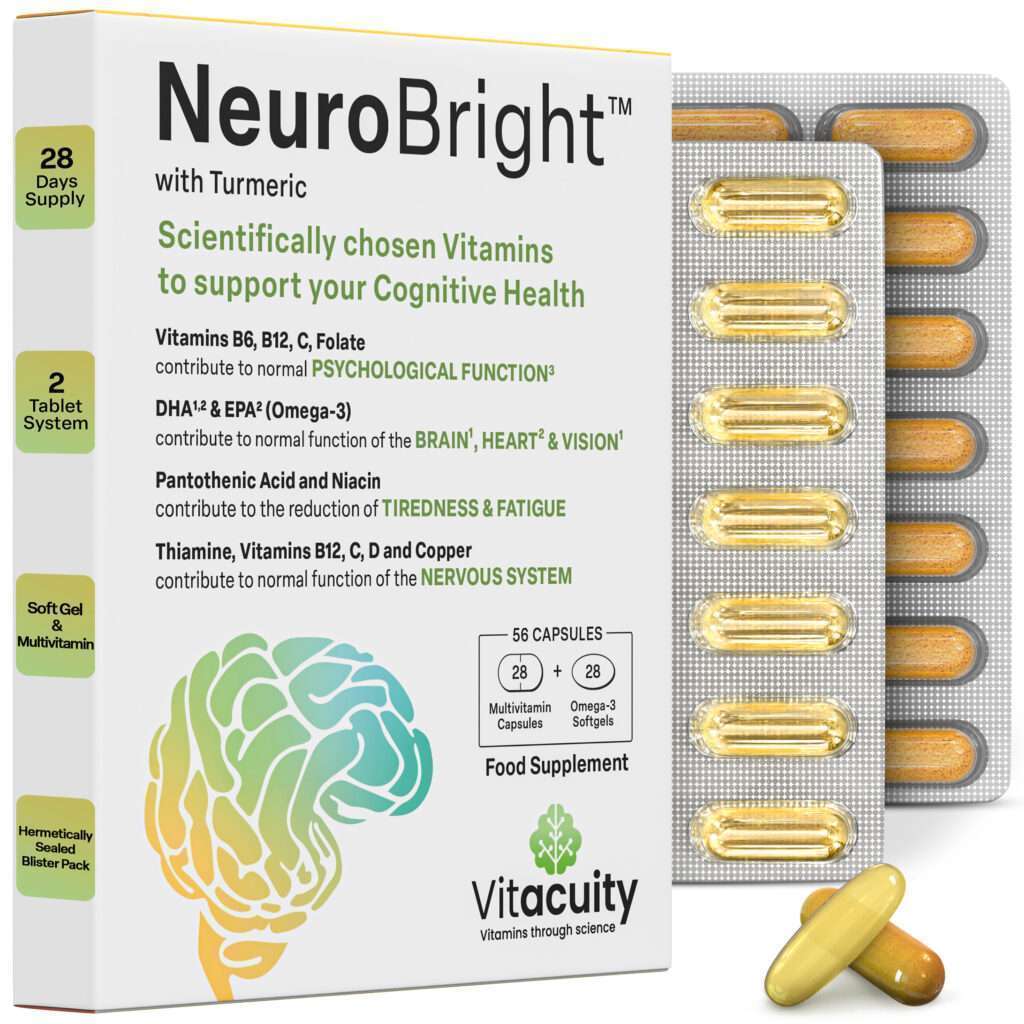
Free guide: The research behind brain health supplements
Plus our weekly research digest — straight to your inbox.
Just leave your email address.