Cold Exposure And Brain Health — What Ice Baths Actually Do To Your Neurons
Quick Read Cold exposure, particularly ice baths, activates a biological stress response called hormesis, where controlled stress triggers the body
We write a new article on supplements every day , all detailed, with citations.
Once a week we send an email containing a list of the last 7 days articles. Please sign up and also feel free to share the articles with friends and family who you think might benefit.
Simon Parrott – Vitacuity Ltd
Vitamin D3 deficiency is common and often overlooked as a cause of persistent tiredness. Your body uses vitamin D3 to power your cells’ energy-generating machinery, regulate brain chemicals that control motivation and mood, and manage immune inflammation. Research shows the link between low vitamin D and fatigue is real: a double-blind trial found vitamin D3 supplementation significantly reduced tiredness compared to placebo, and studies show nearly 85% of otherwise healthy women presenting with fatigue had low vitamin D levels.
Multiple studies document improvements in fatigue after vitamin D correction, particularly in older adults, soldiers, and people with post-COVID fatigue. However, one trial in chronic fatigue syndrome patients found no benefit, and one large study in very elderly nursing home residents found no association, suggesting the effect depends on severity of deficiency and the population studied.
Since vitamin D supplementation at normal doses (1,000 to 4,000 IU daily) carries negligible risk and the research consistently shows an association with fatigue, it represents a practical first step worth trying. Take it with food containing fat, give it several weeks to work, and consider a blood test if symptoms are severe.
Verdict: Vitamin D3 deficiency appears to be a real and common cause of tiredness that is safe and inexpensive to address through supplementation, though more definitive research is still needed to confirm benefit across all populations.
What if the tiredness you’ve been pushing through for months, the kind that makes getting off the sofa feel like an achievement, isn’t actually about stress, age, or “just how things are”? What if it has a measurable, correctable cause that a significant proportion of the UK population is quietly walking around with right now?
Vitacuity has reviewed over 1.77 million research papers and selected the most relevant studies on this topic. What they reveal about vitamin D3 and fatigue is worth paying close attention to, not because it’s a miracle cure, but because the link is real, the deficiency is widespread, and the fix is genuinely simple.
Most people think of vitamin D as a bone health nutrient. That’s a bit like thinking of the internet as a way to send emails. The reality is far more interesting.
Your body uses vitamin D3, the form made in your skin when sunlight hits it, as a signalling molecule that influences hundreds of processes. When it comes to energy and fatigue, three pathways are particularly important.
First, mitochondrial function. Your mitochondria are the tiny power stations inside your muscle cells. They convert oxygen and nutrients into ATP, the fuel your body actually runs on. Research from 2013 found that correcting vitamin D deficiency in symptomatic adults improved mitochondrial oxidative function in skeletal muscle [12]. In plain English: fixing low vitamin D helped the cells’ energy-generating machinery work better.
Second, neurotransmitter balance. Vitamin D is involved in regulating dopamine and serotonin, the brain chemicals that govern motivation, mood, and your sense of vitality. A 2024 narrative review in the journal *Nutrients* confirmed that an imbalance between these two neurotransmitters is directly linked to the genesis of fatigue, and that vitamin D plays a demonstrable role in their regulation [11].
Third, immune system function. When you’re vitamin D deficient, your immune system can become dysregulated. Chronic low-grade inflammation is profoundly exhausting, and vitamin D deficiency may be quietly fuelling it. A 2014 review outlined how deficiency reduces the antimicrobial peptide cathelicidin, disrupts natural killer T-cell function, and leads to persistent inflammation that manifests as chronic fatigue [10].
Put these three mechanisms together and you start to understand why fatigue is one of the most commonly observed symptoms of vitamin D deficiency, and why simply eating better or sleeping more doesn’t always fix it.
Evidence grade: Promising to Strong (observational data, large populations)
Before we look at whether supplementing helps, it’s worth understanding how widespread this problem actually is.
The D3 PULSE survey, one of the largest of its kind, gathered responses from 20,603 doctors across 23 Indian states and 4,472 cities in 2025 [1]. Their finding? Vitamin D3 deficiency was present in 51% to 100% of outpatient patients. And crucially, 67% of doctors reported that they clinically identify deficiency *primarily through symptoms*, with fatigue and depression at the top of the list.
This is a doctor community so familiar with the pattern of fatigue + low vitamin D that they’ve effectively built it into their diagnostic instinct.
While this data is from India and the specifics of prevalence will differ by geography, skin type, and sun exposure, the clinical picture they’re describing, exhausted patients whose fatigue is traceable to measurable vitamin D deficiency, is recognisable anywhere that people spend significant time indoors or live at northern latitudes.
Evidence grade: Strong for this specific finding (randomised controlled trial, double-blind, placebo-controlled)
This is the gold standard of evidence, a double-blind, randomised, placebo-controlled trial published in 2016 that tested vitamin D3 specifically against fatigue [6].
The results? Adults who received vitamin D3 supplementation reported significant reductions in self-perceived fatigue compared to those on placebo. The fact that it was double-blind means neither participants nor researchers knew who was taking the real supplement, ruling out placebo effect as the explanation.
This is the kind of trial that should stop a conversation in its tracks. It’s not a survey. It’s not an association study. It’s a controlled experiment, and vitamin D3 won.
Evidence grade: Promising (observational, prospective study, n=273)
The IMAGE study, published in 2025, looked at 273 participants across four groups: healthy elderly, frail elderly without cancer, frail elderly with cancer, and healthy younger adults [4].
The numbers are striking. Healthy elderly participants had median vitamin D levels of 82 nmol/L. Frail elderly without cancer had median levels of 54 nmol/L. Frail elderly with cancer had median levels of just 47 nmol/L. And the fatigue scores tracked almost perfectly with these numbers, the lower the vitamin D, the higher the fatigue rating.
Regression analysis confirmed that low vitamin D was independently associated with increased fatigue (p < 0.001), greater frailty (p < 0.001), and reduced muscle strength (p < 0.05).
This matters because muscle weakness and fatigue often travel together. If vitamin D deficiency is impairing the mitochondria in your muscle cells, as the 2013 research suggests [12], then what you’re experiencing as “getting older and feeling more tired” may, in part, be a correctable nutrient shortfall.
Evidence grade: Promising (prospective therapeutic study, n=1,200, no randomised control group)
A 2020 prospective study from India enrolled 1,200 adult women presenting to primary care with fatigue but no underlying medical illness [7]. The researchers tested their vitamin D levels and administered a fatigue assessment questionnaire.
The result: 84.8% of women who came in with fatigue as their main complaint had low vitamin D levels. After five weeks of cholecalciferol (60,000 IU weekly) supplementation to correct those levels, fatigue symptom scores improved significantly.
The honest caveat here is that this study lacked a randomised control group, so we can’t rule out that some improvement was simply natural recovery over time or placebo effect. But the scale of the finding is hard to dismiss. Nearly 85% of otherwise healthy women presenting with persistent fatigue had measurable vitamin D deficiency. That’s not a coincidence. That’s a pattern.
Evidence grade: Promising (prospective cohort study, n=152, 90 days)
A 2019 US military study enrolled 152 active-duty soldiers, divided into control and treatment groups based on their baseline vitamin D levels [14]. Those in the treatment group received vitamin D3 supplementation for 90 days.
Using validated Patient-Reported Outcomes Measurement Information System (PROMIS) scores, the treatment group showed statistically significant improvements in both fatigue and sleep (p < 0.01) compared to controls.
This is particularly interesting because soldiers are a physically active, generally healthy population, not elderly or chronically ill. If vitamin D deficiency is dragging down energy and sleep quality in fit young adults in their prime, it’s reasonable to assume the same is happening across the wider population.
Evidence grade: Promising (retrospective study, n=28, and case-control study, n=148, small samples, important signal)
Two recent papers add an intriguing dimension to this story.
A 2025 retrospective study looked at 28 patients who had developed ME/CFS (Myalgic Encephalomyelitis/Chronic Fatigue Syndrome) following COVID-19 vaccination [2]. Of these, 27 out of 28 had insufficient or deficient vitamin D levels at their initial visit (mean 16 ± 4 ng/mL). Following vitamin D replacement therapy, combining dietary counselling, sun exposure, and oral supplementation, vitamin D levels rose to a mean of 28 ± 5 ng/mL. Remarkably, 82% of patients (23 out of 28) no longer met the diagnostic criteria for ME/CFS after treatment. Sleep problems showed the greatest improvement (71%), followed by autonomic symptoms (68%).
This is a small, uncontrolled retrospective study, the authors themselves acknowledge a randomised controlled trial is needed. But as a clinical signal, it’s striking.
A separate 2025 case-control study found that Post-COVID Syndrome patients had significantly lower vitamin D levels (mean ~17 ng/mL) compared to a non-COVID control group (mean ~22-24 ng/mL), across multiple years of measurement [5]. Whether low vitamin D is a cause, a consequence, or simply a co-traveller of post-viral fatigue remains unclear, but the association is consistent.
Evidence grade: Promising (cross-sectional clinical study, n=180, 12 weeks, no control group)
A 2024 study enrolled 180 female fibromyalgia patients and administered 50,000 IU of oral vitamin D3 weekly for 12 weeks [15]. Before and after scores on the Fibromyalgia Impact Questionnaire (FIQ) and Visual Analogue Scale (VAS) for pain were compared.
Significant improvements were found in both FIQ scores (p < 0.05) and VAS pain scores (p < 0.01). The study also found a negative correlation between vitamin D levels and both pain and functional impact scores, meaning: higher vitamin D, lower symptoms.
Fatigue is a hallmark feature of fibromyalgia, and this study adds to a growing picture that vitamin D deficiency may be amplifying symptoms in people who are already struggling. Without a control group, we can’t be certain how much of the improvement was attributable to vitamin D specifically, but the signal is consistent with the broader evidence.
Here’s where we have to be honest, because the research isn’t universally positive, and you deserve the full picture.
The RCT that didn’t work. A 2015 double-blind randomised controlled trial tested high-dose intermittent vitamin D3 (100,000 IU every two months for six months) in 50 patients with chronic fatigue syndrome [8]. The result? No significant improvement in fatigue scores (adjusted treatment effect 0.2 points; 95% CI -0.8 to 1.2; p = 0.73) and no improvement in vascular or metabolic outcomes.
Why might this conflict with other findings? Several plausible reasons. The dosing schedule was unusual, large intermittent boluses rather than consistent daily supplementation. The baseline vitamin D levels weren’t severely deficient (mean 46 nmol/L), meaning there wasn’t much headroom for improvement. And CFS is a heterogeneous condition with multiple potential causes; not all CFS patients may have vitamin D-related fatigue.
The nursing home study that found no link. A 2025 Swedish cross-sectional study of 545 elderly nursing home residents found no association between vitamin D levels and non-specific symptoms including fatigue, once adjusted for age, gender, and dementia [3]. This population was very old (mean age 86), severely frail, and many had advanced dementia, making it genuinely difficult to tease apart what’s driving symptoms. The researchers suggest other causes for these symptoms deserve investigation, which is fair.
Causality is still debated. Most of the positive studies show *association*, not definitive proof that low vitamin D *causes* fatigue rather than the other way round (i.e., that being fatigued leads people to stay indoors and lose sunlight exposure). The 2024 narrative review in *Nutrients* was explicit about this: “current data on the outcomes of correcting hypovitaminosis D are conflicting”, even while acknowledging vitamin D’s clear involvement in fatigue-related pathways [11].
The bottom line on what we don’t know: We don’t have a definitive, large-scale RCT showing that supplementing vitamin D in deficient, otherwise healthy adults consistently eliminates fatigue. The existing RCT evidence is limited and, in one case, negative. What we *do* have is a consistent mechanistic case, strong observational associations, a positive double-blind RCT, and multiple clinical studies showing improvement after correction of deficiency. The signal is real. The mechanism is plausible. But science hasn’t yet tied it up with a perfect bow.
So what would a sensible, well-informed person actually do with all of this?
Here’s the practical reality. Vitamin D deficiency is common, genuinely common. If you live in the UK, work indoors, spend most of your time away from direct sunlight, or are over 40 (when skin synthesis declines), your vitamin D levels are quite likely to be sub-optimal. The NHS itself acknowledges that most people in the UK are at risk of deficiency, particularly from October to March.
The symptoms of deficiency, persistent tiredness, low mood, muscle weakness, poor sleep, are exactly the symptoms that most people in their 40s and 50s either chalk up to getting older or mention to their GP and get told “you seem fine.” The research here suggests there’s a better explanation worth testing.
Should you rush out and get a blood test first? In an ideal world, yes, a serum 25-hydroxyvitamin D test would tell you exactly where you stand. But testing isn’t always accessible, isn’t always cheap, and the research is consistent enough that we can apply some practical logic here.
Vitamin D follows the “safe to supplement” rule clearly. At normal supplementation doses of 1,000–4,000 IU daily, toxicity is effectively off the table for otherwise healthy adults. Vitamin D toxicity requires sustained mega-dosing far beyond what any standard supplement delivers. The risk of remaining deficient, given what the research shows about fatigue, muscle function, immune regulation, and long-term health, almost certainly outweighs the negligible risk of supplementing at a sensible daily dose.
Practical actions, in order of priority:
1. Supplement daily with 1,000–4,000 IU of vitamin D3 (cholecalciferol) starting now. Don’t wait for a test. Don’t agonise over the dose within this range. If you’re a larger person or you know you get very little sun, lean toward 2,000–4,000 IU. Supplement year-round in the UK, not just in winter.
2. Take it with a meal containing fat. Vitamin D is fat-soluble. Absorption is significantly better when taken alongside food that contains some dietary fat.
3. Consider adding K2. Several of the researchers flag the importance of the vitamin D pathway, K2 helps direct calcium to bones rather than soft tissues when vitamin D levels rise. The research in this article doesn’t specifically examine K2, but it’s a sensible companion nutrient.
4. Give it time. If fatigue is your concern, don’t expect overnight results. The studies that showed improvement generally ran for 5–12 weeks. Raising your serum levels takes consistent supplementation over months.
5. If symptoms are severe or persistent, do pursue a blood test. Significant deficiency (under 25 nmol/L) warrants a higher loading dose, and in that case, speaking to a GP makes practical sense.
6. Don’t expect it to fix everything. The research is honest that vitamin D is one piece of the puzzle. Sleep, stress, thyroid function, iron levels, and cardiovascular health all contribute to energy. But given that it’s safe, cheap, and backed by consistent evidence, it’s the lowest-hanging piece of fruit on the tree.
Your tiredness might not simply be “life.” It might have a cause, and a £10 bottle of vitamin D3 is a reasonable place to start.
[1] Patterns of Prevalence and Treatment Approaches of Vitamin D3 Deficiency in India: Insights from the D3 PULSE Online Cross-sectional Survey (2025). DOI: 10.4103/ijph.ijph_30_24 | https://pubmed.ncbi.nlm.nih.gov/40964738/
[2] Efficacy of vitamin D replacement therapy on 28 cases of myalgic encephalomyelitis/chronic fatigue syndrome after COVID-19 vaccination (2025). DOI: 10.1016/j.nut.2025.112718 | https://pubmed.ncbi.nlm.nih.gov/40090177/
[3] Are long-lasting nonspecific symptoms related to vitamin D deficiency among older adults living in nursing homes? (2025). DOI: 10.1186/s12877-025-06132-z | https://pubmed.ncbi.nlm.nih.gov/40556007/ | https://www.ncbi.nlm.nih.gov/pmc/articles/PMC12186412/
[4] Fatigue and Vitamin D Status in Frail Elderly with and without Cancer, and Healthy Controls of Different Ages: Results from the IMAGE Study (2025). DOI: 10.1159/000548451 | https://pubmed.ncbi.nlm.nih.gov/40952957/ | https://www.ncbi.nlm.nih.gov/pmc/articles/PMC12622988/
[5] Decreased levels of vitamin D in Post-Corona Virus-19 Disease syndrome (PCS) patients compared to a control group (2025). DOI: 10.1016/j.clnesp.2024.11.023 | https://pubmed.ncbi.nlm.nih.gov/39617141/
[6] Effect of vitamin D3 on self-perceived fatigue: A double-blind randomized placebo-controlled trial (2016). https://pubmed.ncbi.nlm.nih.gov/28033244/
[7] Can self-perceived easy fatigability be a predictor of vitamin D deficiency in young Indian women? (2020). DOI: 10.4103/jfmpc.jfmpc_862_19 | https://pubmed.ncbi.nlm.nih.gov/32318457/ | https://www.ncbi.nlm.nih.gov/pmc/articles/PMC7113952/
[8] Effect of intermittent vitamin D3 on vascular function and symptoms in chronic fatigue syndrome, a randomised controlled trial (2015). DOI: 10.1016/j.numecd.2014.10.007 | https://pubmed.ncbi.nlm.nih.gov/25455721/
[10] Review: Vitamin D3 deficiency results in dysfunctions of immunity with severe fatigue and depression in a variety of diseases (2014). https://pubmed.ncbi.nlm.nih.gov/24425848/
[11] Vitamin D and Its Role on the Fatigue Mitigation: A Narrative Review (2024). DOI: 10.3390/nu16020221 | https://pubmed.ncbi.nlm.nih.gov/38257114/ | https://www.ncbi.nlm.nih.gov/pmc/articles/PMC10818509/
[12] Improving the vitamin D status of vitamin D deficient adults is associated with improved mitochondrial oxidative function in skeletal muscle (2013). https://pubmed.ncbi.nlm.nih.gov/23393184/
[13] The effects of vitamin D(3) supplementation on serum total 25[OH]D concentration and physical performance: a randomised dose-response study (2013). https://pubmed.ncbi.nlm.nih.gov/23410885/
[14] A Prospective Cohort Study of Vitamin D Supplementation in AD Soldiers: Preliminary Findings (2019). DOI: 10.1093/milmed/usy393 | https://pubmed.ncbi.nlm.nih.gov/30901440/
[15] The effect of vitamin D treatment on quality of life in patients with fibromyalgia (2024). DOI: 10.1007/s11845-023-03521-4 | https://pubmed.ncbi.nlm.nih.gov/37707690/ | https://www.ncbi.nlm.nih.gov/pmc/articles/PMC10961268/
This article is for informational purposes only and does not constitute medical advice. Food supplements should not be used as a substitute for a varied and balanced diet and healthy lifestyle. If you are pregnant, breastfeeding, taking medication or have a medical condition, consult your doctor before taking any supplement. These statements have not been evaluated by the Food and Drug Administration (FDA) or the Medicines and Healthcare products Regulatory Agency (MHRA). This product is not intended to diagnose, treat, cure, or prevent any disease.
Quick Read Cold exposure, particularly ice baths, activates a biological stress response called hormesis, where controlled stress triggers the body
Quick Read Tiny air pollution particles (PM2.5) from traffic and burning fuel are small enough to enter your bloodstream and
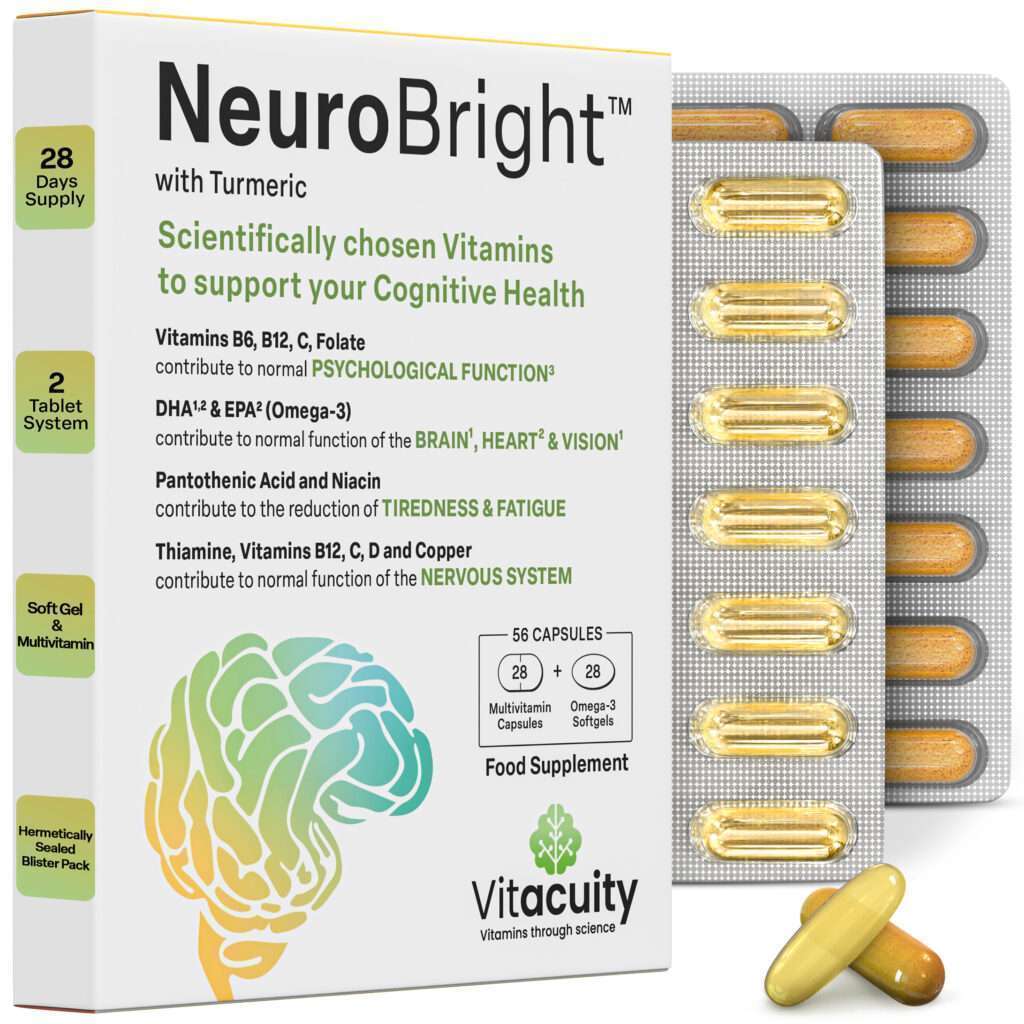
Free guide: The research behind brain health supplements
Plus our weekly research digest — straight to your inbox.
Just leave your email address.