Saffron And Memory — The Spice With Serious Evidence
Quick Read Saffron contains compounds called crocin and crocetin that appear to protect memory and slow cognitive decline through multiple
We write a new article on supplements every day , all detailed, with citations.
Once a week we send an email containing a list of the last 7 days articles. Please sign up and also feel free to share the articles with friends and family who you think might benefit.
Simon Parrott – Vitacuity Ltd
What if one of the most common nutritional deficiencies in people over 50 was quietly accelerating cognitive decline — and most people had no idea they were even low? That’s not a scare tactic. It’s a genuinely important question that researchers have been wrestling with for decades. The relationship between vitamin B12 and brain health is one of the most studied, most debated, and most misunderstood areas in nutritional science. The headlines swing wildly: “B12 prevents dementia!” versus “B vitamins do nothing for the brain.” The truth, as usual, lives somewhere more interesting — and more nuanced — than either extreme. We searched the Vitacuity database and found 15 papers on this topic. Here’s what they actually show.
Vitamin B12 — also known as cobalamin — is essential for three things your brain depends on: DNA synthesis, red blood cell formation, and healthy nervous system function [7]. Without enough of it, the myelin sheath that insulates your nerve fibres begins to degrade, signals slow down, and things start going wrong neurologically.
But the most important mechanism linking B12 to cognitive health isn’t direct — it runs through a compound called homocysteine. Think of homocysteine as a metabolic byproduct that your body produces naturally. Under normal circumstances, B12 (along with folate and B6) helps convert homocysteine into harmless compounds. When B12 levels fall, homocysteine accumulates in the blood — a condition called hyperhomocysteinaemia — and elevated homocysteine is an independent risk factor for cognitive decline and dementia [8].
This is the central hypothesis driving most of the B12 and cognition research: keep homocysteine low, protect the brain. The question researchers have been trying to answer for twenty years is whether supplementing with B vitamins actually delivers on that promise in practice.
Let’s start with what’s not in dispute. B vitamin supplementation — including B12 — reliably lowers homocysteine levels. That part is well established.
A 2017 meta-analysis of randomised controlled trials found that B vitamin supplementation (combining folate, B12, and/or B6) achieved significantly greater reductions in homocysteine than placebo, with a pooled mean difference of -3.625 μmol/L (95% CI: -5.642 to -1.608, p < 0.001) [11]. A 2021 meta-analysis of 21 RCTs involving 7,571 participants confirmed this, finding B vitamins reduced homocysteine by an average of 4.59 μmol/L (95% CI: -5.51 to -3.67, p < 0.01) [10].
So B12, as part of a B-complex approach, demonstrably reduces a known risk factor for cognitive decline. That matters. The controversy begins when we ask whether lowering homocysteine actually translates into better cognitive outcomes — and here the picture becomes more complicated.
Evidence grade: Strong that B12 lowers homocysteine. Conflicted on whether this protects cognition.
One of the most important findings to emerge from the research is that the effect of B vitamin supplementation on cognition appears to depend heavily on *when* you intervene and *how long* you supplement.
A 2022 meta-analysis — one of the more comprehensive in our database — found that B vitamin supplementation was associated with significantly slower cognitive decline in groups where the placebo group was already developing cognitive decline (4,211 participants; mean difference 0.16, 95% CI 0.05 to 0.26) [6]. Crucially, when the intervention lasted more than 12 months, B vitamins demonstrably slowed decline (3,814 participants; MD 0.15, 95% CI 0.05 to 0.26). For shorter interventions under 12 months, no significant effect was detected [6].
The same meta-analysis found that B vitamins helped in non-dementia populations (3,431 participants; MD 0.15, 95% CI 0.04 to 0.25), but showed no significant benefit once dementia was already established (642 participants; MD 0.20, 95% CI -0.35 to 0.75) [6].
This is a critical distinction. B vitamins — including B12 — appear to be a preventive tool, not a treatment for established dementia. The window of benefit may be in the years before significant cognitive impairment sets in.
A 2021 meta-analysis of 21 RCTs (7,571 participants) reinforced this, finding a significant effect on global cognitive function (SMD: 0.36; 95% CI: 0.18 to 0.54, p < 0.01) [10]. Interestingly, this effect appeared in global cognition scores but not in more specific domains like information processing speed, episodic memory, or executive function, suggesting that B vitamins may support general brain maintenance rather than rescuing specific cognitive systems.
Evidence grade: Promising to strong — multiple RCTs and meta-analyses support a protective effect in non-demented adults, particularly with long-term supplementation.
What happens when you give B12 specifically to people who already show signs of cognitive impairment? A 2023 prospective case-control study from China offers some encouraging — if preliminary — data.
The study enrolled 115 patients diagnosed with cognitive impairment and split them into a B12 treatment group (n=58) and a control group (n=57). The B12 group received intramuscular B12 (500mg daily for seven days), followed by oral cobamamide and methylcobalamin for six months. At the six-month mark, the B12 group showed significant improvement in attention, calculation (p < 0.01), and visual-constructional ability (p < 0.05) compared to controls, as measured by MMSE and MoCA assessments [15].
The study’s authors concluded that B12 may particularly improve frontal lobe function in patients with cognitive decline, and recommended that B12 levels be investigated in all patients presenting with cognitive impairment [15].
It’s worth being honest about the limitations here: this was a single centre study, the sample size was modest at 115 participants, and the treatment protocol included intramuscular injections which aren’t a practical everyday option for most people. But the direction of findings is meaningful.
Evidence grade: Promising — single study, modest sample size, but well-designed with objective cognitive measures.
Here’s something the headlines almost never mention: the 2022 meta-analysis found a notable asymmetry between the B vitamins [6]. Higher folate intake was significantly associated with a reduced risk of incident dementia (HR 0.61, 95% CI 0.47 to 0.78, in 13,529 participants), and lower folate levels were associated with higher dementia risk (OR 1.76, 95% CI 1.24 to 2.50, in 6,654 participants) [6].
Higher B12 or B6 intake alone, however, was not independently associated with lower dementia risk in this analysis [6].
What does this mean? It suggests that the B vitamins work as a team — and that folate may be particularly important in the dementia-prevention picture, while B12’s role may be more about correcting deficiency states and supporting the overall homocysteine pathway. B12 deficiency is still a genuine and significant risk, particularly in older adults, but the research suggests that a combined approach covering folate, B12, and B6 is more effective than B12 alone.
Evidence grade: Strong for folate’s association with dementia risk. Conflicted on B12 alone.
Not all the research points in the same direction — and we want to be upfront about that.
A 2020 systematic review and meta-analysis found no significant overall effect of oral B vitamin supplementation on cognitive function in cognitively unimpaired individuals (Z = 0.87; p = 0.39; SMD 0.02; 95% CI -0.034 to 0.08) [5]. The authors were careful to note that this finding applied specifically to oral supplementation in people without cognitive impairment, and did not address treatment of cognitively impaired individuals or non-oral routes of administration.
Similarly, a 2024 meta-analysis of nine RCTs found no significant effect of B12 supplementation on cognitive memory function (SMD -0.03; 95% CI -0.07 to 0.01; p = 0.18) or depressive symptoms (SMD -0.01; 95% CI -0.077 to 0.053; p = 0.71) in the general population [7]. Nine studies is a small pool, and the authors acknowledged that further research is needed to clarify which conditions — particularly pre-existing deficiency — might make B12 most effective.
And the 2017 meta-analysis is sobering in a specific way: while B vitamins reliably lowered homocysteine, this did not translate into improved MMSE scores in patients with established Alzheimer’s disease or dementia (pooled difference in MMSE: 0.027; 95% CI -0.518 to 0.573; p = 0.921) [11].
Why do these studies conflict? Several reasons: different populations (healthy vs. cognitively impaired), different B vitamin combinations, different durations (months vs. years), different baseline B12 and folate levels, and different cognitive tests measuring different things. A supplement may do nothing for a well-nourished 50-year-old with normal B12, while making a meaningful difference for a 65-year-old who is subtly deficient.
Evidence grade: Conflicted — the weight of evidence suggests benefit in people with elevated homocysteine, existing deficiency, or early cognitive concerns, with long-term supplementation. The evidence for benefit in the general cognitively healthy population is weaker.
The honest answer is: quite a lot.
We don’t know the optimal dose or form. The studies in our database used varying combinations — oral B12, intramuscular B12, combined with folate and/or B6 in different ratios [7, 15]. It’s genuinely unclear whether methylcobalamin (the active form) performs differently from cyanocobalamin (the common synthetic form), or what the ideal daily dose looks like for cognitive protection specifically.
We don’t know whether B12 acts independently or only as part of the B-complex team. Most positive studies used combined B vitamin formulas rather than B12 alone [6, 10, 11]. It’s difficult to disentangle B12’s specific contribution from that of folate and B6.
We don’t know the ideal window for intervention. The evidence suggests earlier is better [6], but we lack the long-term prospective studies needed to define precisely when supplementation becomes most critical — is it 50? 55? 40?
We don’t know who benefits most. The research strongly suggests that people with deficiency, elevated homocysteine, or mild cognitive impairment benefit most [6, 15]. But population-level screening for B12 status is uncommon, so many at-risk individuals never know they’re low.
We don’t know whether benefits persist. Most trials ran for 12-24 months. We have very little data on what happens over 5, 10, or 20 years of supplementation.
We don’t know if lowering homocysteine is the whole story. The homocysteine hypothesis is compelling and well-supported, but it may not be the only mechanism at play [8]. B12’s role in myelin maintenance, DNA synthesis, and nervous system function may matter independently of homocysteine levels [7].
Let’s think about this practically. You’re 40-65. You care about your brain. What should you actually do?
First, understand the B12 deficiency problem is real and common. B12 absorption declines with age because the stomach produces less intrinsic factor — the protein needed to absorb B12 from food. People on metformin (a common diabetes medication) are at additional risk. Vegetarians and vegans have lower dietary intake. This isn’t a theoretical concern for a small minority — it’s a meaningful risk for a large chunk of the over-50 population [4, 13].
Second, the evidence favours acting rather than waiting. The research is clearest that B vitamins help most when taken *before* significant cognitive decline develops, and when taken for longer periods — over 12 months [6]. This is an argument for starting early and being consistent, not for waiting until there’s a problem.
Third, B12 is a water-soluble vitamin. This is important. Excess B12 is excreted in urine and not stored to toxic levels. The safety profile at normal supplementation doses is excellent. There is no meaningful risk of supplementing — and a real, documented risk of deficiency. Supplement daily; any excess is safely excreted.
Fourth, don’t supplement B12 in isolation. The research consistently shows that the B vitamins work as a team — folate in particular appears to be as important as B12 in the dementia-risk picture [6]. A combined B-complex supplement covering B12, folate (ideally as methylfolate), and B6 makes more sense than B12 alone.
Fifth, if you’re over 50 and concerned, the cost of a B-complex supplement is trivial compared to the potential upside. Testing for B12 deficiency is possible, but it’s not always straightforward — serum B12 levels don’t perfectly reflect cellular B12 status, and access to testing varies. A sensible, informed person would not wait for perfect test results before taking a safe, cheap, well-supported supplement. They’d supplement, eat well (eggs, dairy, meat, or B12-fortified foods if plant-based), and note that the research supports this as a reasonable long-term protective habit.
The honest summary: B12 alone is not a magic bullet against dementia. No supplement is. But B12 deficiency is real, common, measurable, and linked to accelerated cognitive decline through a well-understood mechanism. Supplementing B12 as part of a B-complex is safe, affordable, and supported by a meaningful body of evidence — particularly for people over 50, those with elevated homocysteine, or those in the early stages of cognitive concern. The research doesn’t promise a miracle, but it makes a reasonable, science-backed case for not being deficient.
That’s a bar worth clearing.
[1] Vitamin B12 and cognitive decline (2015). Available at: https://pubmed.ncbi.nlm.nih.gov/26713042/
[2] Cognitive Decline and Vitamins (2025). Available at: https://pubmed.ncbi.nlm.nih.gov/39958203/
[3] Association between vitamin B and cognitive dysfunction (2023). Available at: https://pubmed.ncbi.nlm.nih.gov/38096853/
[4] Vitamin B12 deficiency and cognitive impairment (2022). DOI: 10.17116/jnevro202212201143 | https://pubmed.ncbi.nlm.nih.gov/35175702/
[5] Oral vitamin B supplementation and prevention of cognitive decline — systematic review and meta-analysis (2020). DOI: 10.1186/s13643-020-01378-7 | https://pubmed.ncbi.nlm.nih.gov/32414424/ | https://www.ncbi.nlm.nih.gov/pmc/articles/PMC7229605/
[6] B vitamin supplementation and cognitive decline — meta-analysis (2022). DOI: 10.1093/nutrit/nuab057 | https://pubmed.ncbi.nlm.nih.gov/34432056/
[7] Effect of vitamin B12 supplementation on cognitive memory function and depressive symptoms — meta-analysis of RCTs (2024). DOI: 10.7759/cureus.73350 | https://pubmed.ncbi.nlm.nih.gov/39655146/ | https://www.ncbi.nlm.nih.gov/pmc/articles/PMC11628180/
[8] Impact of supplementation with vitamins B on hyperhomocysteinaemia and cognitive dysfunction (2022). DOI: 10.1002/iub.2507 | https://pubmed.ncbi.nlm.nih.gov/34058062/
[9] Effectiveness of vitamin-B supplements on cognition in older adults: A meta-analysis (2023). Available at: https://pubmed.ncbi.nlm.nih.gov/36940509/
[10] Preventive efficacy of vitamin B supplements on cognitive decline in elderly adults — meta-analysis of 21 RCTs (2021). DOI: 10.1186/s12877-021-02253-3 | https://pubmed.ncbi.nlm.nih.gov/34134667/ | https://www.ncbi.nlm.nih.gov/pmc/articles/PMC8207668/
[11] Efficacy of Vitamin B Supplementation on Cognition in Elderly Patients With Cognitive-Related Diseases (2017). Available at: https://pubmed.ncbi.nlm.nih.gov/28248558/
[12] Association between vitamin B12 and cognitive dysfunction/dementia (2023). Available at: https://pubmed.ncbi.nlm.nih.gov/36930548/
[13] Is cognition impaired due to vitamin B12 deficiency? (2016). Available at: https://pubmed.ncbi.nlm.nih.gov/27119698/
[14] Homocysteine lowering and cognitive performance (2006). Available at: https://pubmed.ncbi.nlm.nih.gov/17014040/
[15] Vitamin B12 supplementation improves cognitive function in middle aged and elderly patients with cognitive impairment (2023). DOI: 10.20960/nh.04394 | https://pubmed.ncbi.nlm.nih.gov/37334792/
This article is for informational purposes only and does not constitute medical advice. Food supplements should not be used as a substitute for a varied and balanced diet and healthy lifestyle. If you are pregnant, breastfeeding, taking medication or have a medical condition, consult your doctor before taking any supplement. These statements have not been evaluated by the Food and Drug Administration (FDA) or the Medicines and Healthcare products Regulatory Agency (MHRA). This product is not intended to diagnose, treat, cure, or prevent any disease.
Quick Read Saffron contains compounds called crocin and crocetin that appear to protect memory and slow cognitive decline through multiple
Quick Read Dark chocolate contains compounds called flavanols that may help your brain work better by improving blood flow and
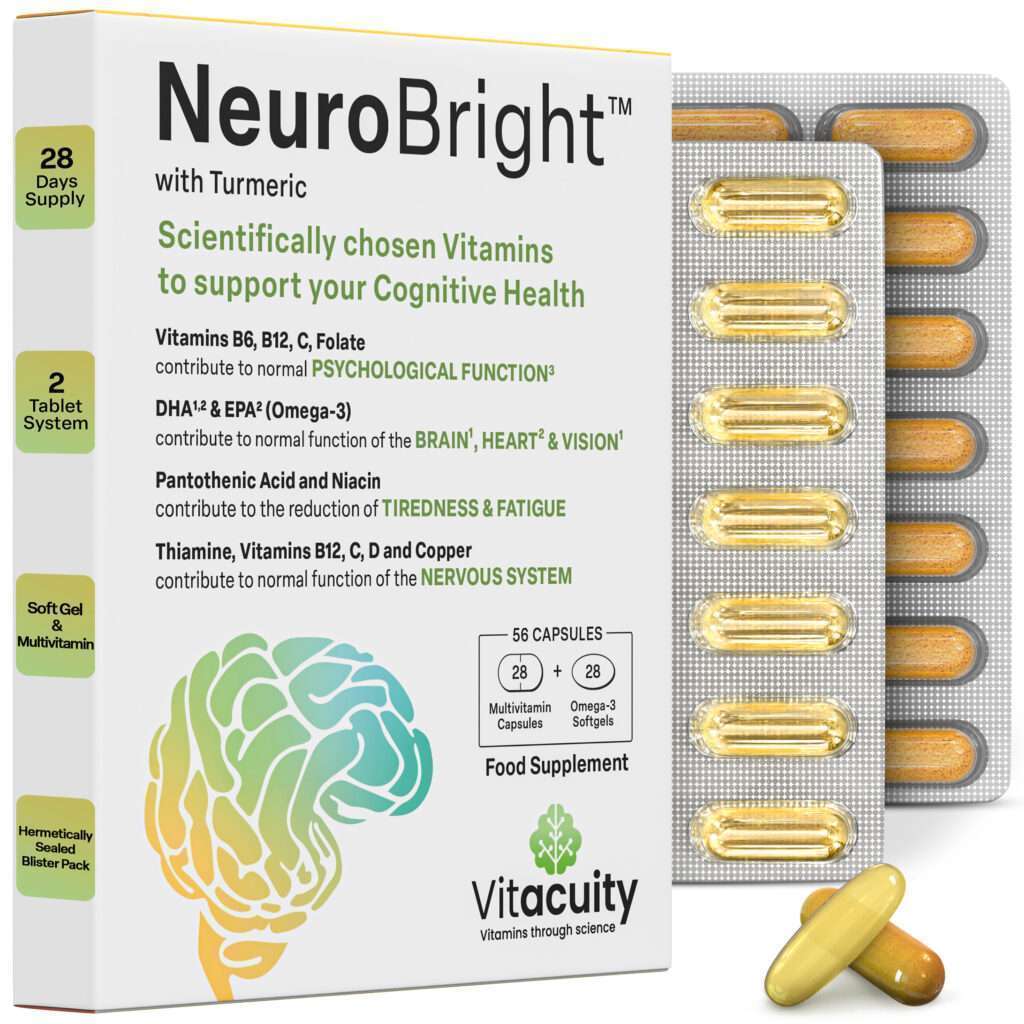
Free guide: The research behind brain health supplements
Plus our weekly research digest — straight to your inbox.
Just leave your email address.