The Supplement Timing Question — Does When You Take Them Actually Matter?
Quick Read When you take supplements matters far less than whether you take them consistently. Most supplements work by building
We write a new article on supplements every day , all detailed, with citations.
Once a week we send an email containing a list of the last 7 days articles. Please sign up and also feel free to share the articles with friends and family who you think might benefit.
Simon Parrott – Vitacuity Ltd
Your brain is roughly 60% fat, and omega-3 fatty acids (particularly DHA and EPA, found mainly in oily fish) are crucial building blocks for brain cells and the connections between them. As you age, these fatty acids help keep your brain’s “wiring” intact and reduce inflammation that damages cognitive function. Word-finding ability specifically depends on healthy white matter, the insulated pathways that allow different brain regions to communicate quickly.
Multiple studies show promising connections. A large midlife study found people with higher omega-3 levels had better brain structure and larger memory regions. A rigorous trial showed that people taking 3.36g daily of combined EPA and DHA for 30 months performed significantly better on verbal fluency tests than those on placebo. Another smaller trial found that flaxseed oil (a plant-based omega-3) also improved word-finding ability. However, benefits appear strongest for people whose omega-3 levels are already low, and your genetics (specifically the APOE4 gene variant) may affect how efficiently your brain uses omega-3.
Most people consume far too little omega-3. Practical steps include eating oily fish two to three times weekly or taking a supplement delivering 1-2g of EPA and DHA daily (much higher than standard capsules). The dose and duration matter more than many realise, and starting in midlife appears optimal. Omega-3 is safe at normal supplement levels and has a strong safety record.
Verdict: The evidence that omega-3 supports brain structure and verbal fluency in midlife is substantial enough to warrant action if your fish intake is low, though it is not a cure-all and results vary based on your baseline status and genetics.
You’re mid-sentence. The word is right there, you can feel its shape, its meaning, and then it’s gone. You reach for it and find only a frustrating blank. Most of us chalk this up to stress, or distraction, or simply “getting older.” But what if the real answer was sitting on the shelf of your local supermarket, inside a tin of sardines?
Here’s the thing: your brain is roughly 60% fat, and the single most abundant fatty acid in your cerebral cortex is DHA, docosahexaenoic acid, a long-chain omega-3 found almost exclusively in oily fish and algae [10]. Word-finding, verbal fluency, the speed at which your brain retrieves language, these aren’t random functions. They depend on the integrity of the white matter highways that connect brain regions, the volume of grey matter in areas like the hippocampus and entorhinal cortex, and the quality of the neural membranes themselves [8][13]. And all of these, the research increasingly suggests, are influenced by how much omega-3 you have in your system, especially in midlife, when the biological groundwork for later cognitive health is quietly being laid.
Vitacuity has reviewed over 1.77 million research papers and selected the most relevant studies on this topic. What follows is an honest account of what the science actually shows, and where the gaps remain.
To understand why omega-3 might affect your ability to find words, you need a brief tour of brain biology, nothing complicated, we promise.
DHA and EPA (eicosapentaenoic acid) are the two key active omega-3 fatty acids. DHA, in particular, is a structural component of neuronal cell membranes, it quite literally makes up part of the architecture of your brain cells. When DHA levels are adequate, membranes remain fluid and flexible, which helps neurons communicate efficiently. When they’re low, that communication slows [10].
But structural integrity is only part of the story. Omega-3s also have powerful anti-inflammatory properties. As we age, the brain tends to accumulate what researchers call neuroinflammation, a low-grade, chronic inflammation that disrupts signalling, damages white matter, and accelerates cognitive decline. EPA and DHA help resolve this inflammation, acting as natural brakes on the process [10].
There’s also the question of the brain’s “drainage system.” Your brain produces waste products, including toxic proteins like amyloid-beta and tau, implicated in Alzheimer’s disease, and it clears them partly through a network called the meningeal lymphatic system, running along the brain’s outer membranes. Recent animal research suggests omega-3 may help preserve this system as we age, reducing the accumulation of exactly those toxic proteins [2].
Finally, white matter, the insulated “wiring” between brain regions, appears particularly vulnerable to omega-3 status. Verbal fluency, specifically, requires rapid communication between the frontal cortex (which manages executive function) and memory-storage regions. If the white matter connecting them degrades, words don’t arrive on time [1][9].
One of the most compelling datasets comes not from a clinical trial but from a large community study, which makes its findings all the more credible, because these are real people eating real diets.
The Framingham Heart Study examined 2,183 dementia-free adults with a mean age of 46 years, genuinely middle-aged, measuring their red blood cell omega-3 concentrations and then scanning their brains using MRI [8]. The Omega-3 Index (the sum of EPA and DHA in red blood cells) was associated with better scores on abstract reasoning, episodic memory, and processing speed. Higher omega-3 levels were also linked to larger total brain volume, larger hippocampal volume, and lower white matter hyperintensity volume, those white spots on brain scans that indicate small vessel damage and are strongly associated with cognitive decline.
This is an observational study, so it can’t prove causation. But 2,183 participants is a substantial sample, and the associations held up after adjusting for confounding factors [8]. The evidence grade here is promising, strong cross-sectional associations in a large cohort, but we need more interventional trials in midlife specifically.
This is the finding that speaks most directly to the word-finding problem.
A randomised controlled trial published in the *American Journal of Clinical Nutrition* in 2021 took 285 older adults with stable coronary artery disease, all cognitively healthy at baseline, and randomly assigned them to either 3.36g per day of EPA and DHA combined, or a control group, for 30 months [6]. Cognitive function was assessed with a full neuropsychological battery at baseline, 12 months, and 30 months.
The results were specific and meaningful: the omega-3 group showed significantly better scores on a combined measure of verbal fluency, language, and memory (mean difference: 1.08; 95% CI: 0.25–1.91; P = 0.011). They also outperformed the control group on two tests of visual-motor coordination. Crucially, improvement appeared at the 12-month mark in the omega-3 group, while the control group showed no change, suggesting the benefit was real and not just regression to the mean.
No significant differences were seen by age, sex, or diabetes status, which gives the finding some generalisability [6].
A few important caveats: the dose used, 3.36g of EPA and DHA per day, is substantially higher than most standard fish oil capsules, which typically deliver 500mg to 1g. And the population had coronary artery disease, which may make them more susceptible to brain benefits from omega-3 than a fully healthy cohort. Still, this is an RCT with a decent sample size and a 30-month duration, that’s meaningful data. Evidence grade: promising to strong, with the caveat of a specific clinical population.
Most omega-3 research focuses on EPA and DHA, the forms found in fish oil. But what about ALA (alpha-linolenic acid), the plant-based omega-3 found in flaxseed, walnuts, and chia seeds? The body can convert ALA to EPA and DHA, though the conversion rate is notoriously low.
A randomised, double-blind, placebo-controlled trial published in 2023 tested exactly this question [15]. Sixty healthy older adults aged 65–80 were given either 3.7g per day of flaxseed oil (containing 2.2g of ALA) or an isocaloric placebo (corn oil) for 12 weeks. Primary outcomes included six cognitive domains, including verbal fluency, measured via the Frontal Assessment Battery, a neuropsychological test where participants name as many words as possible.
After 12 weeks, verbal fluency scores improved significantly more in the flaxseed oil group than the control group (0.30 vs. 0.03 improvement; P < 0.05). No other cognitive domains showed significant differences between groups.
The sample size is small, 60 participants, and 12 weeks is a short intervention. But the fact that verbal fluency specifically responded, mirroring the finding from the larger RCT in [6], is notable. Evidence grade: promising, the specific convergence of findings on verbal fluency is encouraging, but larger and longer trials are needed.
A smaller exploratory study published in 2023 examined 40 cognitively healthy older adults (mean age 76.3 years) who were Seventh-day Adventists, a population with notably healthy dietary patterns [9]. Blood omega-3 levels were measured and correlated with MRI brain scans and neuropsychological testing.
EPA and the overall Omega-3 Index were associated with better delayed recall and faster processing speed. Importantly, EPA, DHA, and the Omega-3 Index were all significantly correlated with total white matter volume. Higher omega-3 levels were also linked to greater entorhinal cortex thickness, a region critically involved in memory encoding and one of the earliest areas to atrophy in Alzheimer’s disease.
This is an exploratory cross-sectional study with a very small and specific population, so the findings are hypothesis-generating rather than conclusive [9]. Evidence grade: early stage for causal claims, though consistent with the broader pattern across larger studies.
A 2024 randomised clinical trial specifically targeted white matter lesions (WMLs), those patches of damage visible on brain MRI that accumulate with age and small vessel disease, and that are strongly associated with cognitive decline and dementia [1]. The trial examined whether omega-3 PUFA supplementation could slow WML progression in older adults who already had evidence of white matter damage.
The rationale is biologically grounded: lower omega-3 intake and lower tissue levels of EPA and DHA are associated with more WMLs. White matter lesions disrupt the long-range connections between brain regions, the very connections that support verbal fluency, processing speed, and executive function. If omega-3 can slow the accumulation of these lesions, it could have downstream effects on cognitive performance [1].
This is an emerging area of direct interventional research. Evidence grade: promising, the biological mechanism is well-supported, and the trial data is building, though full results from ongoing work are needed.
Not all omega-3 trials show benefits, and understanding why is as important as celebrating the ones that do.
A well-designed 2020 RCT tested 18 weeks of fish oil supplementation (1,400mg EPA + DHA per day) versus placebo in 271 healthy mid-life adults aged 30–54 who were already consuming low levels of omega-3 [7]. Overall, supplementation produced no significant improvements across four cognitive domains: psychomotor speed, executive function, learning/episodic memory, and fluid intelligence. Brain volume also didn’t change.
But the exploratory analysis told a more nuanced story: participants with particularly low baseline DHA levels showed improvements in executive function compared to placebo. This suggests that omega-3 supplementation may be most impactful for those who are actually deficient, and that moderate-dose, moderate-duration supplementation in a relatively healthy population with mixed omega-3 status may not move the needle much [7].
This is a crucial calibration point. Evidence grade: conflicted, null results overall, but with a meaningful signal for those with low baseline levels. The dose (1,400mg/day over 18 weeks) may also have been insufficient for the cognitive outcomes measured, compared to the 3,360mg/day used over 30 months in the positive RCT [6].
Similarly, a 2022 RCT with 193 adults supplementing 2.5g/day of omega-3 over 6 months found no overall cognitive improvements on primary outcomes, but did find that those with low baseline episodic memory scores and taking omega-3 improved significantly [12]. The pattern holds: it’s the people who most need it who appear to benefit most.
One reason for conflicting trial results may lie in our genes, specifically, the APOE4 allele, the most well-known genetic risk factor for Alzheimer’s disease.
A 2024 review examined how APOE4 influences omega-3 metabolism in the brain across the lifespan [5]. The APOE protein is involved in transporting lipids, including DHA, into the brain. The APOE4 variant appears to alter how the brain metabolises and retains DHA, potentially making APOE4 carriers less efficient at getting DHA where it needs to go. This could mean that APOE4 carriers may require either higher doses or different forms of omega-3, or that the timing of supplementation (earlier in life, before pathology sets in) matters more for this group [5].
The Framingham Heart Study also reported that associations between omega-3 and brain structure differed by APOE status [8]. This is an important and evolving area of research. Evidence grade: promising, the genetic angle is biologically plausible and supported by emerging data, but clinical guidance for APOE4 carriers remains to be established.
Let’s be honest about where the science is incomplete, because that’s what you deserve.
The dose question is unresolved. The positive verbal fluency RCT used 3.36g of EPA + DHA per day [6], roughly three to five times the dose in most standard supplements. The trials that found null results generally used lower doses over shorter periods [7][12]. We don’t yet know the minimum effective dose for cognitive outcomes.
Duration matters and we’re still working it out. Eighteen weeks may simply not be long enough to see brain-level changes [7]. Thirty months produced clearer results [6]. The brain is slow to change, and most trials are too short.
Most positive brain morphology studies are observational. The large Framingham data [8] and the smaller brain volume studies [9][13] show associations, not causation. People who eat more omega-3 may also make other healthy choices. The handful of RCTs with brain imaging [7][13] have mixed results.
The animal research is intriguing but not yet translatable. The meningeal lymphatic study showing omega-3 reduces toxic protein accumulation and preserves the brain’s waste clearance system was conducted entirely in mice over 12 months [2]. It’s a compelling mechanism, but we need human trials before drawing firm conclusions.
The ALA question is largely unanswered. One trial showed flaxseed oil improved verbal fluency [15], but this was in 60 people over 12 weeks. We don’t know whether the conversion of ALA to DHA was sufficient to explain the effect, or whether ALA has independent mechanisms.
Genetic personalisation is still in its infancy. The APOE4 findings [5][8] suggest that one omega-3 recommendation will not fit all, but we’re not yet at the point where GPs or supplement companies can offer meaningful personalised guidance.
Here’s what a well-informed, practically-minded friend would tell you over coffee.
The evidence that omega-3, specifically EPA and DHA, plays a meaningful role in maintaining brain structure, white matter integrity, and verbal fluency in midlife is genuinely encouraging. It’s not ironclad, and no one should promise you it will prevent dementia. But the convergence of evidence across observational studies, RCTs, and mechanistic research is substantial enough that ignoring omega-3 at midlife seems like a poor gamble.
The practical steps:
1. Assess your intake honestly. Most people in the UK consume far less EPA and DHA than is needed for the doses used in positive trials. If you eat oily fish (salmon, mackerel, sardines, anchovies, herring) two to three times per week, you’re ahead of the curve. If you don’t, and most people don’t, you almost certainly have room to improve [3].
2. Consider a meaningful dose of fish oil. The dose that produced verbal fluency benefits in the most compelling RCT was 3.36g of combined EPA + DHA per day [6]. Many standard fish oil capsules deliver 300–600mg of actual EPA + DHA per capsule, check the label, not just the “fish oil” headline figure. A quality product delivering 1–2g of EPA + DHA per day is a reasonable practical starting point; higher doses may be warranted for those with established low omega-3 status.
3. Omega-3 is safe at normal supplement doses. Unlike fat-soluble vitamins that accumulate, omega-3 at typical supplement doses (up to 3–4g per day) has a well-established safety profile. There is no meaningful risk of toxicity at these levels [3][10]. The risk of being chronically deficient, and what that means for your brain over decades, almost certainly outweighs any theoretical concern about supplementing.
4. If you follow a plant-based diet, don’t assume ALA is enough. The body’s conversion of ALA (from flaxseed, walnuts, chia) to EPA and DHA is low and variable. The flaxseed trial did show verbal fluency improvements [15], but the EPA and DHA derived from algae-based omega-3 supplements are the most direct and reliable plant-based option.
5. Think long-term and start now. The Framingham data showed these associations in 46-year-olds, people in genuine midlife, not old age [8]. If omega-3 is most protective when brain changes are still early and reversible, then the forties and fifties are exactly the right time to act. The brain you build now is the brain you’ll rely on at 70.
6. If you carry the APOE4 allele, the emerging evidence [5][8] suggests that maintaining good DHA status may be particularly important for you, and potentially from an earlier age. This is an area to watch as research develops.
The word-finding frustration you feel in midlife is not inevitable, and it is not purely a result of distraction or stress. Your brain is a biological organ that runs, in part, on fat. Feed it accordingly.
[1] ω-3 PUFA for Secondary Prevention of White Matter Lesions and Neuronal Integrity Breakdown in Older Adults: A Randomized Clinical Trial (2024). https://pubmed.ncbi.nlm.nih.gov/39088212/
[2] Long-term Omega-3 polyunsaturated fatty acid supplementation improves meningeal lymphatic function during brain aging in mice (2025). DOI: 10.1016/j.jlr.2025.100895 | https://pubmed.ncbi.nlm.nih.gov/40935193/ | https://www.ncbi.nlm.nih.gov/pmc/articles/PMC12593584/
[3] An analysis of omega-3 clinical trials and a call for personalized supplementation for dementia prevention (2024). https://pubmed.ncbi.nlm.nih.gov/38379273/
[4] From ocean to emotion: a pilot study exploring acute mood effects following consumption of a DHA-rich powder compared with placebo in middle-aged Australian men (2024). DOI: 10.1017/S0007114524002204 | https://pubmed.ncbi.nlm.nih.gov/39624031/
[5] Effects of APOE4 on omega-3 brain metabolism across the lifespan (2024). https://pubmed.ncbi.nlm.nih.gov/38609814/
[6] ω-3 Ethyl ester results in better cognitive function at 12 and 30 months than control in cognitively healthy subjects with coronary artery disease: a secondary analysis of a randomized clinical trial (2021). DOI: 10.1093/ajcn/nqaa420 | https://pubmed.ncbi.nlm.nih.gov/33675344/ | https://www.ncbi.nlm.nih.gov/pmc/articles/PMC8243604/
[7] The effects of omega-3 fatty acids on neuropsychological functioning and brain morphology in mid-life adults: a randomized clinical trial (2020). DOI: 10.1017/S0033291719002617 | https://pubmed.ncbi.nlm.nih.gov/31581959/ | https://www.ncbi.nlm.nih.gov/pmc/articles/PMC8109262/
[8] Association of Red Blood Cell Omega-3 Fatty Acids With MRI Markers and Cognitive Function in Midlife: The Framingham Heart Study (2022). DOI: 10.1212/WNL.0000000000201296 | https://pubmed.ncbi.nlm.nih.gov/36198518/ | https://www.ncbi.nlm.nih.gov/pmc/articles/PMC9754651/
[9] Omega-3 Fatty Acids, Cognition, and Brain Volume in Older Adults (2023). DOI: 10.3390/brainsci13091278 | https://pubmed.ncbi.nlm.nih.gov/37759879/ | https://www.ncbi.nlm.nih.gov/pmc/articles/PMC10526215/
[10] Structured Long-Chain Omega-3 Fatty Acids for Improvement of Cognitive Function during Aging (2022). DOI: 10.3390/ijms23073472 | https://pubmed.ncbi.nlm.nih.gov/35408832/ | https://www.ncbi.nlm.nih.gov/pmc/articles/PMC8998232/
[11] Phosphatidylserine containing omega-3 fatty acids may improve memory abilities in non-demented elderly with memory complaints: a double-blind placebo-controlled trial (2010). https://pubmed.ncbi.nlm.nih.gov/20523044/
[12] Long-chain Omega-3 fatty acids supplementation and cognitive performance throughout adulthood: A 6-month randomized controlled trial (2022). DOI: 10.1016/j.plefa.2022.102415 | https://pubmed.ncbi.nlm.nih.gov/35338847/
[13] Associations of Omega-3 fatty acids with brain morphology and volume in cognitively healthy older adults: A narrative review (2021). DOI: 10.1016/j.arr.2021.101300 | https://pubmed.ncbi.nlm.nih.gov/33607289/
[14] Circulating Omega-3 and Omega-6 Fatty Acids, Cognitive Decline, and Dementia in Older Adults (2023). DOI: 10.3233/JAD-230083 | https://pubmed.ncbi.nlm.nih.gov/37638432/ | https://www.ncbi.nlm.nih.gov/pmc/articles/PMC10765383/
[15] Supplementation with Flaxseed Oil Rich in Alpha-Linolenic Acid Improves Verbal Fluency in Healthy Older Adults (2023). https://pubmed.ncbi.nlm.nih.gov/36986229/
This article is for informational purposes only and does not constitute medical advice. Food supplements should not be used as a substitute for a varied and balanced diet and healthy lifestyle. If you are pregnant, breastfeeding, taking medication or have a medical condition, consult your doctor before taking any supplement. These statements have not been evaluated by the Food and Drug Administration (FDA) or the Medicines and Healthcare products Regulatory Agency (MHRA). This product is not intended to diagnose, treat, cure, or prevent any disease.
Quick Read When you take supplements matters far less than whether you take them consistently. Most supplements work by building
Quick Read Creatine is known as a muscle supplement, but emerging research suggests it may also boost brain performance. Your
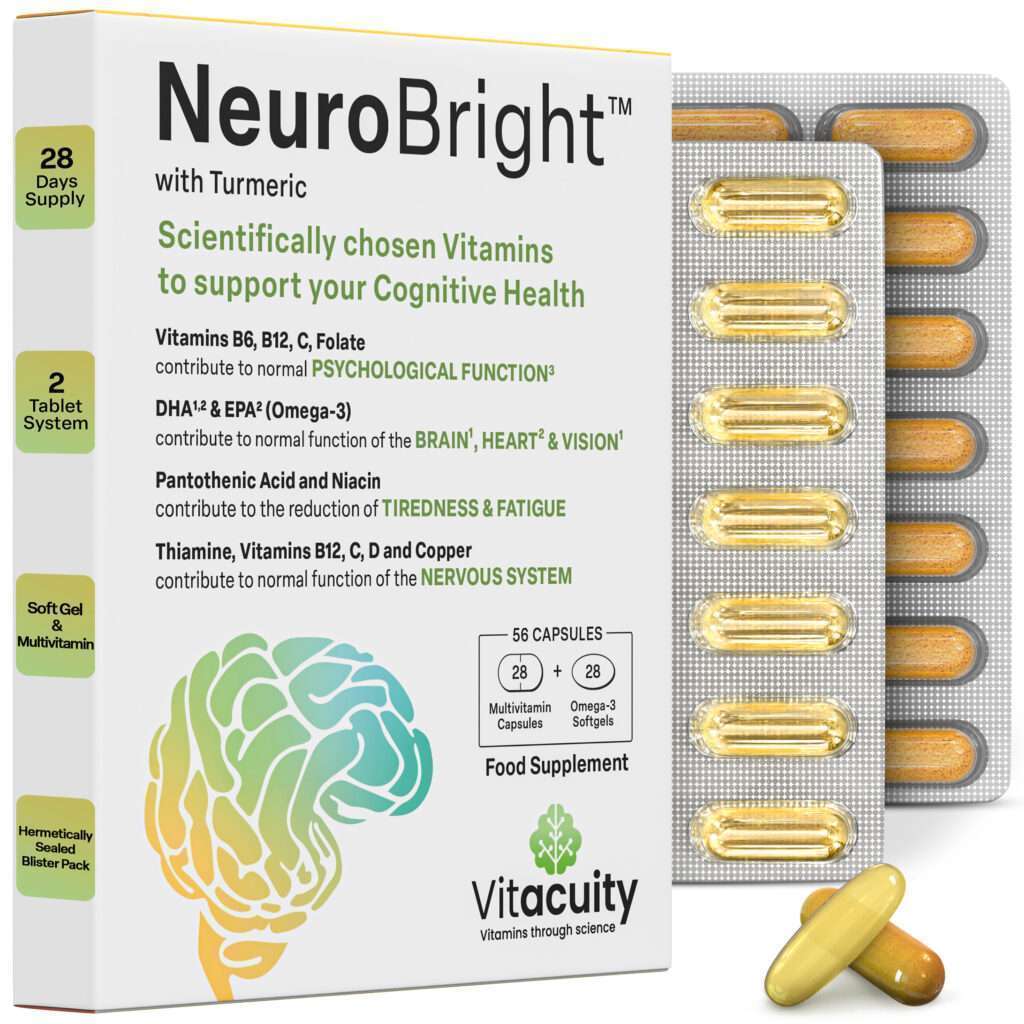
Free guide: The research behind brain health supplements
Plus our weekly research digest — straight to your inbox.
Just leave your email address.