Curcumin And Depression — The Inflammation Connection
Quick Read Depression may involve chronic, low-grade inflammation in the brain, not just a chemical imbalance. Curcumin, the active compound
We write a new article on supplements every day , all detailed, with citations.
Once a week we send an email containing a list of the last 7 days articles. Please sign up and also feel free to share the articles with friends and family who you think might benefit.
Simon Parrott – Vitacuity Ltd
Phosphatidylserine, or PS, is a fat molecule that forms part of your brain cell membranes and helps them communicate and function properly. Your brain naturally produces less PS as you age, which can make memory and thinking harder. Animal studies show this mechanism clearly: when older rats received PS, their brains released more of the memory-related chemical acetylcholine and performed better on memory tasks.
In humans, PS shows its clearest benefits for people who already notice memory problems or have mild cognitive impairment. A 2025 study of 190 people with memory difficulties found that a supplement containing PS improved short-term memory compared to placebo over 12 months. Several other studies found the same pattern: people starting with lower memory scores benefited most. Research on healthy adults with no memory complaints shows more modest results.
Research studies have tested doses ranging from 63 mg to 300 mg daily, with 100 to 300 mg appearing most common in the studies showing benefits. Safety data across all trials is reassuring, with no adverse effects reported. However, most recent positive studies used multi-ingredient supplements, making it hard to credit PS alone. Sample sizes have been modest, and studies short, so long-term benefits remain unclear.
Verdict: PS is a reasonable, evidence-informed option for people over 40 experiencing memory decline, though benefits are modest and consistent mainly in those who already have memory concerns rather than in healthy adults.
What if one of the most effective things you could do for your memory wasn’t a drug, a brain-training app, or a dramatic lifestyle overhaul, but a molecule your brain is already making, in slowly diminishing quantities, right now? Phosphatidylserine has been quietly accumulating a research record for decades. It’s not a trending ingredient. It doesn’t have a celebrity endorsement. But when Vitacuity analysed over 1.77 million research papers and pulled the most relevant studies on this topic, what we found was genuinely interesting, and, in places, surprisingly compelling. The honest answer is that this isn’t a simple story of miracle cures. But it’s a story worth telling carefully, because within the nuance, there’s real signal here.
Phosphatidylserine, usually abbreviated to PS, is a type of fat molecule called a glycerophospholipid. If that sounds technical, here’s the plain-English version: it’s a key structural component of cell membranes, and it’s found in particularly high concentrations in brain tissue [3].
Think of your neurons, your brain cells, as having a kind of outer skin. PS sits in that skin, helping cells communicate, stay flexible, and function properly. It’s especially concentrated on the *inner* surface of neural cell membranes, where it plays an important role in several signalling pathways [3]. When a neuron needs to fire, when neurotransmitters need to be released, when your brain needs to consolidate a memory, PS is involved at a structural and chemical level.
Here’s the catch that matters as you age: brain PS levels decline with age. This isn’t dramatic or sudden, but it’s consistent. As PS levels fall, cell membranes become less fluid, signalling becomes less efficient, and neurotransmitter release, including acetylcholine, the neurotransmitter most directly associated with memory, becomes impaired [3, 8].
Animal studies have shown this mechanism in action quite clearly. In aged rats, oral administration of PS increased acetylcholine release and restored a key enzyme (Na+/K+-ATPase) to levels seen in young rats, and simultaneously improved their performance on memory tasks [8]. The animal data, while not directly transferable to humans, gives us a plausible and well-understood biological reason to take the human research seriously [8, 13].
The big question, of course, is whether any of this translates when you take PS as a supplement. The answer, and this is where we have to be careful and precise, is: it depends on who you are, and what you’re measuring.
The clearest and most consistent human evidence for PS sits in a specific population: older adults who are already experiencing some degree of memory difficulty, but who don’t have dementia. In the research, this is typically called “mild cognitive impairment,” or MCI.
A well-designed 2025 randomised, double-blind, placebo-controlled trial published in the *Journal of Affective Disorders* recruited 190 MCI patients in Tianjin, China, with a mean age of around 68 years [1]. Participants received either a supplement containing PS (63 mg/day), alpha-linolenic acid (ALA), and small amounts of ginkgo flavonoids and B vitamins, or a placebo, for 12 months.
The results were statistically significant across multiple domains. The intervention group showed meaningful improvements in arithmetic (β = 0.688), similarity testing (β = 1.070), and, most notably, short-term memory (β = 0.600, 95% CI 0.399–0.800) compared to placebo [1]. Interestingly, the researchers also found that the supplement elevated levels of several important neurochemicals in the blood, including acetylcholine, GABA, serotonin, and omega-3 fatty acids (ALA, EPA, and DHA) [1].
One nuance worth noting: this study used a combination supplement, not PS alone. The researchers found that rising ALA levels mediated approximately 19.7% of the short-term memory improvement, meaning PS wasn’t the only active ingredient [1]. So while the results are encouraging, we can’t attribute everything to PS in isolation.
Evidence grade: Promising, a well-designed RCT with 190 participants over 12 months, but using a multi-ingredient supplement, which makes it harder to attribute effects to PS specifically.
A 2010 study (cited in the research) examined PS containing omega-3 fatty acids (specifically PS-DHA, where DHA is attached to the PS backbone) in non-demented elderly people with memory complaints [10]. Again, this is the population where PS seems to find its most reliable effect, people who aren’t clinically impaired, but who are noticeably struggling with memory in daily life.
This double-blind, placebo-controlled trial adds to a picture that emerges across the literature: PS appears to have its clearest effects in people who already have something to recover or protect, rather than in people whose cognition is currently at peak [7].
This finding was also echoed in a 2010 Japanese study by Kato-Kataoka et al., which investigated soy-derived PS in 78 elderly Japanese adults (aged 50–69) with mild cognitive impairment [5]. Over six months, at doses of either 100 mg or 300 mg per day, the overall group results were mixed, neuropsychological scores improved in both the treatment and placebo groups. But when researchers looked specifically at participants who scored *lower* at baseline, PS-treated groups showed significant improvements in memory that didn’t occur in the placebo group, with the improvements specifically driven by *delayed verbal recall*, the ability to remember something after a gap of time [5].
Delayed verbal recall is significant because it’s one of the first memory functions to decline with age, and one of the earliest markers of dementia risk. The fact that PS appeared to specifically improve this metric in the most vulnerable participants is worth noting.
Evidence grade: Promising, consistent effects in the MCI and memory-complaint population, with clearest results in those with lower baseline scores. Sample sizes are modest (78 participants in the Japanese study), and not all measures showed improvement.
A 2014 pilot study took a different approach, combining PS with phosphatidic acid (PA), another phospholipid that may work synergistically with PS to support brain cell membrane health [6]. This was an early-stage pilot study, and the researchers were transparent about that.
In the first part of the study, elderly people with memory complaints (but not dementia) took 300 mg PS + 240 mg PA daily for three months. The PS+PA group showed statistically significant improvements in memory compared to placebo, and also appeared to avoid the mood dip (“winter blues”) that the placebo group experienced [6].
The more striking, and more tentative, finding came from a second arm of the study involving Alzheimer’s patients. In this two-month trial (n = 53 in the PS+PA group, n = 39 in the placebo group), patients taking PS+PA maintained their ability to perform daily living activities, while the placebo group showed measurable decline, from an average of 5.62 activities to 4.90 (p = 0.035) [6]. The PS+PA group also showed 3.8% deterioration versus 17.9% in the placebo group, and 49% reported improved general condition versus 26.3% on placebo [6].
These are genuinely interesting numbers. But this was a pilot study with relatively small groups, short follow-up, and combination supplementation. The researchers themselves called for longer-term studies before drawing firm conclusions [6].
Evidence grade: Early stage for Alzheimer’s / Promising for non-demented memory complaints, pilot data only for the AD arm, but the signal is intriguing and the methodology was controlled.
This is where the story gets more complicated, and where intellectual honesty matters most.
A 2023 randomised, double-blind, placebo-controlled study published in *Neurology and Therapy* examined the Neuriva® supplement (a combination of whole coffee cherry extract and PS) in 138 healthy adults aged 40–65 who reported memory problems [2, 15]. After 42 days, the PS-containing supplement produced statistically significant improvements in working memory accuracy (p ≤ 0.024), reaction time (p ≤ 0.031), and picture recognition accuracy (p = 0.035) compared to placebo [2].
These are real results from a well-structured trial, but again, this is a *combination* product, and it’s not possible to separate the PS contribution from the coffee cherry extract. No significant differences were found for BDNF levels, the Everyday Memory Questionnaire, or Go/No-Go tests [2].
A 2003 review published in *Nutrition*, which examined double-blind, placebo-controlled studies across multiple cognitive supplements, offered an important overall perspective on the PS literature [7]. The reviewers concluded that PS had “produced consistently modest increases in recall of word lists” in older adults with moderate cognitive impairment. For the general healthy adult population, the picture was more limited: only one study reported consistent benefits across multiple memory tests, and even then only in a subgroup of adults who performed more poorly than their peers at baseline [7].
“Modest” and “subgroup-dependent” are words that shouldn’t be ignored. But “modest” doesn’t mean “nothing.” And the consistency of the subgroup finding, people who start lower benefit more, is itself a consistent finding across multiple studies.
Evidence grade: Promising for those with existing memory concerns; limited for cognitively healthy adults with no complaints.
Across the research, PS doses ranged from 63 mg/day (in the multi-ingredient 2025 trial) to 300 mg/day (in several single-ingredient studies) [1, 5, 6, 7, 14].
The 300 mg/day dose has the most historical precedent in the older literature, and the Japanese study used 100 mg or 300 mg, with both doses producing similar improvements in the low-baseline subgroup [5]. The 2014 PS+PA combination study used 300 mg PS + 240 mg PA daily [6].
A 2015 study examining PS in Alzheimer’s patients (both human and rodent) used 300 mg/day in the human arm and found significant improvements in vocabulary and picture matching scores compared to controls [14]. In the rat arm, 30 mg/kg outperformed 15 mg/kg, suggesting a dose-response relationship [14].
The safety picture across all these studies is consistently reassuring. Multiple trials reported no adverse effects at these doses, and a comprehensive 2024 review of PS synthesis, metabolism and nutrition confirmed that clinical studies have shown PS to be safe and well-tolerated [3].
Let’s be direct about the limits of this research, because they matter.
The combination supplement problem. Several of the most encouraging recent trials, including the 2025 Chinese MCI study and the 2023 Neuriva® trial, used multi-ingredient formulations [1, 2]. This makes it very difficult to attribute observed effects specifically to PS. We can say the *supplement* worked. We can’t always say PS alone was responsible.
The “who benefits most” question. The pattern across studies is fairly clear: people who start with lower cognitive scores, or who already have memory complaints, appear to benefit more than people with no symptoms. What’s less clear is whether PS can *prevent* decline in healthy, symptom-free adults, the studies simply haven’t been long enough or large enough to answer that.
Sample sizes and duration. Most of the human trials are in the 50–200 participant range, and run for six months or less. These are respectable pilots and proof-of-concept studies, but they’re not the large-scale, long-duration trials that would let us speak with real confidence about long-term cognitive protection.
The source of PS matters. Earlier research used bovine brain-derived PS, which was the gold standard in older studies but is no longer commercially available for obvious reasons. Modern supplements use soy-derived or sunflower-derived PS, which have different fatty acid profiles. The animal research suggests soy-derived PS still works via similar mechanisms [8, 13], but the older and newer research isn’t perfectly comparable.
Alzheimer’s specifically. The 2015 study and the 2014 pilot both suggest PS may help people with Alzheimer’s disease, but these are small, short studies [6, 14]. A 2003 review noted that one study actually *failed* to find positive effects in probable Alzheimer’s patients [7]. This is a conflicted picture. The weight of evidence is tentatively positive for *stabilising* function rather than reversing it, but much more research is needed before any firm conclusions can be drawn.
Children and younger adults. A 2025 RCT in healthy children aged 8–12 found no significant differences in the primary outcomes from 100 mg/day of sunflower PS over 12 weeks, though a subgroup of children with below-median performance did show some benefit on a visuospatial memory task [4]. This mirrors the adult pattern, those who start lower may benefit more. But the evidence base for younger populations is thin.
Here’s what a sensible, well-informed person should take from all of this.
PS is not a miracle. It will not restore a 65-year-old’s memory to their 25-year-old self. The research doesn’t say that, and we won’t pretend otherwise.
But if you’re 40–65, noticing that names and words are slightly harder to retrieve than they used to be, and you’re thinking about what you can do now to support your brain health for the long term, PS is one of the more credible things on the supplement shelf. Not because the evidence is overwhelming, but because the evidence is consistent in a specific and meaningful direction: people who are already experiencing mild memory decline, or who have memory complaints, tend to benefit.
The biological mechanism is sound and well-understood [3, 8]. The safety record across multiple human trials is clean [3, 5, 6]. The effective doses used in research, 100 to 300 mg/day, are achievable with standard supplements. And crucially, deficiency risk is real: PS levels in the brain decline with age, dietary sources (mostly organ meats and fish) are things most people rarely eat in meaningful quantities, and the body’s own synthesis capacity decreases over time [3].
PS is fat-soluble, but unlike vitamins A and D, it doesn’t have a known toxicity concern at normal supplemental doses. Multiple studies have explicitly noted no adverse effects [3, 5, 6]. This isn’t a case where you need a blood test before deciding whether to supplement.
Our practical recommendation: If you’re over 40 and have any concerns about memory, a dose of 100–300 mg/day of PS (soy or sunflower-derived) is a reasonable, evidence-informed thing to try. Look for studies lasting at least six months, because the research suggests this isn’t an overnight effect. Some of the more interesting research combined PS with omega-3 fatty acids [1, 10], which is consistent with what we know about the structural role of DHA in brain cell membranes, so a PS supplement that also contains or is paired with omega-3s is worth considering.
Don’t expect dramatic changes. Do expect that you’re doing something biologically sensible based on a growing body of controlled research, and that your brain, which is quietly working very hard to keep you thinking clearly, will likely thank you for the support.
[1] Effects of a food supplement containing phosphatidylserine on cognitive function in Chinese older adults with mild cognitive impairment: A randomized double-blind, placebo-controlled trial (2025). DOI: 10.1016/j.jad.2024.09.131 | https://pubmed.ncbi.nlm.nih.gov/39317299/
[2] A Randomized, Double-Blind, Placebo-Controlled, Parallel Study Investigating the Efficacy of a Whole Coffee Cherry Extract and Phosphatidylserine Formulation on Cognitive Performance of Healthy Adults with Self-Perceived Memory Problems (2023). DOI: 10.1007/s40120-023-00454-z | https://pubmed.ncbi.nlm.nih.gov/36929344/ | https://www.ncbi.nlm.nih.gov/pmc/articles/PMC10195946/
[3] Phosphatidylserine: A comprehensive overview of synthesis, metabolism, and nutrition (2024). DOI: 10.1016/j.chemphyslip.2024.105422 | https://pubmed.ncbi.nlm.nih.gov/39097133/
[4] The cognitive effects of supplementation with sunflower phosphatidyl serine in healthy children aged 8 to 12 years: a randomized controlled trial (2025). DOI: 10.1186/s12937-025-01264-9 | https://pubmed.ncbi.nlm.nih.gov/41318468/ | https://www.ncbi.nlm.nih.gov/pmc/articles/PMC12772107/
[5] Soybean-derived phosphatidylserine improves memory function of the elderly Japanese subjects with memory complaints (2010). https://pubmed.ncbi.nlm.nih.gov/21103034/
[6] Positive effects of soy lecithin-derived phosphatidylserine plus phosphatidic acid on memory, cognition, daily functioning, and mood in elderly patients with Alzheimer’s disease and dementia (2014). DOI: 10.1007/s12325-014-0165-1 | https://pubmed.ncbi.nlm.nih.gov/25414047/ | https://www.ncbi.nlm.nih.gov/pmc/articles/PMC4271139/
[7] “Brain-specific” nutrients: a memory cure? (2003). DOI: 10.1016/s0899-9007(03)00024-8 | https://pubmed.ncbi.nlm.nih.gov/14624946/
[8] Oral administration of soybean lecithin transphosphatidylated phosphatidylserine improves memory impairment in aged rats (2001). DOI: 10.1093/jn/131.11.2951 | https://pubmed.ncbi.nlm.nih.gov/11694624/
[9] “Brain-Specific” Nutrients: A Memory Cure? (2002). DOI: 10.1111/1529-1006.00007 | https://pubmed.ncbi.nlm.nih.gov/26151475/
[10] Phosphatidylserine containing omega-3 fatty acids may improve memory abilities in non-demented elderly with memory complaints: a double-blind placebo-controlled trial (2010). https://pubmed.ncbi.nlm.nih.gov/20523044/
[11] Effects of a food supplement containing phosphatidylserine on cognitive function in Chinese older adults with mild cognitive impairment: A randomized double-blind, placebo-controlled trial (2025). DOI: 10.1016/j.jad.2024.09.131 | https://pubmed.ncbi.nlm.nih.gov/39317299/
[12] Oral administration of porcine liver decomposition product for 4 weeks enhances visual memory and delayed recall in healthy adults over 40 years of age: A randomized, double-blind, placebo-controlled study (2020). DOI: 10.1016/j.exger.2020.111064 | https://pubmed.ncbi.nlm.nih.gov/32841683/
[13] Pharmacological effects of phosphatidylserine enzymatically synthesized from soybean lecithin on brain functions in rodents (1996). https://pubmed.ncbi.nlm.nih.gov/8708821/
[14] Effect of phosphatidylserine on memory in patients and rats with Alzheimer’s disease (2015). https://pubmed.ncbi.nlm.nih.gov/26345866/
[15] A Randomized, Double-Blind, Placebo-Controlled, Parallel Study Investigating the Efficacy of a Whole Coffee Cherry Extract and Phosphatidylserine Formulation on Cognitive Performance of Healthy Adults with Self-Perceived Memory Problems (2023). DOI: 10.1007/s40120-023-00454-z | https://pubmed.ncbi.nlm.nih.gov/36929344/ | https://www.ncbi.nlm.nih.gov/pmc/articles/PMC10195946/
This article is for informational purposes only and does not constitute medical advice. Food supplements should not be used as a substitute for a varied and balanced diet and healthy lifestyle. If you are pregnant, breastfeeding, taking medication or have a medical condition, consult your doctor before taking any supplement. These statements have not been evaluated by the Food and Drug Administration (FDA) or the Medicines and Healthcare products Regulatory Agency (MHRA). This product is not intended to diagnose, treat, cure, or prevent any disease.
Quick Read Depression may involve chronic, low-grade inflammation in the brain, not just a chemical imbalance. Curcumin, the active compound
Quick Read Cold exposure, particularly ice baths, activates a biological stress response called hormesis, where controlled stress triggers the body
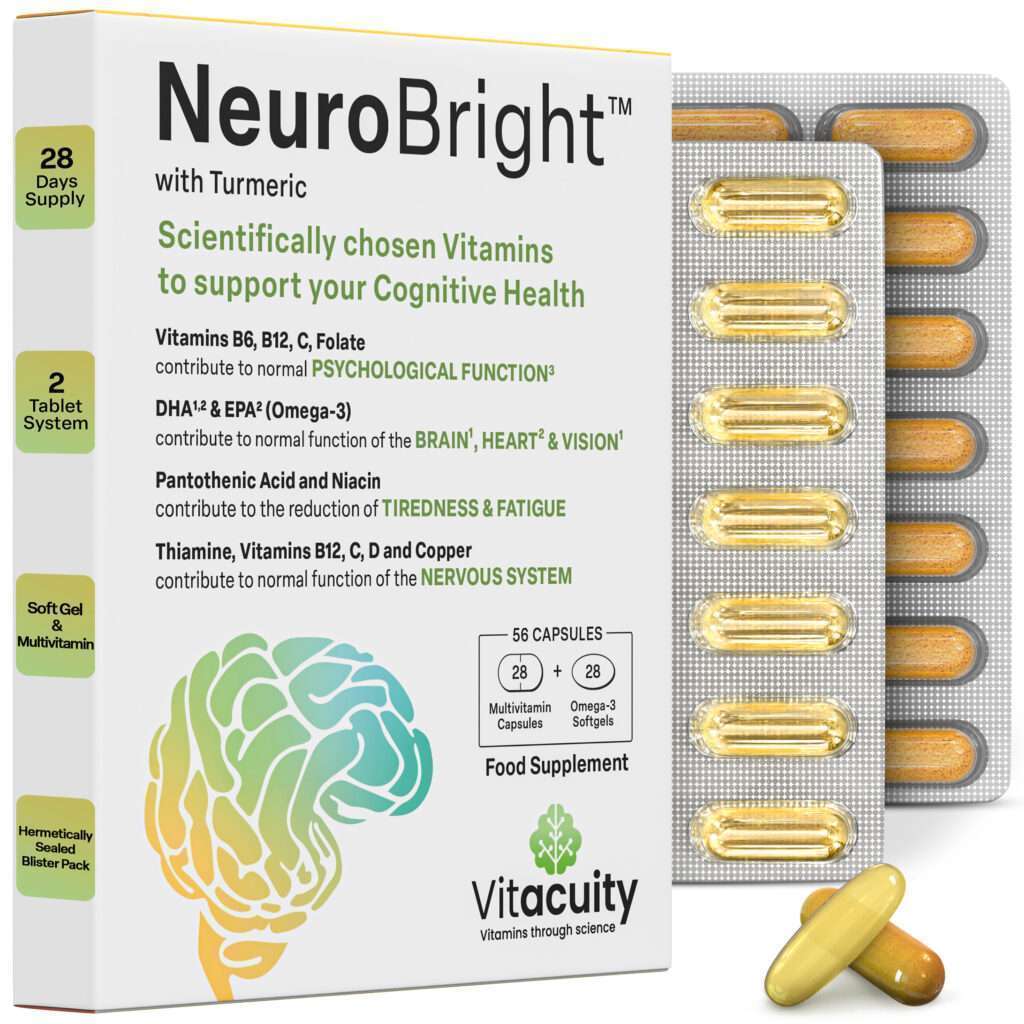
Free guide: The research behind brain health supplements
Plus our weekly research digest — straight to your inbox.
Just leave your email address.