The Supplement Timing Question — Does When You Take Them Actually Matter?
Quick Read When you take supplements matters far less than whether you take them consistently. Most supplements work by building
We write a new article on supplements every day , all detailed, with citations.
Once a week we send an email containing a list of the last 7 days articles. Please sign up and also feel free to share the articles with friends and family who you think might benefit.
Simon Parrott – Vitacuity Ltd
Phosphatidylserine (PS) is a fat molecule that naturally exists in every cell, especially in the brain, where it helps regulate nerve signals and supports memory chemicals. Your body produces less of it as you age, and dietary sources are often insufficient. Multiple small clinical trials over 25 years have consistently shown that PS supplements, typically at 100-300 mg daily, may improve memory, reasoning, and daily functioning in older adults with mild memory problems or early cognitive decline.
The strongest recent evidence comes from a 2025 study of 190 people with mild cognitive impairment, which found improvements in short-term memory and reasoning over 12 months. Other trials show PS was particularly helpful for those with the lowest baseline memory scores. Importantly, most promising studies combined PS with other nutrients like omega-3 fatty acids, so it is unclear how much benefit comes from PS alone. No serious side effects have been reported across trials.
The research suggests PS may be most valuable as an early intervention when people first notice memory changes, rather than after significant decline has occurred. Long-term data beyond one year is lacking, and studies use relatively small groups of participants. PS appears safe at typical doses and is naturally present in foods like meat, fish, and soy.
Verdict: Phosphatidylserine shows promising but not yet definitive evidence for supporting memory in people with mild cognitive concerns, with a strong safety profile and decades of consistent research support.
What if one of the most important molecules for protecting your brain was already sitting inside every cell in your body, and the question wasn’t whether to get more of it, but simply whether you’re getting enough? Most people have never heard of phosphatidylserine. It doesn’t have the cultural cachet of omega-3 or the marketing budget of ginkgo biloba. But quietly, across decades of research, it has accumulated one of the more interesting evidence bases in cognitive health nutrition. Here’s what we actually know, and, just as importantly, what we don’t.
Phosphatidylserine, PS for short, is a type of fat molecule called a phospholipid, and it’s not some exotic extract from a Himalayan root. It’s already present in every cell membrane in your body, with the highest concentrations found in brain tissue [2].
Think of your brain cells as having a carefully constructed outer wall. Phosphatidylserine sits in the inner layer of that wall, where it performs several jobs simultaneously. It helps regulate how signals pass between nerve cells. It acts as a cofactor, a kind of molecular helper, for enzymes involved in brain signalling pathways. It plays a role in managing neuroinflammation and in the process of synaptic refinement, which is the brain’s way of strengthening the connections that matter and pruning the ones that don’t [2].
There’s also a neurotransmitter angle. Research suggests PS is involved in the production and release of acetylcholine, one of the brain’s most important memory chemicals, the same one that Alzheimer’s drugs attempt to preserve [7][14]. When PS levels decline, as they naturally do with age, this whole system comes under strain.
The practical problem is this: the body can synthesise its own PS, but production becomes less efficient as we age, and dietary intake, primarily from meat, fish, and soy, is often insufficient to compensate. That gap is what’s driven decades of supplementation research.
Evidence grade: Promising, one well-designed RCT with 190 participants over 12 months
One of the most rigorous recent trials was published in the *Journal of Affective Disorders* in 2025 [1]. Researchers in Tianjin, China recruited 190 older adults (average age 68) who had already been diagnosed with mild cognitive impairment, MCI, the stage researchers consider the critical window before dementia can take hold.
Participants were randomly assigned to either a supplement containing PS (63 mg/day total), alpha-linolenic acid (ALA), ginkgo flavonoids, and B vitamins, or a matched placebo. They took it daily for 12 months.
The results were statistically significant across three cognitive measures. The intervention group showed meaningful improvements in arithmetic performance (β = 0.688), similarity reasoning (β = 1.070), and, notably, short-term memory (β = 0.600, 95% CI 0.399–0.800). These aren’t abstract numbers; they represent real, measurable differences in how well people could think and remember [1].
What made this study particularly interesting was the biological mechanism it uncovered. The supplement group showed significant increases in serum levels of ALA, DHA, and EPA, the omega-3 fatty acids, alongside increases in acetylcholine, GABA, and serotonin. Importantly, statistical analysis suggested that rising ALA levels in the blood explained about 19.7% of the short-term memory improvement, suggesting a synergistic mechanism at work rather than PS acting alone [1].
One important caveat: this was a combination supplement, not pure PS. Disentangling exactly how much of the effect belongs to PS versus ALA versus ginkgo is not possible from this data.
Evidence grade: Promising, double-blind RCT, 78 participants, 6 months
A 2010 double-blind, randomised controlled trial published with 78 elderly Japanese participants (aged 50–69) with mild cognitive impairment tested soybean-derived PS at either 100 mg or 300 mg per day against placebo over six months [4].
The headline finding requires careful reading. In the group as a whole, all three groups, both PS doses and placebo, showed improvements on neuropsychological tests, which is a common phenomenon in cognitive trials (simply being tested tends to improve performance). However, when researchers looked specifically at participants who had the lowest baseline scores, those with the most significant memory difficulties at the start, a clear difference emerged. In this subgroup, PS-treated participants showed significant improvements in memory scores versus their own baseline, while the placebo group’s scores remained flat [4].
The specific memory ability that improved was delayed verbal recall, the ability to remember something you were told earlier, without being reminded. Researchers noted this is one of the first cognitive skills to deteriorate in the early stages of dementia, making it a particularly meaningful outcome to measure [4].
No negative side effects were observed at either dose.
Evidence grade: Promising, two small pilot RCTs, largest n=92, 2-3 months duration
A 2014 paper reported on two early-stage pilot studies using a combination of 300 mg PS and 240 mg phosphatidic acid (PA) daily, both derived from soy lecithin [9].
The first study, a 3-month double-blind, placebo-controlled trial in elderly people with memory complaints but without dementia (n=57 per protocol), found that the PS+PA group showed significant improvements in memory using the Wechsler Memory Scale, a well-validated cognitive assessment, while the placebo group did not [9].
The second study, a 2-month randomised controlled trial in patients with diagnosed Alzheimer’s disease (n=92 per protocol), produced a striking finding. In patients taking PS+PA, daily functioning across seven activities of daily living remained stable. In the placebo group, daily functioning declined measurably, from an average score of 5.62 to 4.90. The group difference was statistically significant (P=0.021) [9].
Perhaps the most telling data point: after the trial ended, 43% of patients in the PS+PA group chose to continue supplementation while still blinded to whether they’d been taking the active treatment or placebo. None of the placebo group did. No negative side effects were observed [9].
These are small, short-duration pilot studies, they cannot tell us about long-term outcomes, but they’re a genuine signal worth taking seriously.
Evidence grade: Promising, double-blind placebo-controlled trial, elderly participants with memory complaints
A 2010 double-blind, placebo-controlled trial tested a marine-sourced form of PS with omega-3 DHA directly attached to its backbone, known as PS-DHA, in non-demented elderly individuals with self-reported memory complaints [11]. A companion safety study published in 2011 confirmed that PS-DHA was well-tolerated with no concerning changes in blood markers, blood pressure, body weight, or heart rate over the course of the trial and a subsequent open-label extension [12].
This combination is notable because it effectively delivers two brain-relevant nutrients in a single molecule: the membrane-structural benefits of PS alongside the anti-inflammatory and neuroprotective properties associated with DHA. The form of PS may matter, different sources (bovine brain, soy, marine) carry different fatty acid profiles, and earlier research used bovine-derived PS which was rich in omega-3s naturally. Soy-derived PS, which replaced it on safety grounds, carries a different fatty acid profile, which may partly explain variation in results across studies [6][10].
Evidence grade: Early stage, laboratory and animal studies
A 2023 comparative study examined whether DHA-enriched PS (DHA-PS) and EPA-enriched PS (EPA-PS) could directly protect hippocampal neurons, the brain cells most associated with memory, against oxidative damage [3].
Oxidative stress is considered one of the hallmarks of Alzheimer’s disease. The study found that both DHA-PS and EPA-PS offered measurable neuroprotective effects against hydrogen peroxide-induced damage in primary hippocampal neuron cultures [3].
Similarly, a 2020 rat study found that bean-derived PS protected against memory deficits caused by a neurotoxin known to damage hippocampal cells. PS-treated rats performed significantly better on maze tests, showed preserved cholinergic cell function in the hippocampus, and showed elevated glucose uptake in the frontal lobe compared to untreated animals [7].
A separate mouse study found that dietary DHA-PS could restore depleted levels of DHA-containing phospholipids in the cerebral cortex of dementia-model mice fed a high-fat diet, suggesting PS may help repair some of the lipid disruption associated with neurodegeneration [8].
These are important mechanistic clues. But mice and rat results don’t always translate to humans, and this should be held as background science supporting the human trials, not as evidence in its own right.
Evidence grade: Promising overall, multiple small human RCTs, consistent direction of effect
A 1999 review in *Alternative Medicine Review* summarised the double-blind clinical trial literature on PS available at the time, concluding that PS had been “validated through double-blind trials for improving memory, learning, concentration, word recall, and mood in middle-aged and elderly subjects with dementia or age-related cognitive decline,” and described its benefit-to-risk profile as excellent [6].
A 2015 paper specifically focused on PS and the human brain noted PS’s role in cognition, memory, and cognitive disorders, reinforcing the picture of a nutrient with genuine relevance to brain function that declines naturally with age [10].
A smaller pilot study from 2013 tested soybean-derived PS at 300 mg/day for 12 weeks in elderly subjects with memory complaints and found meaningful improvements in cognitive performance over this relatively short period [15]. A 2010 pilot study of PS containing omega-3 fatty acids in subjects with subjective memory complaints found early evidence of benefit in memory recall [13].
Taken together, what’s striking about the PS literature is not that any single study is definitive, none of them are, but that across multiple independent research groups, different formulations, different populations, and different countries, the direction of effect has remained broadly consistent. That kind of coherence, even in small studies, carries evidential weight.
Honesty matters here, and there are genuine gaps in this research.
The combination problem. Several of the most promising recent trials, including the 2025 RCT [1], used combination supplements containing PS alongside ALA, ginkgo, or DHA. This makes it impossible to attribute the cognitive benefits to PS alone. It’s plausible, even likely, that PS works better in combination with omega-3s than in isolation, but the trials haven’t been designed to separate these effects cleanly.
The source question is unresolved. Early clinical trials, which produced some of the strongest results, used bovine brain-derived PS, a form that’s naturally rich in DHA and other omega-3s. When bovine PS was replaced by soy-derived PS (for safety and ethical reasons), some researchers noted potentially reduced efficacy. Marine-derived PS-DHA attempts to solve this by reattaching omega-3s, with promising results, but the direct head-to-head comparison between sources hasn’t been done rigorously in humans [6][10][11].
We lack long-term data. Most trials run for 2–12 months. Dementia prevention is a decades-long endeavour. Whether PS supplementation slows the trajectory of decline over 5, 10, or 20 years, and what dose would be needed, remains genuinely unknown.
Sample sizes are modest. The largest trial reviewed here enrolled 190 participants [1]. Meaningful, but not the multi-thousand participant studies that would give us full confidence. Most others were under 100 participants.
We don’t have clear dose-response data. The 2010 Japanese trial [4] tested 100 mg and 300 mg, with some suggestion that those who were already more impaired benefited more. But we don’t yet have a clear understanding of optimal dosing across different populations and stages of cognitive decline.
The Alzheimer’s question. The research here suggests PS may be most valuable in the early stages, MCI, mild memory complaints, before significant neurodegeneration has occurred. The data for frank Alzheimer’s disease is more limited, and the pilot studies [9][14] suggest stabilisation rather than reversal. This is biologically plausible but should be understood clearly.
Here’s the honest summary: phosphatidylserine is not a cure for dementia, and nobody should expect it to be. But across a body of clinical research spanning more than 25 years, multiple double-blind, placebo-controlled trials, several different research groups, multiple countries, a consistent picture has emerged. PS appears to support memory, cognitive function, and daily functioning, particularly in people who are already experiencing mild memory decline.
The evidence grade for PS is *promising*. That means we have genuine human trial data, not just lab work on mice, but the trials are not yet large enough or long enough to be definitive. For comparison, most supplements in this category have far weaker human evidence than this.
So what would a sensible, informed person actually do?
PS is a phospholipid naturally present in the body and in food. It is consistently described across the research as safe and well-tolerated, with no meaningful side effects reported across multiple trials [4][9][12]. It is not a fat-soluble vitamin that accumulates dangerously, and it is not a hormone. At normal supplemental doses of 100–300 mg/day, the risk profile is extremely low.
The typical dietary intake of PS from food, meat, fish, eggs, soy, is estimated to be modest, and it declines further as people age and often reduce their intake of fatty animal products. The brain’s ability to synthesise its own PS also diminishes with age [2][10]. This is a genuine gap that supplementation can reasonably address.
If you’re in your 40s or 50s and starting to notice that your short-term memory isn’t quite what it was, misplacing things more often, losing words mid-sentence, taking longer to recall names, the research most consistently shows benefit in exactly this population. The 2025 RCT [1] specifically found improvements in short-term memory in people with MCI over 12 months. The 2010 Japanese trial [4] found the greatest benefit in those with lower baseline memory scores. The 2013 and 2010 pilot studies [15][13] found benefit in people with subjective memory complaints, not diagnosed disease, just the sense that things aren’t quite as sharp as they were.
The practical case is this: if you’re going to supplement with PS, the form matters. The early evidence used bovine-derived PS, naturally rich in DHA. Modern soy-derived PS has a different fatty acid profile. The most recent promising work uses either marine-sourced PS-DHA [11][12] or PS combined with omega-3-rich ALA [1]. There’s a reasonable argument that pairing PS with an omega-3 supplement, or choosing a formulation that already combines them, may be more effective than taking PS in isolation.
A daily dose in the 100–300 mg range appears to be the range used across the research [4][9][15]. No trial reviewed here has reported safety concerns at these doses.
The window that matters most may be now, not after significant cognitive decline has taken hold, but during the years when the trajectory can still be influenced. The research on PS is most compelling precisely as an early intervention, in people like the readers of this article: cognitively healthy or mildly concerned, motivated, and looking at the evidence clearly.
We read over 1.77 million research papers in building the Vitacuity database. Of all the compounds we’ve reviewed for cognitive health, phosphatidylserine has one of the longer and more coherent evidence trails for early memory support, not perfect, not proven beyond doubt, but genuinely worth knowing about.
[1] Effects of a food supplement containing phosphatidylserine on cognitive function in Chinese older adults with mild cognitive impairment: A randomized double-blind, placebo-controlled trial. (2025). *Journal of Affective Disorders.* DOI: 10.1016/j.jad.2024.09.131 | https://pubmed.ncbi.nlm.nih.gov/39317299/
[2] Phosphatidylserine: A comprehensive overview of synthesis, metabolism, and nutrition. (2024). *Chemistry and Physics of Lipids.* DOI: 10.1016/j.chemphyslip.2024.105422 | https://pubmed.ncbi.nlm.nih.gov/39097133/
[3] A Comparative Study about the Neuroprotective Effects of DHA-Enriched Phosphatidylserine and EPA-Enriched Phosphatidylserine against Oxidative Damage in Primary Hippocampal Neurons. (2023). *Marine Drugs.* DOI: 10.3390/md21070410 | https://pubmed.ncbi.nlm.nih.gov/37504941/ | https://www.ncbi.nlm.nih.gov/pmc/articles/PMC10381609/
[4] Soybean-derived phosphatidylserine improves memory function of the elderly Japanese subjects with memory complaints. (2010). https://pubmed.ncbi.nlm.nih.gov/21103034/
[6] A review of nutrients and botanicals in the integrative management of cognitive dysfunction. (1999). https://pubmed.ncbi.nlm.nih.gov/10383479/
[7] Neuroprotective Effect of Bean Phosphatidylserine on TMT-Induced Memory Deficits in a Rat Model. (2020). *International Journal of Molecular Sciences.* DOI: 10.3390/ijms21144901 | https://pubmed.ncbi.nlm.nih.gov/32664537/ | https://www.ncbi.nlm.nih.gov/pmc/articles/PMC7402346/
[8] Recovery of brain DHA-containing phosphatidylserine and ethanolamine plasmalogen after dietary DHA-enriched phosphatidylcholine and phosphatidylserine in SAMP8 mice fed with high-fat diet. (2020). *Lipids in Health and Disease.* DOI: 10.1186/s12944-020-01253-3 | https://pubmed.ncbi.nlm.nih.gov/32450867/ | https://www.ncbi.nlm.nih.gov/pmc/articles/PMC7249346/
[9] Positive effects of soy lecithin-derived phosphatidylserine plus phosphatidic acid on memory, cognition, daily functioning, and mood in elderly patients with Alzheimer’s disease and dementia. (2014). *Advances in Therapy.* DOI: 10.1007/s12325-014-0165-1 | https://pubmed.ncbi.nlm.nih.gov/25414047/ | https://www.ncbi.nlm.nih.gov/pmc/articles/PMC4271139/
[10] Phosphatidylserine and the human brain. (2015). https://pubmed.ncbi.nlm.nih.gov/25933483/
[11] Phosphatidylserine containing omega-3 fatty acids may improve memory abilities in non-demented elderly with memory complaints: a double-blind placebo-controlled trial. (2010). https://pubmed.ncbi.nlm.nih.gov/20523044/
[12] Safety of phosphatidylserine containing omega-3 fatty acids in non-demented elderly: a double-blind placebo-controlled trial followed by an open-label extension. (2011). https://pubmed.ncbi.nlm.nih.gov/21711517/
[13] The effect of phosphatidylserine-containing omega-3 fatty acids on memory abilities in subjects with subjective memory complaints: a pilot study. (2010). https://pubmed.ncbi.nlm.nih.gov/21103402/
[14] Effect of phosphatidylserine on memory in patients and rats with Alzheimer’s disease. (2015). https://pubmed.ncbi.nlm.nih.gov/26345866/
[15] The effect of soybean-derived phosphatidylserine on cognitive performance in elderly with subjective memory complaints: a pilot study. (2013). https://pubmed.ncbi.nlm.nih.gov/23723695/
This article is for informational purposes only and does not constitute medical advice. Food supplements should not be used as a substitute for a varied and balanced diet and healthy lifestyle. If you are pregnant, breastfeeding, taking medication or have a medical condition, consult your doctor before taking any supplement. These statements have not been evaluated by the Food and Drug Administration (FDA) or the Medicines and Healthcare products Regulatory Agency (MHRA). This product is not intended to diagnose, treat, cure, or prevent any disease.
Quick Read When you take supplements matters far less than whether you take them consistently. Most supplements work by building
Quick Read Creatine is known as a muscle supplement, but emerging research suggests it may also boost brain performance. Your
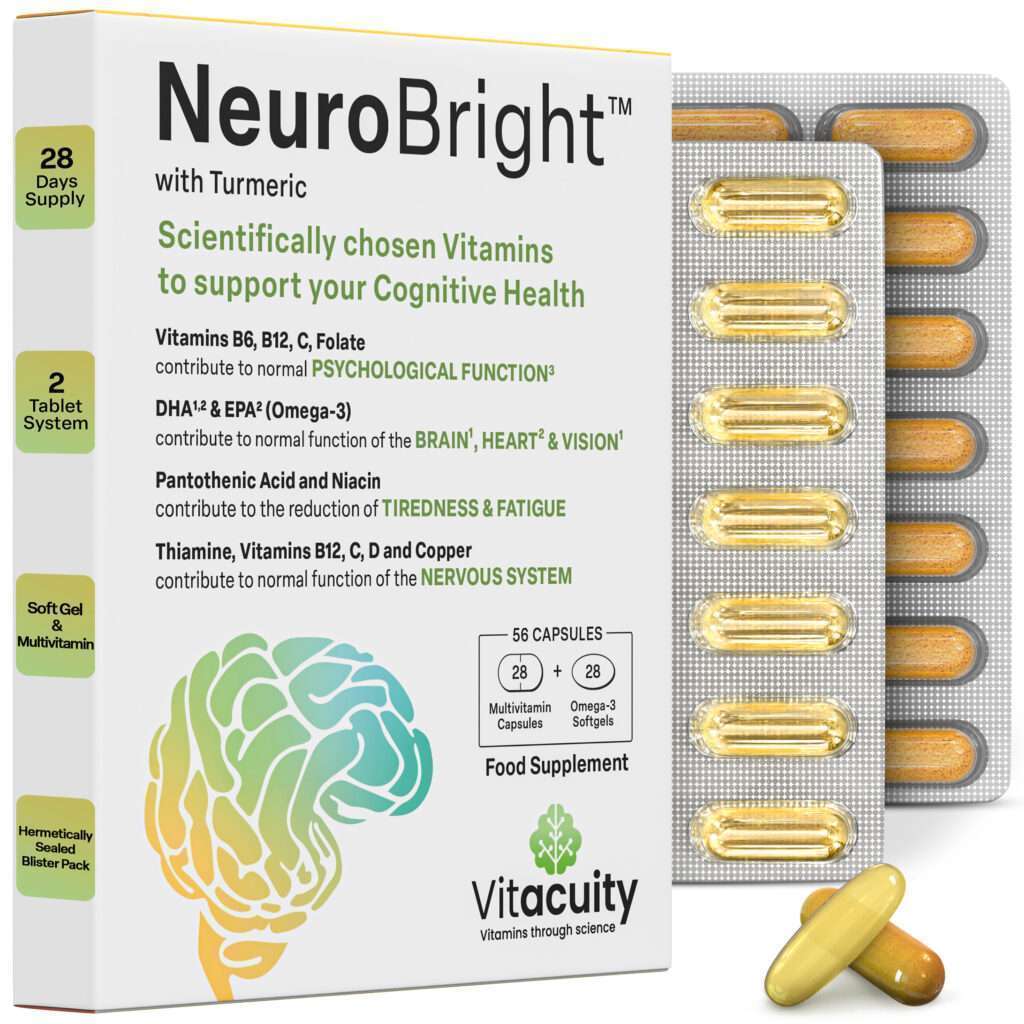
Free guide: The research behind brain health supplements
Plus our weekly research digest — straight to your inbox.
Just leave your email address.