Cold Exposure And Brain Health — What Ice Baths Actually Do To Your Neurons
Quick Read Cold exposure, particularly ice baths, activates a biological stress response called hormesis, where controlled stress triggers the body
We write a new article on supplements every day , all detailed, with citations.
Once a week we send an email containing a list of the last 7 days articles. Please sign up and also feel free to share the articles with friends and family who you think might benefit.
Simon Parrott – Vitacuity Ltd
Omega-3 fatty acids, found in fish oil and oily fish, make up a large part of your brain and help control inflammation, reduce harmful protein buildup, and support new brain cell growth. Large studies tracking hundreds of thousands of people over many years consistently show that people with higher omega-3 levels have 8 to 21 percent lower risk of dementia and Alzheimer’s disease. One long-term study following people for 17 years found omega-3 was linked to slower shrinkage in brain areas affected by Alzheimer’s.
However, when researchers tested omega-3 supplements in controlled trials with people who already had Alzheimer’s disease, the results were disappointing. The most likely explanation is that omega-3 works as a preventive tool before disease develops, not as a treatment afterward. Poor trial design, varying doses, and baseline differences between study participants also muddy the picture. One notable exception: people with heart disease taking high doses showed cognitive benefits equivalent to slowing brain aging by 2.5 years.
Men, people over 60, those with early memory problems, and those with genetic risk factors appear to benefit most. The supplement is very safe at normal doses of 1 to 3 grams daily and costs little. Starting supplementation in your 40s or 50s may be more effective than waiting until cognitive problems appear.
Verdict: Strong population evidence supports taking 1 to 2 grams of omega-3 daily or eating oily fish regularly for dementia prevention, though clinical trial evidence remains mixed and likely reflects prevention in early stages rather than treatment of established disease.
What if one of the most effective things you could do for your brain health right now cost less than a cup of coffee a day, was sitting on the shelves of every pharmacy in the country, and had been studied in nearly half a million people? That’s not a marketing pitch, it’s a genuine question raised by the research on omega-3 fatty acids and dementia risk. But here’s the honest caveat: the evidence is more nuanced, more fascinating, and more instructive than any headline can capture. Population studies paint a compelling picture. Clinical trials tell a more complicated story. And the gap between those two things turns out to be one of the most interesting puzzles in brain health research right now. Let’s walk through what we actually know, and what we don’t.
Your brain is roughly 60% fat, and a significant proportion of that fat is docosahexaenoic acid, DHA, one of the two key long-chain omega-3 fatty acids found in oily fish and fish oil supplements. The other is EPA (eicosapentaenoic acid). These aren’t just structural building blocks. They’re biologically active molecules that influence how your brain functions at a cellular level [3].
So what are the proposed mechanisms? Several have been identified in preclinical research:
Neuroinflammation control. Chronic low-grade inflammation in the brain is increasingly understood as a driver of Alzheimer’s disease. DHA and EPA help regulate this by suppressing pro-inflammatory molecules and promoting the production of specialised pro-resolving mediators (SPMs), essentially molecules that actively turn off the inflammatory response rather than simply dampening it [3].
Amyloid plaque and tau tangle reduction. The characteristic lesions of Alzheimer’s disease, amyloid-beta plaques and neurofibrillary tangles, appear to be influenced by omega-3 status. Laboratory and animal studies suggest DHA and EPA can reduce the formation of these structures [3].
Neurogenesis. There is evidence from preclinical work that omega-3 fatty acids may support the growth of new neurons, a process called neurogenesis, which naturally declines with age [1].
Neuroprotectin D1. DHA produces a downstream metabolite called neuroprotectin D1, which appears to have its own protective effects on brain cells. It’s one of the more intriguing pieces of the mechanistic puzzle [7].
The critical word in everything above is *preclinical*, meaning animal and lab studies. The mechanisms are plausible and well-described. The question is whether they translate into measurable cognitive protection in humans. That’s where the picture gets more complex, and more interesting.
Let’s start with the big numbers, because they are genuinely impressive.
A 2023 UK Biobank analysis of 267,312 participants found that higher plasma omega-3 levels were inversely associated with the risk of both Alzheimer’s disease and all-cause dementia. The highest quintile of total omega-3 status was associated with a 13% reduced risk of Alzheimer’s disease and a 21% reduced risk of all-cause dementia compared to the lowest quintile [10].
A separate UK Biobank cohort study, this time involving 440,750 participants, found that higher plasma DHA was associated with a 8% reduction in dementia risk per standard deviation increase in concentration. Fish oil supplement users had a 7% decreased risk of all-cause dementia compared to non-users. Critically, this association was partially mediated through plasma omega-3 levels, meaning the supplement’s benefit appeared to work *through* raising omega-3 status in the blood [11].
A third UK Biobank analysis of 215,083 participants with an average follow-up of nearly eight years found fish oil supplement users had a 13% lower risk of all-cause dementia (hazard ratio 0.87, 95% CI: 0.79–0.96) [12].
These are among the largest studies ever conducted on this question. The evidence grade here is promising to strong for population-level association, the consistency across massive independent cohorts is hard to dismiss.
It’s not just cross-sectional data. One of the more compelling pieces of evidence comes from the Alzheimer’s Disease Neuroimaging Initiative (ADNI) cohort, which followed 1,135 participants without dementia (mean age 73) for six years.
In that study, long-term users of omega-3 supplements showed a 64% reduced risk of developing Alzheimer’s disease compared to non-users (hazard ratio: 0.36, 95% CI: 0.18–0.72) [6]. A 2025 case-control study of 301 participants in Tehran found a strikingly similar number, individuals in the highest tertile of dietary omega-3 intake had a 64% lower chance of Alzheimer’s disease compared to those in the lowest tertile (OR: 0.36, 95% CI: 0.18–0.74) [2].
Meanwhile, a French prospective cohort study, the Three-City study, followed 1,279 participants for an extraordinary 17 years and found that higher plasma EPA+DHA levels were consistently associated with a lower risk of dementia (hazard ratio 0.87 per standard deviation increase), lower cognitive decline on global and memory measures, and less medial temporal lobe atrophy on brain imaging [8].
That last finding matters enormously. The medial temporal lobe, particularly the hippocampus, is one of the first brain regions affected in Alzheimer’s disease. The suggestion that omega-3 status is associated with slower atrophy in this region, over nearly two decades of follow-up, is one of the most clinically meaningful signals in the entire evidence base.
Evidence grade: Promising. These are observational studies and cohort analyses, they cannot prove causation. But the consistency of the association, across multiple countries, multiple methodologies, and sample sizes ranging into the hundreds of thousands, is genuinely notable.
A 2023 meta-analysis incorporating 48 longitudinal studies with 103,651 participants found that dietary intake of omega-3 fatty acids could lower the risk of all-cause dementia or cognitive decline by approximately 20%, with DHA intake specifically showing the strongest signal (relative risk 0.82) [6].
A separate dose-response meta-analysis found that fish intake of up to two portions per week (250g) was associated with a 10% reduction in all-cause dementia and a 30% reduction in Alzheimer’s disease risk, though importantly, protection appeared to level off above that threshold [13].
The consistent thread across these population studies is that omega-3 fatty acid status, whether measured through dietary intake, blood markers, or supplement use, appears associated with meaningful reductions in dementia risk. A 2025 overview of systematic reviews, which pooled data from nine systematic reviews incorporating 14 randomised controlled trials and 26,881 participants aged 40 and older, found a statistically significant improvement in MMSE cognitive scores with omega-3 supplementation (effect size: 0.16; 95% CI: 0.01–0.32) [4].
The effect size is modest. But it’s consistent.
Here is where intellectual honesty requires us to slow down. Because while the population data is encouraging, randomised controlled trials, where people are assigned to take omega-3 supplements or a placebo, have produced decidedly mixed results.
A 2025 meta-analysis of five RCTs in 702 Alzheimer’s disease patients found that omega-3 supplementation had a non-significant impact on ADAS-Cog scores (mean difference 1.37, 95% CI: 0.00–2.73) [5]. A 2024 systematic review of 11 RCTs reached a similar conclusion, benefits appeared in some early-stage studies, particularly for memory and hippocampal volume preservation, while more advanced Alzheimer’s disease showed little response [14].
So why the disconnect between the stunning population data and the underwhelming trial results? This is genuinely one of the most important methodological questions in nutritional neuroscience right now.
A detailed 2025 review identified several likely culprits [1]:
– Disease stage. By the time someone has diagnosable Alzheimer’s disease, the neurodegeneration is well advanced. Omega-3 may be protective at an earlier stage, preventing or slowing the accumulation of damage, rather than reversing established disease. – Baseline omega-3 status. If trial participants already have adequate omega-3 levels, supplementation may show little additional benefit. Population studies capture people who are genuinely deficient. – Genetics. ApoE4 carriers, who carry the strongest known genetic risk factor for Alzheimer’s, may respond differently to DHA supplementation, and failure to stratify by genotype muddies the results. – Sex differences. Women in the Tehran case-control study showed a particularly striking association (OR: 0.22 for highest omega-3 tertile), but most trials haven’t analysed male and female responses separately [2]. – Dose and form. DHA versus EPA ratios, chemical form (triglyceride vs. ethyl ester), and supplement quality all vary across trials, making comparisons difficult. – Placebo problems. Some trials have used olive oil or other lipid-containing placebos, which may themselves have cognitive effects, artificially narrowing the apparent benefit of omega-3.
One standout positive finding from RCT data: in cognitively healthy individuals with coronary artery disease, 3.36g of EPA and DHA daily was associated with cognitive ageing being slowed by an estimated 2.5 years [7]. This hints that omega-3 may be most effective as a *preventive* intervention in people with cardiovascular risk factors, before cognitive decline begins.
Evidence grade for clinical trials in established Alzheimer’s: Conflicted. Evidence grade for prevention in at-risk populations: Promising.
The research increasingly suggests that omega-3 is not a one-size-fits-all intervention. Certain groups appear to show stronger associations with benefit:
– ApoE4 carriers may benefit particularly from DHA supplementation taken before cognitive decline develops [7]. This is a group where early, sustained intervention seems most worth considering. – Men and those aged 60 and over showed stronger protective associations in the UK Biobank data [10]. – People with mild cognitive impairment (early memory complaints rather than diagnosed Alzheimer’s) showed more consistent benefit from DHA supplementation in RCT data than those with established disease [7]. – Those with cardiovascular disease or metabolic risk factors appear to be a population where higher-dose omega-3 may have meaningful cognitive benefits [7]. – People with obesity showed a notably weaker association in the Tehran study, higher omega-3 intake was not significantly associated with reduced Alzheimer’s risk in overweight or obese participants [2].
A 2024 analysis called explicitly for more personalised supplementation strategies, matching intervention to genetic profile, baseline omega-3 status, sex, and disease stage, rather than applying blanket recommendations [9].
In the spirit of being genuinely useful rather than just reassuring, here is what the evidence cannot yet tell us.
We don’t know the optimal dose. Studies have used everything from 1g to 3.36g of combined EPA and DHA per day. The dose-response relationship in humans for cognitive protection has not been clearly established.
We don’t know the optimal EPA:DHA ratio. Most fish oil supplements combine both, but whether DHA alone, EPA alone, or a specific ratio offers the greatest protection remains unclear [1].
We don’t know the optimal timing. The evidence increasingly suggests that omega-3 needs to be taken *before* significant cognitive decline sets in, but exactly how early, and for how long, is unknown.
We don’t know how obesity modifies the effect. The Tehran study found no significant association in overweight or obese participants [2]. If this finding is replicated, it would have significant implications for supplementation recommendations in a population where overweight is common.
ApoE4 and omega-3 interactions need much larger, dedicated trials. The pharmacogenomic signal is interesting but the existing studies are too small to draw firm conclusions.
Most RCT failures may reflect trial design rather than inefficacy. As the 2025 methodological review makes clear [1], the inconsistency in clinical trial results tells us as much about how the trials were designed as it does about omega-3 itself. Better-designed trials, using correct populations, adequate doses, measured baseline status, appropriate placebos, and stratifying by ApoE genotype, may produce clearer results.
Here is what a sensible, well-informed person should actually do with all of this.
The population evidence, across hundreds of thousands of people, followed for up to 17 years, in multiple countries, consistently shows that higher omega-3 status is associated with meaningfully lower dementia risk. The clinical trial evidence is mixed, but the most credible explanation for that is trial design failure, not omega-3 failure. In particular, trials testing omega-3 in people who already have established Alzheimer’s disease are probably asking the wrong question, it’s like testing a seatbelt’s ability to reverse a car crash rather than prevent one.
The practical case for daily omega-3 supplementation is strong:
– Fish oil at normal supplement doses (1–3g EPA+DHA daily) is exceptionally safe. Adverse effects are minimal and well-documented, mainly mild gastrointestinal discomfort at higher doses. There is no meaningful toxicity risk. – Omega-3 deficiency is common in modern Western diets. If you don’t eat oily fish two or three times a week, you are almost certainly not hitting the levels associated with protective effects in these studies. – The risk-benefit calculation is lopsided in favour of supplementing: modest cost, minimal risk, plausible and consistent evidence of meaningful long-term benefit. – Waiting for perfect trial evidence before supplementing is not a neutral choice, it is a choice to forego a potentially protective intervention during the years when it may matter most.
What to actually do:
1. Aim for 1–2g of combined EPA and DHA per day as a minimum. Higher-risk individuals, those with a family history of Alzheimer’s, known ApoE4 carrier status, cardiovascular disease, or early memory concerns, may consider 2–3g daily based on the dose ranges showing benefit. 2. Eat oily fish two to three times per week if possible. The dose-response data from dietary studies suggests this achieves meaningful protection. 3. Start sooner rather than later. The evidence increasingly points to omega-3 as a preventive tool, most effective before cognitive decline is established. Your 40s and 50s are not too early. 4. Choose a quality supplement. The 2025 methodological review flagged supplement quality and chemical form as meaningful variables in trial outcomes [1]. Look for triglyceride-form fish oil from reputable manufacturers that test for purity and oxidation. 5. Be consistent. This is not an acute intervention, it’s a long-game strategy. The 17-year Three-City study and six-year ADNI cohort data are reminders that these effects accumulate over time.
At Vitacuity, we have reviewed over 1.77 million research papers to bring you the most relevant evidence, and on omega-3 and brain health, the picture that emerges from the 15 key papers selected for this piece is genuinely one of the more compelling cases in the nutritional neuroscience literature. Not proof. Not a miracle. But a consistent, biologically plausible, and unusually well-evidenced reason to make oily fish and fish oil a non-negotiable part of how you protect your brain over the long term.
[1] Omega-3 polyunsaturated fatty acids in neurodegenerative disorders: Mixed designs = mixed results (2025). DOI: 10.1016/j.plipres.2025.101356 | https://pubmed.ncbi.nlm.nih.gov/40976313/
[2] Unravelling the link between dietary omega-3 fatty acids and risk of Alzheimer’s disease: a case-control study (2025). DOI: 10.1080/1028415X.2025.2563378 | https://pubmed.ncbi.nlm.nih.gov/41101748/
[3] Neuroprotective Role of Omega-3 Fatty Acids: Fighting Alzheimer’s Disease (2025). DOI: 10.3390/molecules30153057 | https://pubmed.ncbi.nlm.nih.gov/40807232/ | https://www.ncbi.nlm.nih.gov/pmc/articles/PMC12348196/
[4] Omega-3 Polyunsaturated Fatty Acids and Cognitive Decline in Adults with Non-Dementia or Mild Cognitive Impairment: An Overview of Systematic Reviews (2025). DOI: 10.3390/nu17183002 | https://pubmed.ncbi.nlm.nih.gov/41010527/ | https://www.ncbi.nlm.nih.gov/pmc/articles/PMC12472900/
[5] Cognitive efficacy of omega-3 fatty acids in Alzheimer’s disease: A systematic review and meta-analysis (2025). DOI: 10.3892/br.2025.1940 | https://pubmed.ncbi.nlm.nih.gov/39991006/ | https://www.ncbi.nlm.nih.gov/pmc/articles/PMC11843191/
[6] The Relationship of Omega-3 Fatty Acids with Dementia and Cognitive Decline: Evidence from Prospective Cohort Studies of Supplementation, Dietary Intake, and Blood Markers (2023). https://pubmed.ncbi.nlm.nih.gov/37028557/
[7] Omega-3 fatty acids and cognitive function (2023). DOI: 10.1097/MOL.0000000000000862 | https://pubmed.ncbi.nlm.nih.gov/36637075/ | https://www.ncbi.nlm.nih.gov/pmc/articles/PMC11878108/
[8] Blood polyunsaturated omega-3 fatty acids, brain atrophy, cognitive decline, and dementia risk (2020). DOI: 10.1002/alz.12195 | https://pubmed.ncbi.nlm.nih.gov/33090665/
[9] An analysis of omega-3 clinical trials and a call for personalized supplementation for dementia prevention (2024). https://pubmed.ncbi.nlm.nih.gov/38379273/
[10] Plasma Omega-3 Fatty Acids and Risk for Incident Dementia in the UK Biobank Study: A Closer Look (2023). DOI: 10.3390/nu15234896 | https://pubmed.ncbi.nlm.nih.gov/38068754/ | https://www.ncbi.nlm.nih.gov/pmc/articles/PMC10708484/
[11] Circulating polyunsaturated fatty acids, fish oil supplementation, and risk of incident dementia: a prospective cohort study of 440,750 participants (2023). https://pubmed.ncbi.nlm.nih.gov/37046127/
[12] Fish oil supplementation, APOE genotype, and dementia risk: UK Biobank cohort study (2022). DOI: 10.1016/j.clnu.2022.01.002 | https://pubmed.ncbi.nlm.nih.gov/35124466/
[13] Fish intake, n-3 fatty acid body status, and risk of cognitive decline: a systematic review and a dose-response meta-analysis of observational and experimental studies (2022). DOI: 10.1093/nutrit/nuab078 | https://pubmed.ncbi.nlm.nih.gov/34605891/
[14] The Role of Omega-3 Fatty Acid Supplementation in Slowing Cognitive Decline Among Elderly Patients With Alzheimer’s Disease: A Systematic Review of Randomized Controlled Trials (2024). https://pubmed.ncbi.nlm.nih.gov/39659348/
[15] The effects of omega-3, DHA, EPA, Souvenaid® in Alzheimer’s disease: A systematic review and meta-analysis (2024). https://pubmed.ncbi.nlm.nih.gov/38924283/
This article is for informational purposes only and does not constitute medical advice. Food supplements should not be used as a substitute for a varied and balanced diet and healthy lifestyle. If you are pregnant, breastfeeding, taking medication or have a medical condition, consult your doctor before taking any supplement. These statements have not been evaluated by the Food and Drug Administration (FDA) or the Medicines and Healthcare products Regulatory Agency (MHRA). This product is not intended to diagnose, treat, cure, or prevent any disease.
Quick Read Cold exposure, particularly ice baths, activates a biological stress response called hormesis, where controlled stress triggers the body
Quick Read Tiny air pollution particles (PM2.5) from traffic and burning fuel are small enough to enter your bloodstream and
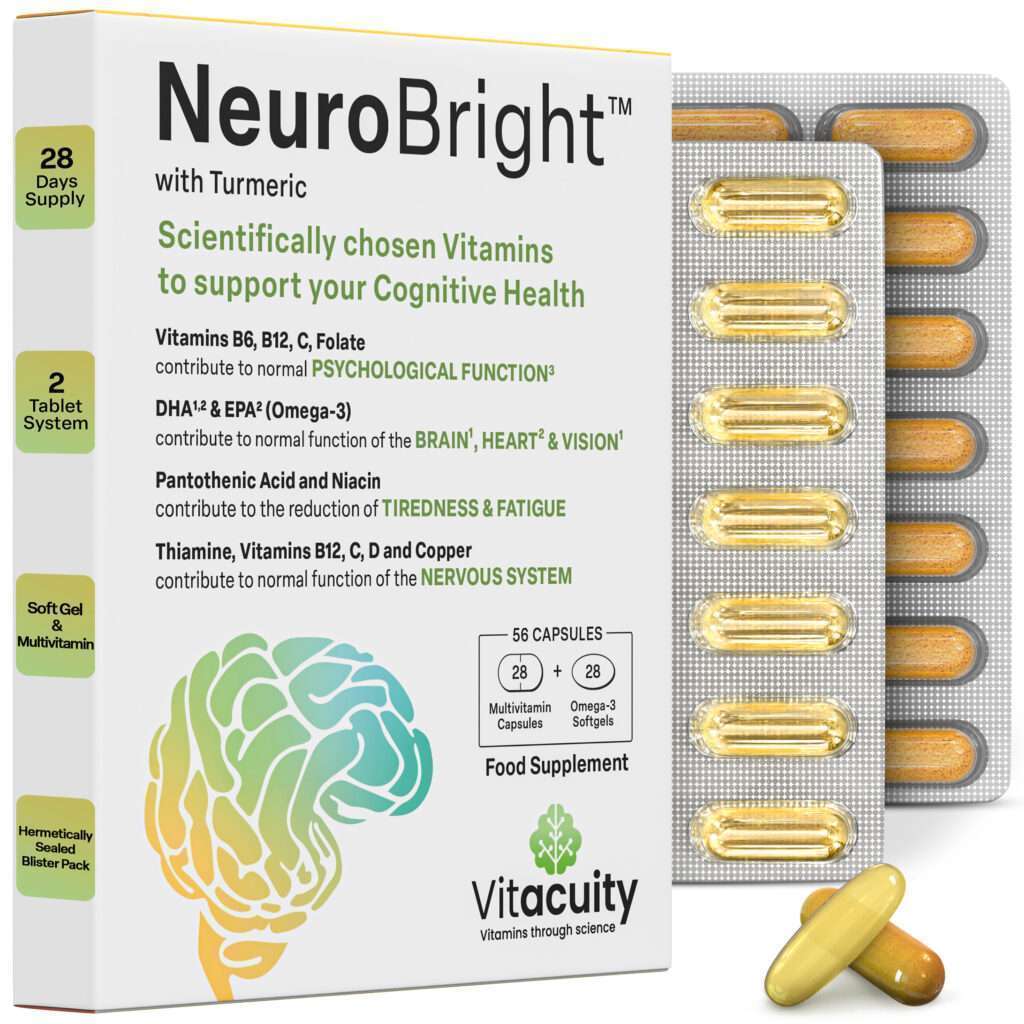
Free guide: The research behind brain health supplements
Plus our weekly research digest — straight to your inbox.
Just leave your email address.