Betaine And Homocysteine — The Methyl Donor Nobody Mentions
Quick Read Your body has two separate systems for recycling homocysteine, an amino acid that builds up after you eat
We write a new article on supplements every day , all detailed, with citations.
Once a week we send an email containing a list of the last 7 days articles. Please sign up and also feel free to share the articles with friends and family who you think might benefit.
Simon Parrott – Vitacuity Ltd
Ashwagandha is a plant used in traditional medicine for thousands of years, and recent clinical trials suggest it may genuinely support memory and thinking skills. The active compounds in ashwagandha appear to work by reducing stress hormones like cortisol, protecting nerve cells from damage, and supporting the brain systems involved in learning and memory.
Multiple randomised, placebo-controlled trials show that people taking ashwagandha extract for 30 to 90 days improved on tests of working memory (holding information in your mind), recall, attention, and reaction time. Benefits appeared in both healthy stressed adults and people with early memory problems. One study even found improvements after a single dose. The supplement was well tolerated with minimal side effects.
However, the research still has gaps. Study sizes are small, trials last only weeks to months while cognitive decline happens over decades, and different brands use different extracts which makes comparison difficult. Most benefits appear in stressed or aging populations rather than already-healthy individuals. Larger, longer independent studies are needed before certainty.
Verdict: Ashwagandha shows genuinely promising evidence as part of a broader brain-health approach, particularly for stressed adults over 40, but it is not yet proven beyond doubt and works best alongside sleep, movement, and a healthy diet.
What if one of the most scrutinised memory supplements on the market wasn’t a lab-synthesised nootropic, but a root that Ayurvedic physicians have been prescribing for over 3,000 years? And what if the clinical trials, real, randomised, placebo-controlled trials published in peer-reviewed journals, were starting to back them up? Ashwagandha (*Withania somnifera*) has spent millennia in the shadow of scepticism from Western medicine. But a growing body of human trial data is making that scepticism harder to sustain. Vitacuity reviewed over 1.77 million research papers and selected the most relevant studies on this topic. Here’s what the evidence actually shows, and where the gaps still remain.
Before we get to the trials, it helps to understand *why* ashwagandha might affect memory in the first place. The plant’s active compounds, primarily a group called withanolides, appear to work through several pathways simultaneously, which is part of what makes it so interesting to researchers [5].
First, there’s the stress connection. Chronic stress is one of the most well-documented enemies of memory. When you’re under sustained pressure, your body pumps out cortisol, a hormone that, in excess, literally shrinks the hippocampus, the brain region most critical for forming new memories. Ashwagandha has been shown in multiple trials to reduce circulating cortisol levels, which may partly explain its cognitive effects [9][14].
Second, ashwagandha appears to have direct neuroprotective properties. Animal and lab studies suggest it promotes the formation of dendrites, the branching extensions of nerve cells that allow neurons to communicate, and may have GABA-mimetic effects, meaning it can calm excessive neural activity [12]. There is also early evidence that it combats neuroinflammation and oxidative stress, two processes strongly associated with age-related cognitive decline [2].
Third, and perhaps most intriguingly, it may support acetylcholine signalling, the neurotransmitter system most closely tied to memory and learning, and the same system that deteriorates in Alzheimer’s disease [7].
This multi-pathway approach is what researchers call “pleiotropic” action. The herb isn’t doing one thing, it’s potentially doing several at once, which makes it harder to study but also potentially more valuable in practice.
One of the cleanest signals in the ashwagandha literature is its effect on working memory, the ability to hold and manipulate information in your mind in real time. Think of it as your mental scratchpad.
A 2025 randomised, double-blind, placebo-controlled pilot study published in the *Journal of Psychopharmacology* [1] enrolled 40 adults with mild cognitive impairment (MCI), a clinically recognised stage between normal ageing and dementia. Participants received either 250 mg daily of a standardised ashwagandha extract (Somin-On™, containing the active compound sominone) or a placebo for 60 days.
The results were striking for a study of this size. Using the gold-standard Wechsler Memory Scale-III (WMS-III), participants in the ashwagandha group showed significant improvements in immediate memory, general memory, and working memory compared to the placebo group, and these improvements grew larger over time. On the Montreal Cognitive Assessment (MoCA), ashwagandha produced a 7.83% improvement from baseline at 30 days, rising to 14.77% at 60 days. On the Mini-Mental State Examination (MMSE), gains reached 9.26% at 30 days and 19.21% at 60 days [1].
There was also a notable improvement in visuospatial processing, tested using the Shepard Mental Rotation task, which requires mentally rotating 3D objects. Scores rose 12.22% at 30 days and 31.67% at 60 days from baseline in the ashwagandha group [1].
Evidence grade: Promising. The findings are encouraging, but the sample size of 40 is small and this was a pilot study. Replication in larger trials is needed before firm conclusions can be drawn.
Not all the research focuses on people with cognitive impairment. A large and well-designed randomised, double-blind, placebo-controlled study [14], one of the most methodologically rigorous in the field, recruited 130 healthy, cognitively sound adults aged 20–55 who reported experiencing stress. They received either one capsule of a sustained-release ashwagandha root extract (Ashwagandha SR) or a placebo daily for 90 days.
Of the 130 enrolled, 125 completed the study. The primary cognitive assessment used was the Cambridge Neuropsychological Test Automated Battery (CANTAB), a well-validated digital testing system. By the final assessment (visit 4), the ashwagandha group showed significantly improved recall memory compared to placebo. The first-attempt memory score was 12.9 ± 6.7 in the ashwagandha group versus 10.1 ± 6.3 in the placebo group. Total errors in recalling patterns dropped substantially, 17.5 ± 23.3 in the ashwagandha group versus 27.7 ± 23.6 in the placebo group [14].
The same study also found reductions in perceived stress scores, improvements in sleep quality, and improvements in psychological well-being, all of which may have contributed to, or compounded, the cognitive improvements [14].
Evidence grade: Promising. Larger sample than many ashwagandha trials, well-controlled, and using validated neuropsychological tools. The stress-reduction effect makes it difficult to entirely isolate the direct cognitive mechanism, but the practical effect is real.
A 2022 study published in the *Journal of Ayurveda and Integrative Medicine* [9] tested the effects of two doses of ashwagandha (225 mg/day and 400 mg/day) against a placebo in 60 adults (43 women, 17 men, mean age 34) who reported experiencing perceived stress. Participants were assessed at Day 0, Day 15, and Day 30 using the CNS Vital Signs battery, a validated computerised cognitive test.
Significant differences emerged in cognitive flexibility, visual memory, reaction time, psychomotor speed, and executive functioning, with ashwagandha groups consistently outperforming the placebo group across these domains. Both ashwagandha groups also showed reductions in salivary cortisol over time, with the 225 mg group showing a statistically significant reduction from Day 0 to Day 30, while the placebo group’s cortisol actually increased slightly [9].
The lower dose performing as well as, or better than, the higher dose is an interesting finding, and one that deserves further investigation.
Evidence grade: Promising. Reasonable sample size, short duration (30 days) is a limitation. The cortisol data provides a plausible biological mechanism linking stress reduction to cognitive improvement.
Most supplement research looks at effects over weeks or months. A 2022 crossover study [8] took a different approach, testing whether a *single dose* of ashwagandha could produce measurable cognitive changes. Thirteen healthy volunteers completed a battery of cognitive tests (working memory, sustained attention, executive function, psychomotor vigilance) and were then given either 400 mg of an ashwagandha extract (NooGandha™) or a placebo in a double-blind, crossover design.
Acute ashwagandha supplementation improved working memory performance on the Sternberg Task, particularly at the 3 and 6-hour marks. It also sustained attention more effectively than placebo, reaction times remained stable in the ashwagandha group while worsening in the placebo group, suggesting ashwagandha helped prevent mental fatigue over the course of the day. Executive function (the ability to shift between rules) also showed some improvement [8].
Evidence grade: Early stage for acute effects. The sample size of 13 is very small and limits what conclusions can be drawn. But as a proof-of-concept, it’s interesting, and suggests the effects may not require weeks of loading to begin.
A 2024 study [11] examined the effects of 225 mg of liposomal ashwagandha (a formulation designed for better absorption) in 59 healthy young men and women (average age 22.7 years) over 30 days in a randomised, double-blind, placebo-controlled design. Participants completed the COMPASS cognitive battery, testing word recall, word recognition, choice reaction time, picture recognition, digit vigilance, and executive function, at baseline, acutely (after a single dose), and after 30 days.
Ashwagandha supplementation improved acute and 30-day scores on word recall (both correct responses and recalled attempts), choice reaction time, picture recognition (both accuracy and reaction time), digit vigilance, and the Stroop Colour-Word test. The ashwagandha group also reported lower perceptions of tension and fatigue on the Profile of Mood States (POMS) measure [11].
Evidence grade: Promising. Well-structured trial with a validated cognitive battery, but the young healthy population means results may not directly translate to older adults concerned about cognitive decline.
One of the earliest and most-cited randomised trials on ashwagandha and cognition [6], published in 2017 in the *Journal of Dietary Supplements*, was a double-blind, placebo-controlled study in adults with mild cognitive impairment using a root extract standardised to withanolides. It established several of the key methodological frameworks that later trials have built upon, including the use of validated memory scales and MCI as a target population.
While full numerical details are not available in the research chunks provided, this trial contributed importantly to the 2020 systematic review [7] that synthesised the available clinical evidence and concluded that ashwagandha supplementation, across multiple trials, consistently improved performance on cognitive tasks, executive function, attention, and reaction time, with good tolerability and minimal side effects.
Evidence grade: Promising, as part of a growing body of evidence.
A 2020 systematic review published in *Phytotherapy Research* [7] searched five major medical databases (PubMed, EMBASE, Medline, PsycINFO, and ClinicalTrials.gov) for clinical trials on ashwagandha and cognitive function. Five trials met their inclusion criteria. The review’s conclusion was carefully worded but genuinely positive: there is “some early clinical evidence, in the form of randomised, placebo-controlled, double-blind trials, to support the cognitive benefits of W. somnifera supplementation.”
The review noted that study populations varied, including older adults with MCI and adults with psychiatric conditions, but that across these groups, ashwagandha consistently improved cognitive performance, executive function, attention, and reaction time. Crucially, it was also well-tolerated, with good adherence and minimal side effects [7].
Evidence grade: Promising overall. The systematic review is valuable but was limited to five trials, reflecting how early-stage this field was just five years ago. The evidence base has grown meaningfully since then.
Honesty matters here. The ashwagandha and memory research is genuinely encouraging, but it has significant limitations that deserve to be stated plainly.
Sample sizes are small. Most trials have enrolled between 13 and 130 participants. That’s a meaningful step beyond animal studies, but nowhere near the scale needed to draw definitive conclusions. Effects that look real in small trials can disappear or shrink in larger ones.
Study durations are short. Most trials run for 30 to 90 days. Cognitive decline is a slow, decades-long process. We simply don’t know whether ashwagandha’s benefits persist over years, or whether they plateau, diminish, or compound over time.
Extract standardisation is inconsistent. Different studies use different branded extracts, KSM-66, Sensoril, Shoden, NooGandha™, Somin-On™, Ashwagandha SR, each standardised to different active compounds at different concentrations. This makes it genuinely difficult to compare results across trials, or to know which extract and dose is optimal [7][1][8].
The stress-cognition confound is real. Many of the cognitive improvements observed in trials may be partly or largely mediated through stress reduction, lower cortisol, better sleep, reduced anxiety, rather than direct effects on memory circuits. For someone with high stress, this distinction may not matter much practically. But it matters scientifically when trying to understand *how* ashwagandha works [9][14].
Most cognitive benefits are seen in people under stress or with MCI. The evidence for ashwagandha improving memory in already-low-stress, cognitively healthy individuals is thinner. Most trials specifically recruited stressed adults or those with mild cognitive impairment [1][14]. The 2024 trial in healthy young adults [11] is a welcome exception, but needs replication.
Long-term safety data is limited. Short-term trials consistently report good tolerability, but we lack robust data on effects over years of continuous use [7].
We need larger, longer, independently funded trials. Several of the studies reviewed were sponsored by or involved the manufacturers of the specific extracts being tested. This doesn’t invalidate the findings, but it does mean independent replication is important.
Here’s the honest, practical picture: ashwagandha is one of the more credible plant-based options for supporting memory and cognitive function, particularly if you’re over 40, experiencing stress, noticing the first signs of mental fatigue, or want to be proactive about cognitive ageing.
The evidence isn’t at the level of “proven beyond doubt.” But it’s meaningfully beyond “no evidence at all.” Multiple randomised, placebo-controlled, double-blind trials, the best kind of evidence we have in nutrition science, consistently show improvements in working memory, recall, attention, and reaction time. The effect sizes are real, the safety profile is good, and the mechanism makes biological sense [1][7][9][14].
What would a sensible, informed person actually do?
If you’re 40–65 and concerned about cognitive health, here’s the practical reasoning:
– Ashwagandha is safe at normal doses. Short-term trials consistently show good tolerability with minimal side effects [7][14]. There are no known serious adverse effects at doses used in trials (typically 225–500 mg daily of standardised extract). – You don’t need to be unwell to benefit. Trials in healthy stressed adults show real effects. If stress is part of your life, and for most people over 40, it is, ashwagandha addresses one of the key modifiable drivers of cognitive decline [9][14]. – The stress-sleep-cognition triangle matters. Even if ashwagandha’s cognitive benefits are partly mediated through better sleep and lower cortisol, those are genuinely valuable outcomes in their own right. Better sleep is one of the most powerful things you can do for your brain [14]. – Look for standardised extracts. Given the variability across products, opt for an extract standardised to withanolides. The doses used in the trials that showed cognitive benefits ranged from 225 mg to 500 mg daily [1][8][9][11][14]. – Give it time. The trials that showed the strongest effects ran for 60–90 days. Don’t judge it after two weeks. Commit to at least two months and reassess [1][14]. – It’s not a silver bullet. Ashwagandha works best as part of a broader approach to brain health, good sleep, movement, social connection, and a diet rich in whole foods. Think of it as an intelligent addition to good habits, not a replacement for them.
The ancient physicians of Ayurveda called ashwagandha a *Rasayana*, a rejuvenator [12]. The science is starting to understand why. Not because the tradition was infallible, but because the underlying biology is beginning to stack up. That’s worth paying attention to.
[1] Effect of ashwagandha (Withania somnifera) extract standardized with Sominone (Somin-On™) on memory and cognitive functioning in adults with mild cognitive impairment: a randomised double-blind, placebo-controlled pilot study (2025). DOI: 10.1177/02698811251324377 | https://pubmed.ncbi.nlm.nih.gov/40099725/
[2] Enhancing healthspan with Ashwagandha (Withania somnifera): a comprehensive review of its multifaceted geroprotective benefits (2025). DOI: 10.1007/s10522-025-10320-0 | https://pubmed.ncbi.nlm.nih.gov/40921883/ | https://www.ncbi.nlm.nih.gov/pmc/articles/PMC12417257/
[3] Ashwagandha (Withania somnifera): mental health, sleep quality, and cognitive function review (2025). DOI: 10.3390/nu17132143 | https://pubmed.ncbi.nlm.nih.gov/40647248/ | https://www.ncbi.nlm.nih.gov/pmc/articles/PMC12252077/
[5] Ashwagandha as an Adaptogenic Herb: A Comprehensive Review of Immunological and Neurological Effects (2025). DOI: 10.7759/cureus.96183 | https://pubmed.ncbi.nlm.nih.gov/41356880/ | https://www.ncbi.nlm.nih.gov/pmc/articles/PMC12680924/
[6] Efficacy and Safety of Ashwagandha (Withania somnifera (L.) Dunal) Root Extract in Improving Memory and Cognitive Functions (2017). DOI: 10.1080/19390211.2017.1284970 | https://pubmed.ncbi.nlm.nih.gov/28471731/
[7] A systematic review of the clinical use of Withania somnifera (Ashwagandha) to ameliorate cognitive dysfunction (2020). DOI: 10.1002/ptr.6552 | https://pubmed.ncbi.nlm.nih.gov/31742775/
[8] Effects of Acute Ashwagandha Ingestion on Cognitive Function (2022). DOI: 10.3390/ijerph191911852 | https://pubmed.ncbi.nlm.nih.gov/36231152/ | https://www.ncbi.nlm.nih.gov/pmc/articles/PMC9565281/
[9] Efficacy of Withania somnifera supplementation on adult’s cognition and mood (2022). DOI: 10.1016/j.jaim.2021.08.003 | https://pubmed.ncbi.nlm.nih.gov/34838432/ | https://www.ncbi.nlm.nih.gov/pmc/articles/PMC8728079/
[11] Acute and Repeated Ashwagandha Supplementation Improves Markers of Cognitive Function and Mood (2024). DOI: 10.3390/nu16121813 | https://pubmed.ncbi.nlm.nih.gov/38931168/ | https://www.ncbi.nlm.nih.gov/pmc/articles/PMC11207027/
[12] An overview on ashwagandha: a Rasayana (rejuvenator) of Ayurveda (2011). https://pubmed.ncbi.nlm.nih.gov/22754076/
[14] Efficacy and Safety of Ashwagandha Root Extract on Cognitive Functions in Healthy, Stressed Adults: A Randomized, Double-Blind, Placebo-Controlled Study (2021). DOI: 10.1155/2021/8254344 | https://pubmed.ncbi.nlm.nih.gov/34858513/ | https://www.ncbi.nlm.nih.gov/pmc/articles/PMC8632422/
[15] Safety and Efficacy of Ashwagandha Root Extract on Cognition, Energy and Mood Problems in Adults: Prospective, Randomized, Placebo-Controlled Study (2024). DOI: 10.1080/02791072.2024.2424279 | https://pubmed.ncbi.nlm.nih.gov/39498904/
This article is for informational purposes only and does not constitute medical advice. Food supplements should not be used as a substitute for a varied and balanced diet and healthy lifestyle. If you are pregnant, breastfeeding, taking medication or have a medical condition, consult your doctor before taking any supplement. These statements have not been evaluated by the Food and Drug Administration (FDA) or the Medicines and Healthcare products Regulatory Agency (MHRA). This product is not intended to diagnose, treat, cure, or prevent any disease.
Quick Read Your body has two separate systems for recycling homocysteine, an amino acid that builds up after you eat
Quick Read B vitamins become increasingly important for brain health after 40 because your body absorbs them less efficiently with
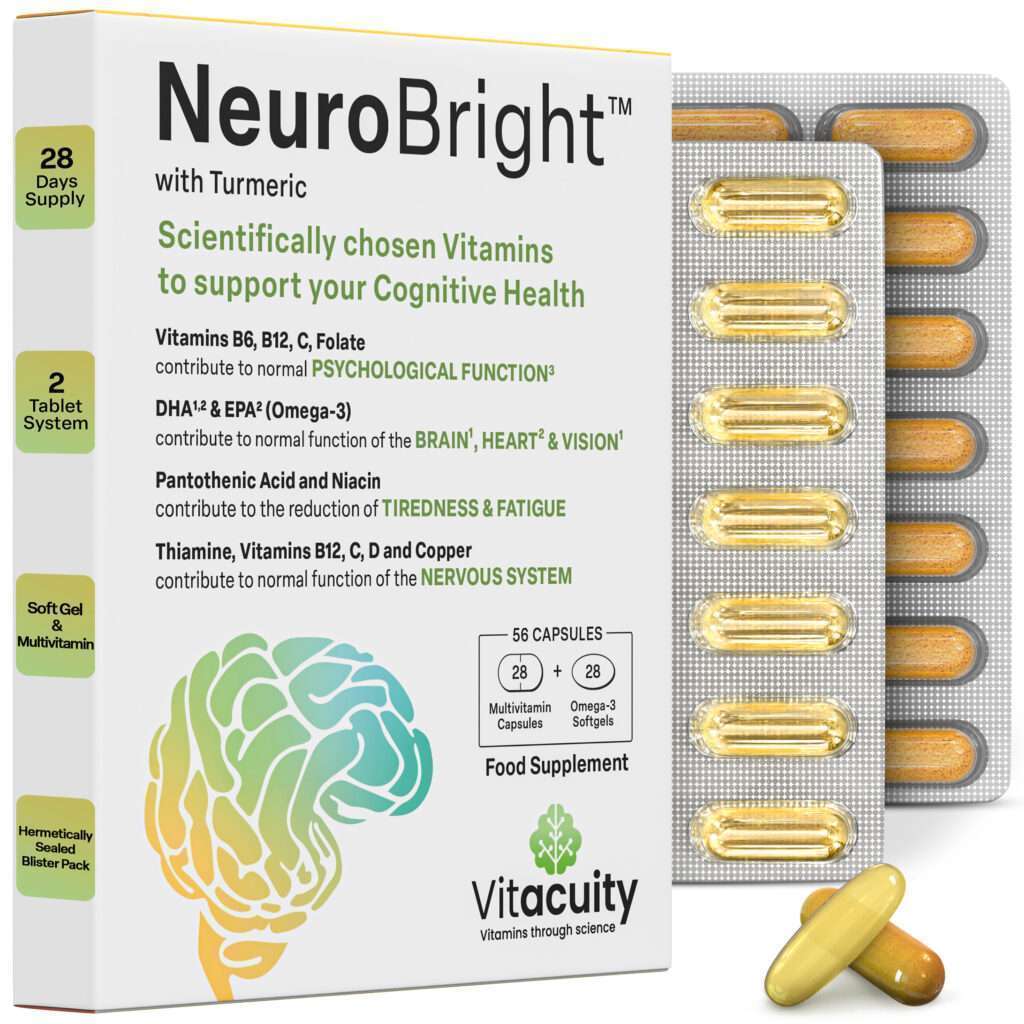
The nutrients that matter, the forms that work, and the claims to ignore.